Professor Paul Watkins
Class Hours: 1-4 pm on Wednesdays
“Where we’re from, the birds sing a pretty song and there’s always music in the air.” —Twin Peaks 1.2
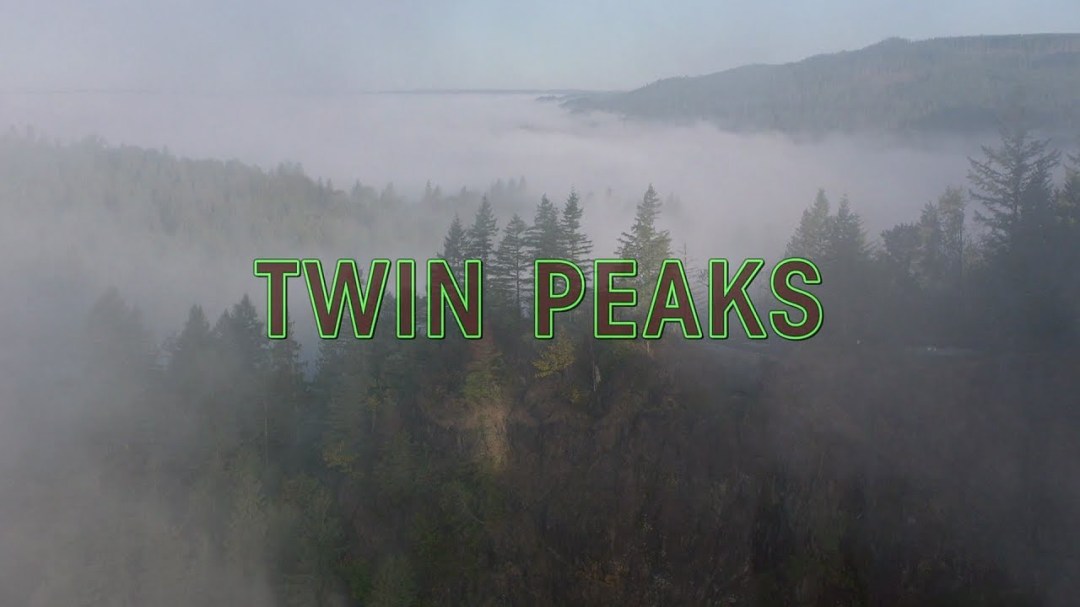
On April 8th, 1990, some 35 million people tuned into some of the strangest television of their lives. Twin Peaks has gone on to inspire the mise-en-scène of multiple television programs, and the evocative music expanded the palette of sound far beyond the small town of Twin Peaks. Shows influenced by Twin Peaksinclude The X-Files, The Killing, Hannibal, Lost, Bates Motel, The Sopranos, Fargo, Stranger Things, Dark, Riverdale, Yellowjackets and Donald Glover said that with Atlanta he “just wanted to make Twin Peaks with rappers.” This course will focus on the six David Lynch directed episodes of the first two seasons (1990-1991) as well as select parts from the limited series (2017). We will also watch the film, Twin Peaks: Fire Walk with Me (1992). Beyond that we will watch a few episodes and scenes from shows influenced by Twin Peaks and discuss what makes something “Lynchian” and what constitutes as “Quality” TV. We will explore representations of violence, the connection between sound, word, and image, dreams and surrealism, gender and feminism, narrative structure, and more. Course evaluation will include a review of the pilot or episode two from the first season, a group presentation, a creative project, a full-length research paper, and a final exam. This course promises to be both wonderful and strange.
Content Warning: Some of the content and discussion in this course will necessarily engage with representations of violence, sex/sexual abuse, and other mature themes.
Web pages of interest on Twin Peaks:
- https://welcometotwinpeaks.com
- https://twinpeaks.fandom.com/wiki/Twin_Peaks
- https://www.sho.com/twin-peaks
- https://wrappedinplasticmagazine.com/complete-issue-list/
- https://www.criterion.com/current/posts/4570-twin-peaks-returns
- http://twinpeakssoundtrackdesign.blogspot.com/p/twin-peaks-music-scene-guide.html
Given the filmic quality of Twin Peaks, these free guides might be useful:
- Yale Film Analysis Guide: http://filmanalysis.yctl.org
- Film Reference Guide: https://collegefilmandmediastudies.com
Books and Collections on Twin Peaks, David Lynch, and Television Narrative:
- 1978 — Fiske, John and John Hartley. Reading Television. (1978; 2003). [eBook on VIU Library]
- 1990 — Lynch, Jennifer. The Secret Diary of Laura Palmer.
- 1994 — Lavery, David, ed. Full of Secrets: Critical Approaches to Twin Peaks.
- 2005 — Chion, Michel. David Lynch.
- 2005 — Rodley, Chris, ed. Lynch on Lynch.
- 2014 — Dukes, Brad. Reflections: An Oral History of Twin Peaks.
- 2015 — Halskov, Andreas. TV Peaks: Twin Peaks and Modern Television Drama.
- 2015 — Burns, Andy. Wrapped in Plastic. [eBook on VIULearn]
- 2015 — Lim, Dennis. David Lynch: The Man from Another Place.
- 2016 — Thorne, John. The Essential Wrapped in Plastic: Pathways to Twin Peaks.
- 2016 / 2017 — Frost, Mark. The Secret History of Twin Peaks and The Final Dossier.
- 2017 — Norelli, Clare Nina. Soundtrack from Twin Peaks.
- 2017 — Hoffman, Eric, ed. Approaching Twin Peaks: Critical Essays.
- 2018 — Lynch, David and Kristine McKenna. Room to Dream.
- 2019 — Nochimson, Martha P. Television Rewired: The Rise of the Auteur Series.
- 2019 — Bushman, David, ed. The Women of David Lynch: A Collection of Essays.
- 2019 — Biderman, Shai, ed. The Politics of Twin Peaks.
- 2019 — Sanna, Antonio, ed. Critical Essays on Twin Peaks: The Return.
- 2020 — Minton, J. B. A Skeleton Key to Twin Peaks – One Experience of The Return.
- 2021 — Wissner, Reba, and Katherine Reed. Music in Twin Peaks – Listen to the Sounds.
- 2021 — Boulègue, Franck. The Return of Twin Peaks: Squaring the Circle.
- 2022 — Thorne, John. Ominous Whoosh: A Wandering Mind Returns to Twin Peaks
- 2023 — Olson, Greg. Black Coffee Lightning: David Lynch Returns to Twin Peaks.
- 2025 — Wood, Jeff. Movies Minute by Minute – Twin Peaks: The Return, Part 8.
- 2025 — Scott, Ryan. Always Music in the Air: The Sounds of Twin Peaks.
- 2025 — Scott, Ryan. Twin Peaks: Through the Red Curtain.
Schedule:
Please note that this schedule is subject to change as the term progresses. All Secondary readings are available on VIULearn (please print or download copies for class).
Jan 7
Introduction to television and film analysis (scene from Blue Velvet); course outline; standards and expectations; Who was David Lynch and why does Twin Peaks matter?
- Screening: Pilot episode (“Northwest Passage”)
After class reading: Stephen Lacey, “Just Plain Odd: Some Thoughts on Performance Styles in Twin Peaks”; Burns, “Introduction” and “Chapter 1” (1-14); Andreas Halskov, “Prologue: Welcome to Twin Peaks” (8-15); Dennis Lim, “Welcome to Twin Peaks” (83-104)
- David Lynch, RIP, Impact of TV
- New York Times, Twin Peaks glossary
- Alison Herman and Rob Harvilla‘s David Lynch Syllabus
- 10 Films that influenced Twin Peaks
- Subliminal Lynch Motifs
- Brian Coney on how Twin Peaks set the standard for TV aesthetics
- Mashup: Blue Shining
Jan 14
Readings: John Fiske, Reading Television (“Reading Television” 1-7 and “The Signs of Television” 22-40); John Thorne, “Cult Buster” (from The Essential Wrapped in Plastic); Ross P. Garner, “‘The Series That Changed Television?’ Twin Peaks, ‘Classic” Status,’ and Temporal Capital”; Andreas Halskov, “Peaks and Waves in Television History” (20-28) and “Beyond the Wasteland: Twin Peaks and the Second Golden Age” (29-38); Andy Burns, “Chapter 6” (see 70-79)
- Screening: 1.2 (“Zen, or the Skill to Catch a Killer”); selected scenes: Season 1
Clips: The Simpsons, 7:1, “Who Shot Mr. Burns? (Part Two); Saturday Night Live with Kyle MacLachlan (1990); Sesame Street, “Twin Beaks”’; Japanese Coffee Commercials for Georgia Coffee; Weather Report (Jan 14)
Jan 21
Readings: Lenora Ledwon, “Twin Peaks and the Television Gothic” (1993); Andreas Halskov, “Lynching Television: TV Auteurism and the Question of Legitimacy” (54-95);Lindsay Hallam, “May the Giant Be With You: Twin Peaks Season Two, Episode One and the Television Auteur” (available, here); Karla Loncar traces “Twin Peaks’ origins in surrealism.”
- Screening: 2.8 (“May the Giant Be with You”)
- Reflection Review Due (Pilot or 1.2)
- The Dance Moves of Twin Peaks
- Seth Meyers: Twin Peaks style
- “Damn Fine Coffee” Advertising: David Lynch’s TV Commercial Adaptation of Twin Peaks
- Matthew Dessem for Slate on How a 1940s Novelty Song Became the Perfect Soundtrack for Twin Peaks’ Creepiest Scene
- Un Chien Andalou (1929)
Jan 28
Readings: Kathryn Kalinak, “‘Disturbing the Guests with This Racket’: Music and Twin Peaks” (1994); Paul Watkins, “Black Lodge Sonata” (DRAFT); Michael Goddard, Telephones, Voice Recorders, Microphones, Phonographs: A Media Archaeology of Sonic Technologies in Twin Peaks
- Screening: 2.9 (“Coma”); Clips: The Return (3.5 and 3.13); Badalamenti on “Laura Palmer’s Theme”; Silencio scene from Mulholland Drive
Discussion of Catching the Big Fish
Clips: The Return (3.5 and 3.13); Badalamenti on “Laura Palmer’s Theme”; Mulholland Drive, Silencio scene; Riverdale, 2.9; Fresh Prince/ Twin Peaks mash-up
- Excerpt from Clare Nina Norelli’s book, Angelo Badalamenti’s Soundtrack from “Twin Peaks”
- Scene Guide for the Music from Twin Peaks
- How Lynch et. al wrote “Just You”
- The Next Peak: Music Inspired by Twin Peaks
- Dream Team: The Semi-Mysterious Story Behind the Music of ‘Twin Peaks’
- What does Lynchian mean in terms of the music
- Personal Voice Recorder in Twin Peaks
- Let’s Rock!, fan-made music video
- Badalamenti on the Music of Twin Peaks
- 10 Songs that Sample Twin Peaks well
- Midi Notation shows Twin Peaks
- 1990 Perspective from The New York Times on the Music of Twin Peaks
- Chrysta Bell covers “Falling”
Feb 4
Readings: Sue Lafky, “Gender, Power, and Culture in the Televisual World of Twin Peaks: A Feminist Critique”; Smith et al., “The Knowing Spectator of Twin Peaks: Culture, Feminism, and Family Violence”; Diane Stevenson, “Romance, Family Violence, and the Fantastic in Twin Peaks” (1994); Diana Hume George, “Lynching Women: A Feminist Reading of Twin Peaks” (1994); Andreas Halskov, “Incest for Millions”: Edginess as a Marker of Quality (96-111); Stacy Rusnak, “Violence, Representation, and Girl Power: Twin Peaks’ Female Characters and Third Wave Feminism” (2019); Hancock, “Gender, Twin peaks, and a Question of Agency”
- Screening: 2.14 (“Lonely Souls”); Start Psych (“Dual Spires”)
Discussion of Group Projects - David Griffith [responds to Hume George], Teaching Twin Peaks at Sweet Briar
- Rashida Jones Checked Under Her Bed for Bob Every Night Until College
- Rolling Stone names Twin Peaks the best Horror TV show of all time
- Twin Peaks Co-Creator Mark Frost Explains the True Nature of BOB
Feb 11
Readings: Thorne, “Half the Man he Used to Be”; O’Connor, “Bourgeois Myth versus Media Poetry in Prime-time: Re-visiting Mark Frost and David Lynch’s Twin Peaks”; Martha P Nochimson, “David Lynch, Twin Peaks” (from Television Rewired)
- Screening: 2.29 (“Beyond Life and Death”) and selected scenes from season 2; Psych (“Dual Spires”)
Discussion of the first two seasons of Twin Peaks
- Cristina Álvarez López and Adrian Martin’s audiovisual essay, Short-Circuit: A “Twin Peaks” System
- Geoff Bil, “Tensions in the World of Moon: Twin Peaks, Indigeneity and Territoriality“
- For Literary Hub, Emily Temple presents “An Incomplete Guide to Literary References in Twin Peaks.”
- David Lynch Hates Season 2 more than You
- Too Weird for Prime Time (Slate)
- Every Episode of Twin Peaks Ranked (Esquire)
- A Guide to the Unsolved Mysteries on Twin Peaks
- 1990 New York Times Retrospective from 1991
- Psych’s Homage to Twin Peaks
- Psych star James Roday talks Twin Peaks episode
and Part 3 of Phenomenon promo.
Feb 16, Week 7: No Class, Study Week
Feb 25
Readings: John Thorne, “Critical Reaction to Fire Walk with Me (265-270) and “The Realization of Laura Palmer” (271-297); Rachel Joseph, “‘Eat My Fear’: Corpse and Text in the Films and Art of David Lynch”
- Screening: Twin Peaks: Fire Walk with Me [VIEWER DISCRETION IS ADVISED]
Discussion of Research Essay
- A Place Beyond the Pines: Twin Peaks: Fire Walk With Me
- Fire Walk with Me at 30 (The Guardian)
- Twin Peaks Revisited on Fire Walk With Me
- How Fire Walk With Me connects to The Return
- Martha Nochimson, “Don’t call Twin Peaksa “cult classic”
- Martyn Conterio, “Fire Walk With Me: how David Lynch’s film went from laughing stock to the key to Twin Peaks”
- Fire Walk with Me Cannes Cinema Paper from 1992
- “The” NIN, “She’s Gone Away” (Fire Walk with Me remix) Video
[Recommend Home viewing: Mulholland Drive]
- Inside the Making of Mulholland Drive, David Lynch’s Dark, Freudian Masterpiece
- Kyle Turner, David Lynch as a Queer Artist
- Sam Walker, “The Visualisation of Memory in David Lynch’s Mulholland Drive”
- Podcast, The Perfect Shots of Mulholland Drive
- Trish Bendix, “The importance of “Mulholland Drive” in Sapphic cinematic history“
- Roger Ebert Review of Mulholland Drive
- On Typography in Lynch films
- What Makes a David Lynch Film Lynchian: A Video Essay
- Fan Theory: Is Mulholland Drive a Twin Peaks movie?
Video Essay 1: “How Lynch Manipulates You“
Video Essay 2: “Mulholland Drive Explained“
March 4
Readings: David McAvoy, “‘Is It About the Bunny? No, It’s Not About the Bunny!’: David Lynch’s Fandom and Trolling of Peak TV Audiences”; Joel Hawkes, “Movement in the Box: The Production of Surreal Social Space and the Alienated Body”
- Screening: Selected scenes from The Return, Parts 1-4
- Screening: Atlanta, “Teddy Perkins” (2.6)
- Finn Cohen in conversation with actors from Season 3
- David Lynch on The Return
- David Lynch on how to watch The Return
- David Marchese at Vulture in conversation with David Lynch
- Essay Series: “‘I’ll See You in 25 Years’: The Return of Twin Peaks and Television Aesthetics”
- Richard Brody on The Return
- Laura Miller (Slate) on The Return
- Matt Zoller Seitz (Vulture) on The Return
- Vadim Rizov’s piece for Filmmaker on The Return
- Matt Zoller Seitz, and Vulture deems Twin Peaks: The Return the best show on TV
- Empire Review on Parts 1 and 2
- Interview with Michael Horne on The Return
- What is Inside that Mysteries Glass Box?
- Finn Cohen on how Twin Peaks lost and found its way back
- The LGBTQ+ World of Twin Peaks
- Fix Your Heart or Die: The Startling Empathy of David Lynch
- Allen, “What Made Denise Such a Radical Trans Character on TV”
- Hooray! David Duchovny Is Back as Denise, Twin Peak
- Genre Queer
- David Lynch Built Queer Worlds For Me To Thrive In
- Jane Schoenbrun on How ‘Twin Peaks: The Return’ Influenced ‘I Saw the TV Glow’
- Atlanta: “The Many Layers of Atlanta’s ‘Teddy Perkins’”
March 11
Readings: Monique Rooney, “Air-object: on Air Media and David Lynch’s ‘Gotta Light?’”; Ashlee Joyce, “The Nuclear Anxiety of Twin Peaks: The Return”
- Screening: The Return, Part 8 [200/203 for 2:30-4 pm]
Creative Interventions Due (including short presentations)
1-2:15 Creative Intervention Sharing
2:30-3:50 Screening in 200/203
- John Dziuban on the appearance of Nine Inch Nails in Episode 8
- Michael Sicinski on Parts 7-9
- Walter Metz, “The Atomic Gambit of Twin Peaks: The Return”
- Matt Zoller Seitz, “The Eighth Episode of Twin Peaks: The Return Is Horrifyingly Beautiful“
- Pretty Hate Machine: Review of episode 8 on Rolling Stone
- Scoring the Woodsmen scene using “Moonlight Sonata”
- EW on Episode 8
- New York Times on Episode 8
- Lynch on David Bowie and the Music that Inspired the New Twin Peaks
- Glenn Kenny, David Lynch Weaves Film History Into ‘Twin Peaks: The Return’
March 18
Readings: Ellis and Theus, “Is It Happening Again? Twin Peaks and ‘The Return’ of History”; Cobb and Potter, “Who is the Dreamer?”; Martha P Nochimson, “Coda: The Return of David Lynch (from Television Rewired); Amanda DiPaolo, “Is it Future or It Past?: The Politics and Use of Nostalgia in Twin Peaks”; Darci Doll, “Zen, or the Art of Being Agent Cooper”; Frank Guan for Vulture: “What Does David Lynch Have to Say About Race?”
- Screening: The Return: selected scenes from parts 11, 15-18 and discussion
- Screening: Fleabag, 2.1
- Peak Nostalgia: Lynch’s irresistible (and corrupted) visions of the American past
- Tracing The Distraught DNA Of Twin Peaks’ Dead Heroine
- Saul Anton for frieze, “Slapstick SuperWestern” (on violence in TV)
- David Ehrlich on Return and episode 11
- Noel Murray on Sound in the new Twin Peaks: ‘I Love Winds’: David Lynch on the Sound of ‘Twin Peaks’
- Tim Burrows for the Guardian, “Twin Peaks: the apex of TV as art, and the only show that chimes with our times”
- Film and TV Critics Debate ‘Twin Peaks: The Return
- New Yorker’s Richard Brody on the final two episodes
- Tyler Coates interviews MacLachlan for Esquire
- David Phelps on Twin Peaks as a game
- Pitchfork: David Lynch on Bowie and the Music that Inspired the New “Twin Peaks”
- Podcast with Dennis Lim on The Return
- Alexandra Kleeman for The New York Times on Prestige TV and Twin Peaks
- Guest co-hosts Christine Makepeace and John Walker join Mike White in the Projection Booth to discuss Fire Walk With Me (1992) and The Return
- Niles Schwartz for The Point, “Curtain Call”
- Adam Thirlwell for the New York Review of Books on David Lynch
- Aliza Ma for Film Comment on The Return (essay)
- Jonathan Foltz, “David Lynch’s Late Style”
- ‘Twin Peaks’ Star Kyle MacLachlan Doesn’t Know What Happened in That Last Scene Either (Variety)
- Fan Theory on the Ending
- ‘Twin Peaks’ Finale Made Women Far More Than Just Victims, but Soldiers in the Bigger Battle
- Matt Zoller Seitz on The Return and how You Can’t Go Home Again
- Paul Fishman for Empire: All Your Questions Answered
- Chloe Rad on Why Twin Peaks Had the Perfect Ending
- “Twin Peaks Actually Explained (No, Really)” [Really, just one 4.5 hour opinion for those who like a kind of closure]
- Music videos on The Return: Once in a Lifetime and The Telephones & Wires of Twin Peaks
- Final Two Episodes Synced
- Fleabag: the most electrifying, devastating TV in years
March 25
Group Presentations (1 pm—3 pm)
- Screening: Pilot of The Killing
- Twin Peaks Cherry Pie Recipe
- Time Calls Twin Peaks (2017) the show of the decade
April 1
Readings: Dana Och, “All Laura Palmer’s Children: Twin Peaks and Gendering the Discourse of Influence”; Andreas Halskov, “Copies and Continuations: Final Remarks” (226-233)
- Screening (class Vote): The X-Files, “Clyde Bruckman’s Final Repose;” I May Destroy You (pilot); Yellowjackets (pilot); Riverdale (pilot); Dark (pilot); The Leftovers, “International Assassin;” Fargo, “Who Rules the Land of Denial?”; or, the film, I Saw the TV Glow
- Nick Schager, How ‘Twin Peaks’ Changed TV Forever, from ‘The X-Files’ to ‘Breaking Bad’
- Vulture, Shows like Twin Peaks
- The Best Part of Riverdale Is All of the Twin Peaks Imagery
- Vanity Fair, Riverdale and Twin Peaks Question Whether America was Ever Great at All
- Six Types of Shows Influenced by Twin Peaks
- 14 ‘Twin Peaks’ Inspired Pop Culture References You Never Noticed, From ‘Friends’ To ‘Titanic’
- Pretty Little Liars -vs- Twin Peaks
- David Chase on the Legacy of Twin Peaks
April 8
Reading: Hassler-Forest, Dan. “When You Get there, You Will Already be there: Stranger Things, Twin Peaks and the Nostalgia Industry.”
- Screening: Stranger Things (Pilot); possible Scenes from Fargo, Bates Motel, Veronica Mars, The Sopranos, True Detective, Top of the Lake, and I Saw the TV Glow
Discussion: What makes something Twin-Peaks-like or “Lynchian”?
Exam review
- Essay Due by 11:59 pm on VIULearn
Twin Peaks-themed potluck
- James Parker, The Atlantic, How Twin Peaks Invented Modern Television
- David Foster Wallace, “David Lynch Keeps His Head“
- 20 TV Shows influenced by Twin Peaks (Rolling Stone)
- Glamour, Shows Influenced by Twin Peaks
- Stranger Things Meets Twin Peaks in musical mashup
- Breaking Bad, Twin Peaks style
- Twin Peaks, Remixed
- Fargo showrunner Noah Hawley on the impact of Twin Peaks
- Creators of Lost, Fargo, The Sopranos and Other Shows on How Twin Peaks Influenced Them
- A Brief History of TV shows being compared to Twin Peaks
- Twin Peaks Inspired Lost, The Leftovers

 PAUL db WATKINS