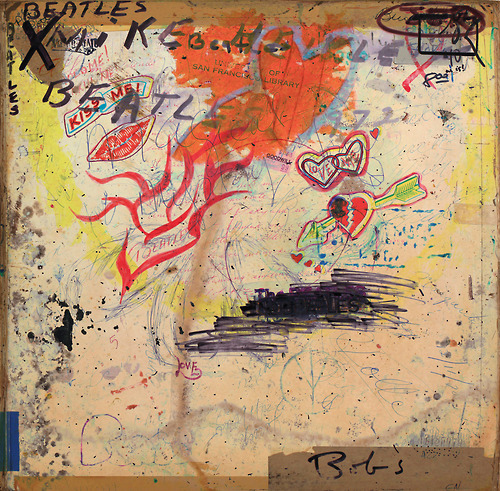
I own my share of peculiar records: The Psychedelic Experience: A Manual Based on The Tibetan Book of the Dead (read by Timothy Leary); Natural Childbirth (an early 1950s record that documents the live birth of a baby); a record that is only frog sounds; a yodeling record; and to my growing vinyl oddities, I can now add Rutherford Chang’s The White Album. Rutherford Chang has been getting a lot of press for his art project, “We Buy White Albums,” where he only purchases copies of The Beatles’ White Album, displayed at a gallery (set up like a record shop) that only carries the iconic double album. All of the albums are first-pressings and Rutherford Chang’s website now lists the total number of copies at 918. At some point during the exhibit (here’s an interview on the process), Rutherford thought, “I wonder what it sounds like if you play 100 copies of The White Album at once?” And that’s exactly what Chang’s The White Album does: 100 (45 year-old) first-pressings of The White Album are synced up in a bizarre sound collage that moves in and out of the familiar and into the choral and cacophonous. Each copy of the record is unique, and given the slight sound variations in pressings, and the natural and scratched wear of vinyl, the listening experience captures the distinct history of each record. We start off with a familiar, but muddier version of “Back in the U.S.S.R,” and then move into uncontrollably new territory as the records slowly coast out of sync over the course of each side. Chang even layered the gatefold cover and disc labels with the worn and hand-drawn originals to create a visual collage that reworks the featureless original and highlights the individual history of each copy.
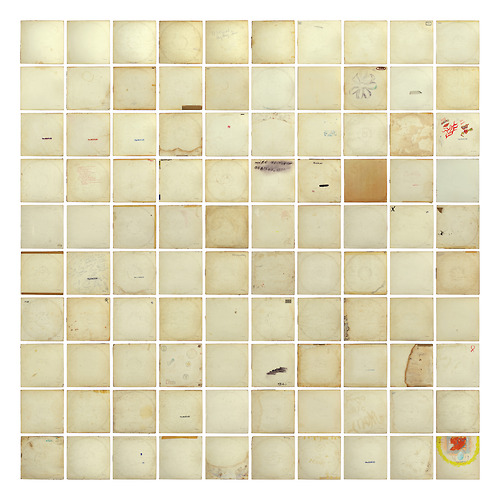
The poster of the 100 albums.
Pressed in a very limited run—which sold out quick—I am happy to add Chang’s The White Album to my vinyl collection. Of course, some purists might disavow the album, while others will welcome this innovative project as being in line with the experimental spirit of late-period Beatles. Have a listen for yourself.
“Manifesto’s point of origin lies in hip hop culture – in its spirit of ingenuity, raw creativity, and people power, but we strive to stay out of boxes and create a platform with the potential to act as a catalyst for cross-pollination, collaboration, and the growth of new forms in this city of wildly talented people.” -Manifesto website.
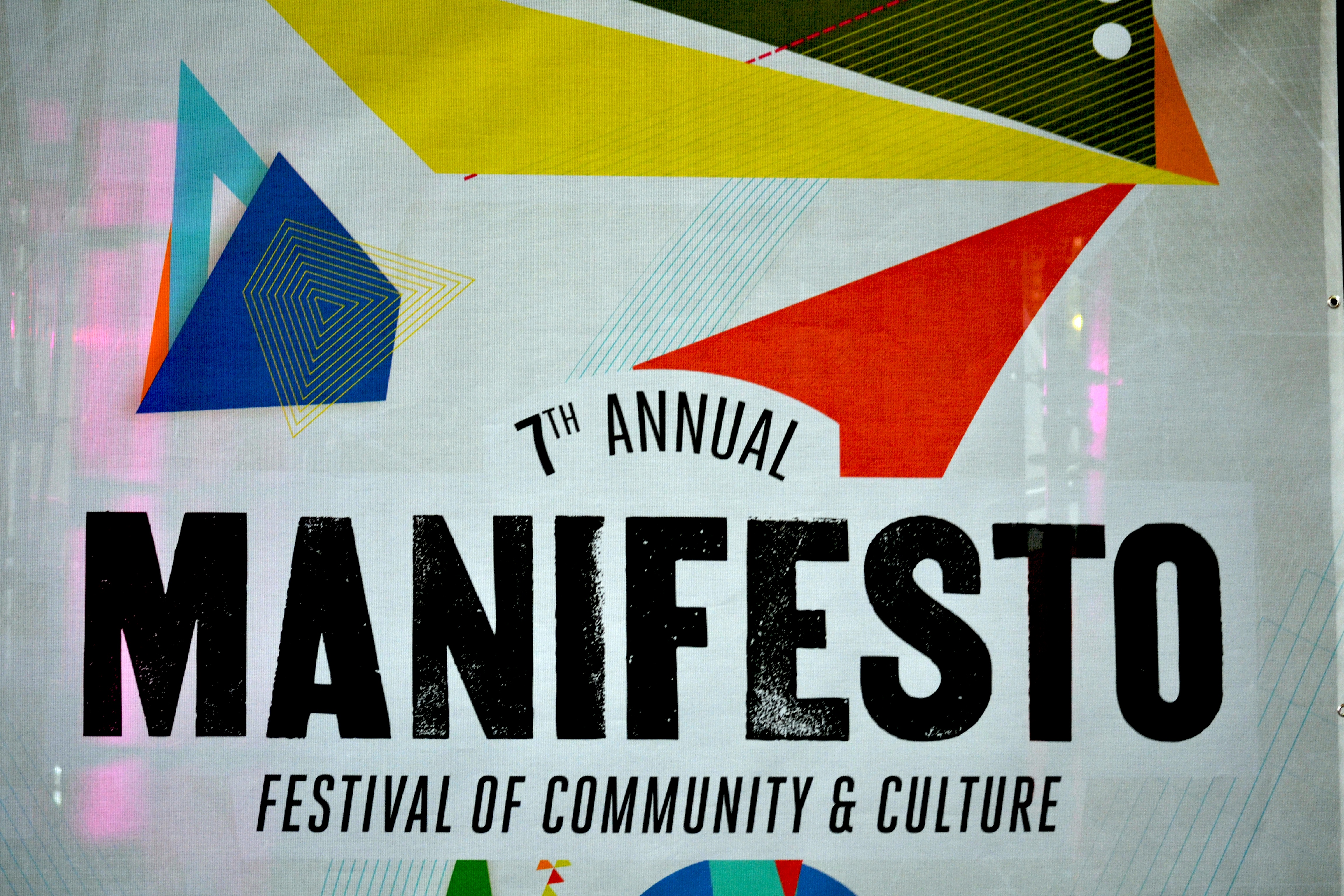
7th Annual Manifesto Festival
The annual Manifesto Festival of Community & Culture is one of the reasons I love living right beside the Yonge-Dundas Sq.
Manifesto is a non-for-profit grassroots organization with a focus on youth and hip-hop culture, with the aims to educate, unify, and provide amazing music to the masses. The local and the global combine for four days of live events featuring musicians, producers, visual artists, and dancers, to panels with industry experts and even mentor sessions, and this year’s festival had even more in store than previous iterations. Another great thing about Manifesto is that it brings hip-hop legends to Toronto – for free! In 2011, I saw Rakim rock the stage, and in 2012 Pharoahe Monch killed it live with hip-hop and local jazz upstarts, BadBadNotGood.
Rakim at Manifesto, 2011.Pharoahe Monch at Manifesto, 2012.
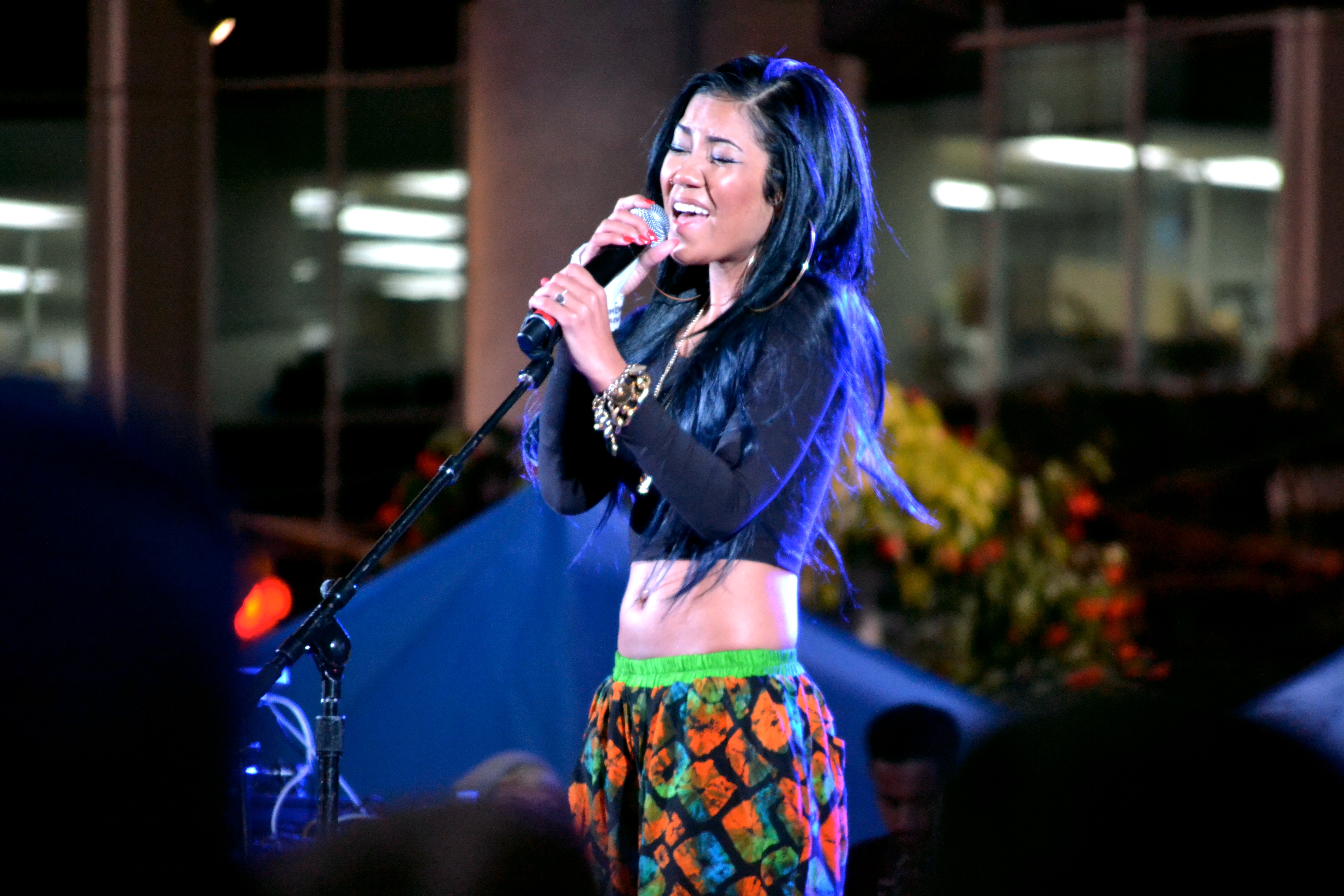
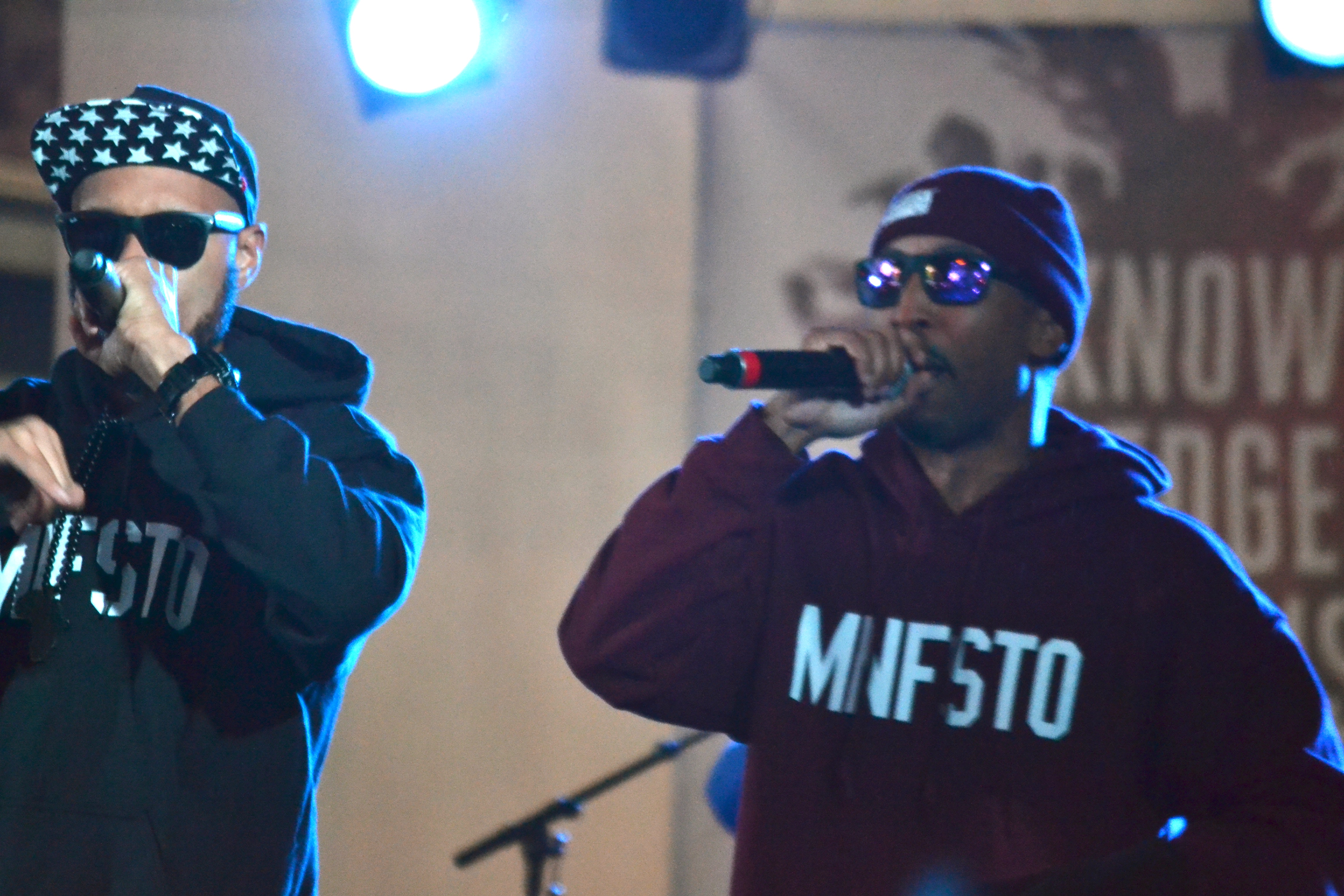
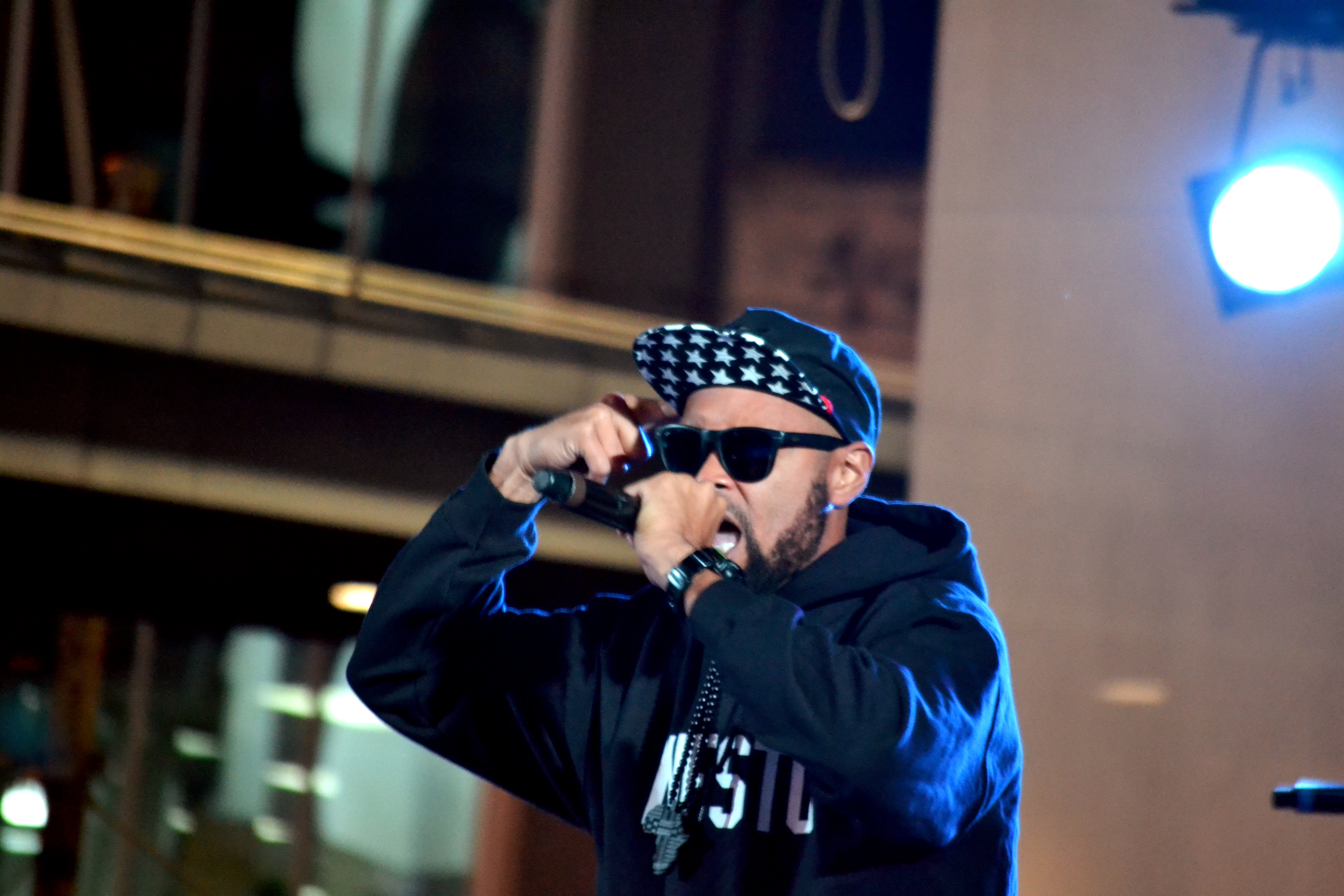
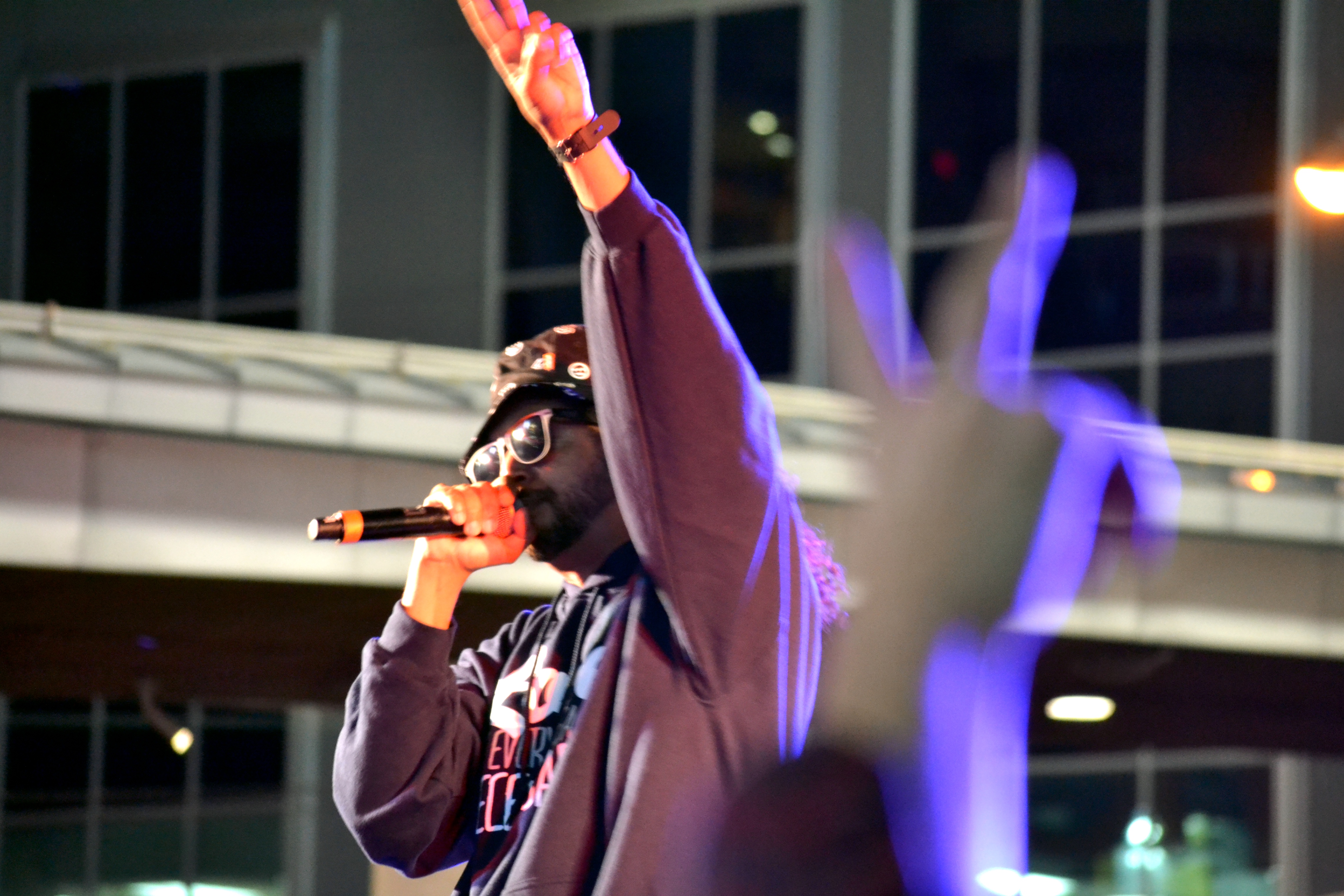
This year’s festival featured amazing headliners, including soon to be big Jhené Aiko, and the legendary Souls of Mischief crew, celebrating their 20-year Anniversary of their classic, 93 ‘til Infinity! Souls of Mischief is a hip-hop group from Oakland, California, part of the hip-hop collective Hieroglyphics and consists of emcees A-Plus, Opio, Phesto, and Tajai. I remember seeing them back in 2003, and I can say with assurance, they are still every bit as dope 10 years later.
For those unacquainted with 90s hip-hop, here’s the video for “93 ‘til Infinity.”
…and here’s a recent remix of 93 ‘til Infinity aptly titled 93 Still by Gummy Soul.
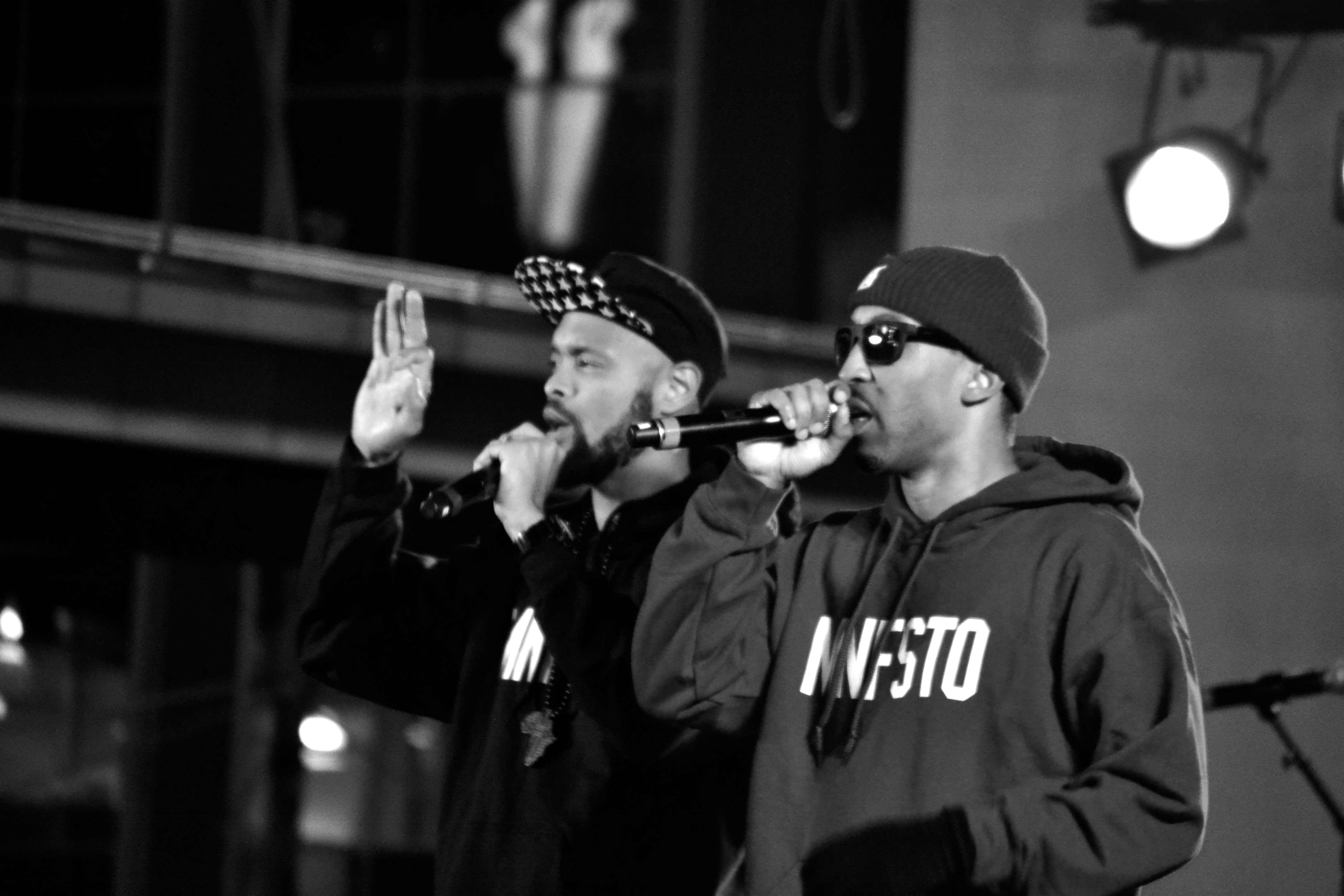
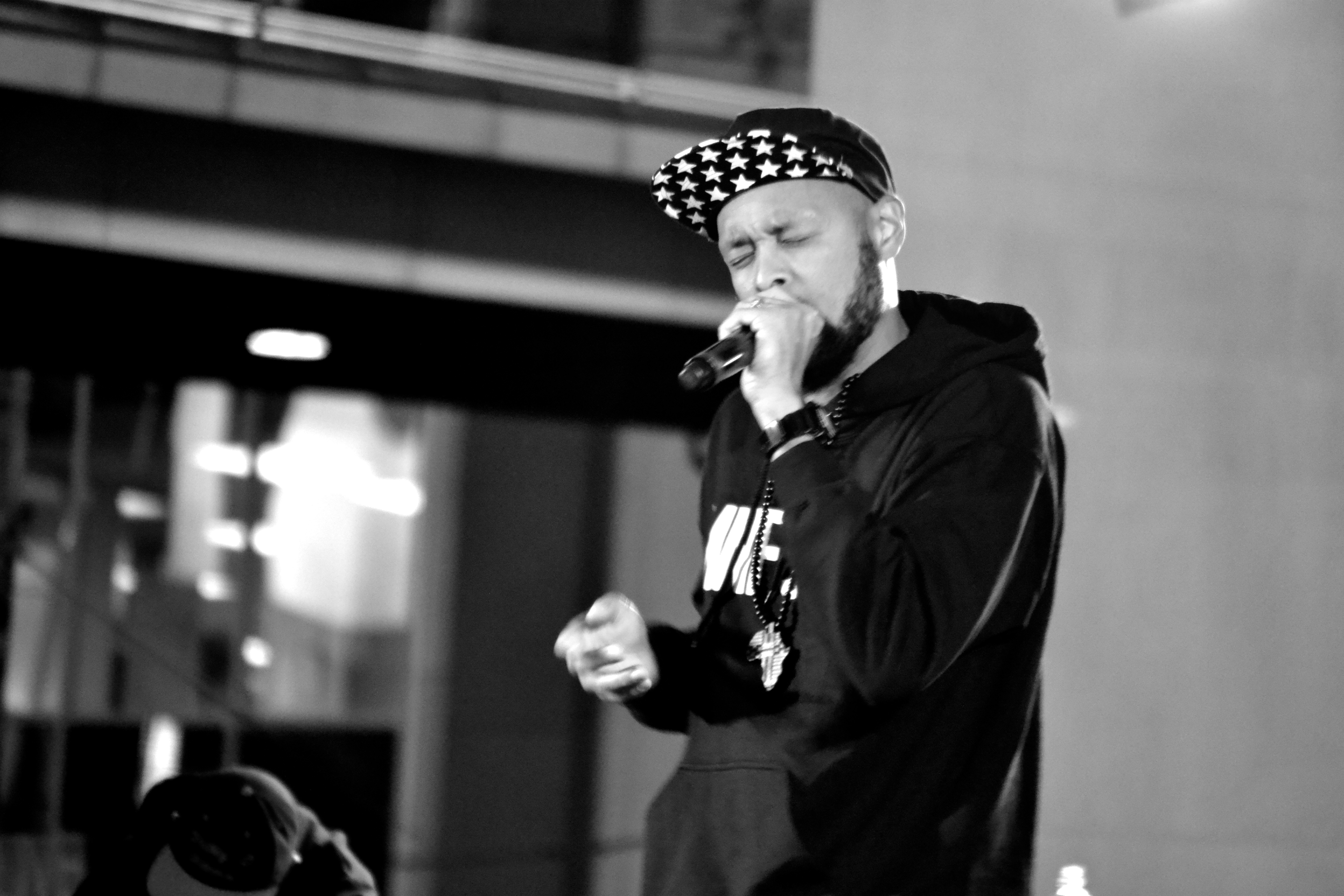
…and here are some pictures I snapped of this year’s headliners.
Shad rolled through as a surprise guest, playing “Rose Garden” and some new material.The talented (and sexy) Jhené Aiko .Souls of Mischief take the stage.
“This poet is a griot in search of a village.”
-Kwame Dawes, “Holy Dub,” Midland 18.
Dub poetry is a form of performance poetry with a West Indian aesthetic and origin. It evolved out of dub music comprised of spoken word pieces over reggae rhythms and Nyabinghi traditions[i] in Jamaica beginning in the 1970s. Rather than the Jamaican form of “toasting” (a significant stylistic influence on hip-hop), which also featured (often improvised) spoken word, sometimes as chant, to the music of the dancehall DJ, a dub poet’s performance is usually pre-written and prepared. Spoken or chanted with the background of reggae rhythms, or a capella or ital, and using Jamaican Creole/Patois, dub poetry effectively blends African and Caribbean oral and griot traditions with more standard approaches to poetry and performance. Basically, dub performances were created by removing vocals from side A of a record with a dub machine to create a B side containing a rhythm/instrumental track, often amplifying the bass and drums. Traditionally dub poets are closely aligned with DJs—yes DJing is both traditional and tradition—as they reanimate and (re)sound the past in the present through a musico-poetic performance atop a tentative original.
Conventionally, “Jamaican Creole is the natural language of dub poetry” (Afua Cooper, Utterances 1) and while dub poets often privilege reggae music, nearly all forms of African American and Afro-diasporic musics, and others, can be used in the performance of a dub poem as the mode continues to evade a single homogenizing definition or approach. Nevertheless, dub “began as, and remains, rebel poetry” (2). This is not to say that dub poetry eludes the possibility of definition. d’bi.young.antifrika—one of Canada’s most renowned dub poets and dub monodramatists—thinks through dub vis-à-vis her own mother’s manuscript on dub, which identifies the four major elements of the then emerging form: music, language, politics, and performance (“r/evolution” 27). Dub as such bridges the personal and the political, and as d’bi developed her own understanding of dub she added four more elements for a total of eight principles to form the acronym s.o.r.p.l.u.s.i: “urgency, sacredness, integrity, and self-knowledge. I then renamed the earlier elements of music, politics, and performance to rhythm, political content and context, and orality” (27).
In the following video d’bi outlines how these eight principles can empower artists, particularly African artists across the diaspora.
For d’bi, the principles of dub poetry—consisting of self-knowledge, orality, rhythm, political content and context, language, urgency, sacredness, and integrity—combine to comprise “a comprehensive eco-system of accountability and responsibility between my audiences and me. each principle in the methodology challenges me to not only be self-invested but to (re)position to the centre of my micro and macro communities, being both accountable and responsible (able to account for and respond to these communities)” (“r/evolution” 27). As such, dub poetry has the power to connect disparate communities together through lines of solidarity. Two days from now, on August 8th, I will have the privilege of interviewing d’bi.young about her practice as a pioneer in the art of dub poetry and theatre. I hope to see you there for what promises to be an exciting and engaging evening of “Word! / Sound! / Powah!”
Here’s the poster for the event, d’bi’s personal page and youtube page, as well as the facebook event page.
Cooper, Afua (Ed.). Utterance and Incantations: Women, Poetry and Dub. Toronto: Sister Vision, 1999. Print.
[i] The Nyahbinghi Order is the oldest of all the Rastafari mansions and the term translates as “black victory” (niya = black, binghi = victory). The Niyabinghi resistance inspired a number of Jamaican Rastafarians, who incorporated niyabinghi chants into their celebrations (Wikipedia). The rhythms of these chants—full of improvised syncopation— greatly influenced popular ska, rocksteady and reggae music.





 PAUL db WATKINS
