Harmonious Dissonance: in Conversation with George Elliott Clarke

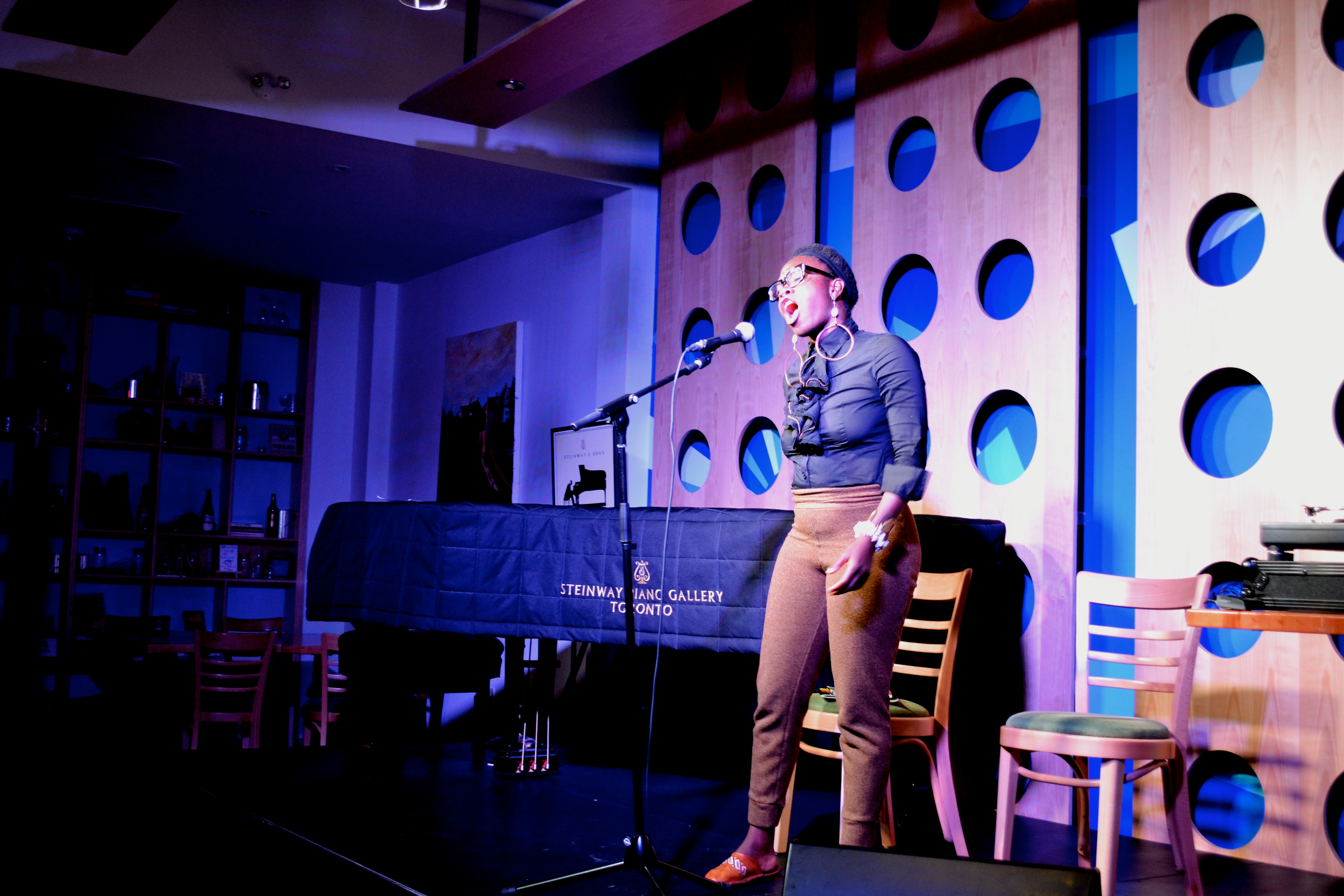
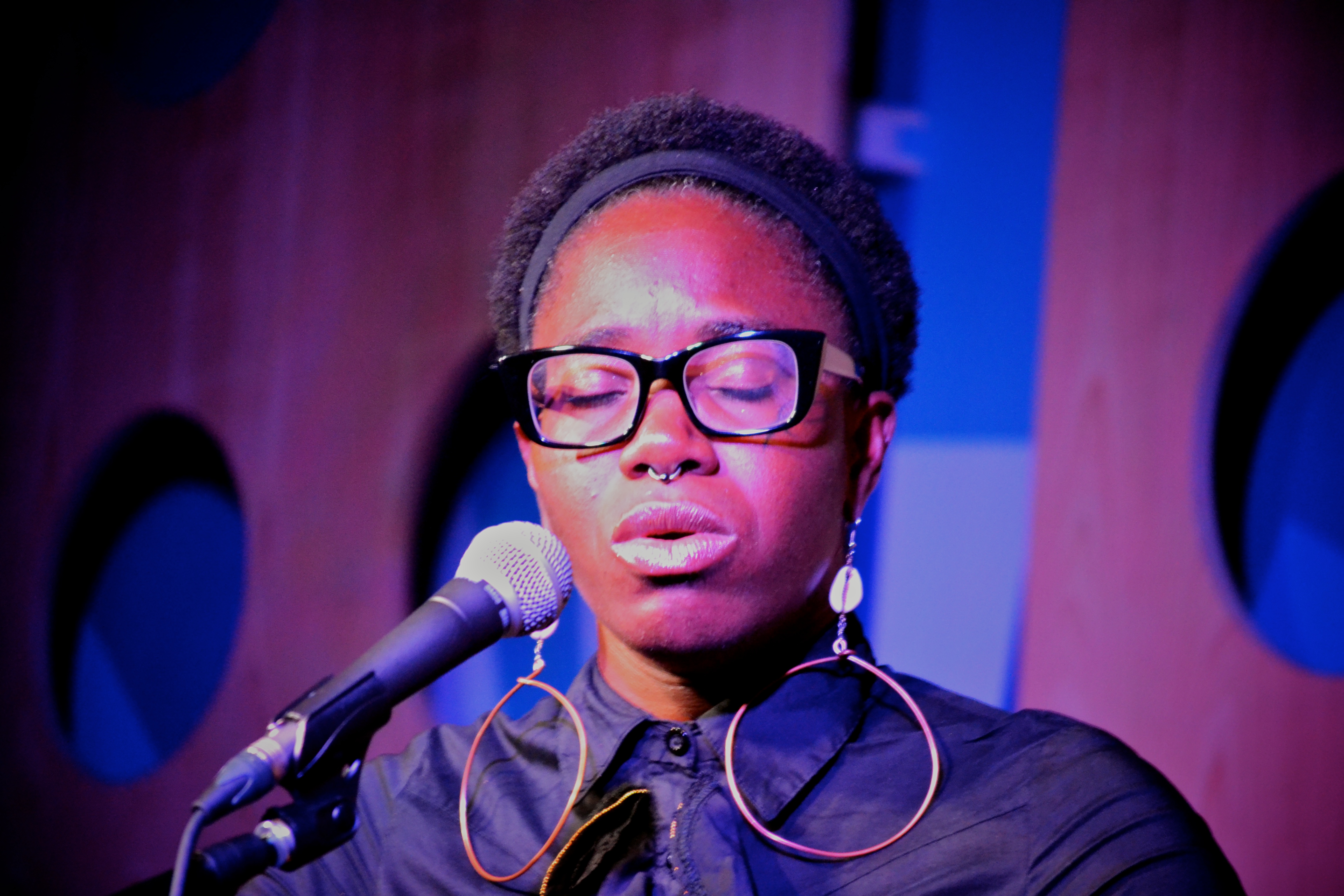
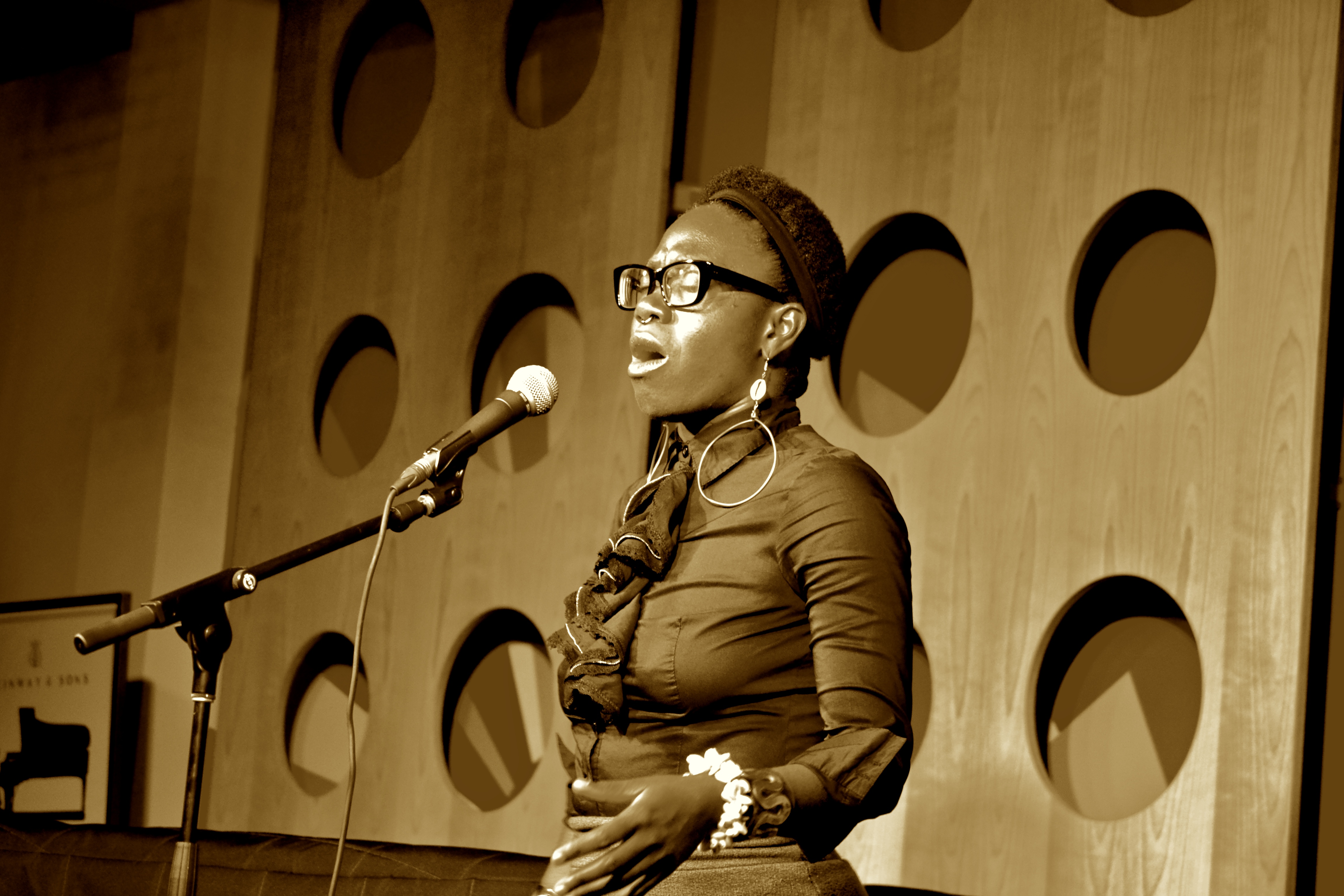
To provide Malahat readers with a context in which to read and more deeply appreciate George Elliott Clarke’s “Othello: By Donation Alphonse François, Marquis de Sade,” a bravura long poem appearing in the magazine’s Summer 2016 issue, I explore with the poet his ambitions and the intent he enacts in the writing of such a profoundly engaging and provocative work. Last year I also recorded George reading a few poems when he visited Vancouver Island University last year, and The Malahat Review has published one of these recordings, “The Testament of Ulysses X.” You may read the full text of this poem or listen to George’s performance of it, recorded while he was the 2015 Ralph Gustafson Distinguished Poet at Vancouver Island University in Nanaimo.

George Elliott Clarke is currently  Canadian Parliamentary Poet Laureate. Towards the end of the interview I asked him, why does the world need poetry? To which he responded:

Hal David and Burt Bacharach: “What the World Needs Now is Love, Sweet Love”? That song comes to mind in thinking about why the world should need poetry. But I will also reiterate my sentiments in the Shad/Q interview: poetry exists in the rhythm of pulse and breath; it is “mind-forged” (Blake) language given vocal (originally) expression in tune with the pace of breath and the beat of the heart. The cadences are related to the sounds conjured by the arrangements of tongue, teeth, lips, and lungs. Poetry is organic technology, a physical art—as much as is dance, save that its calisthenics are performed by abstract characters or organically by the movement of the mouth.  In any event, it is the cheapest art and thus the most portable, for it can be memorized and taught to others. It is the first civilizing art, for it is the basis of scripture, whether inscribed or chanted. It conjoins imagination and emotion; so, for so long as human beings dream, recall, and/or have feelings, they/we will always invent poems.

Read the full interview, here.

In addition,

The Presence of the Past

Winfried Siemerling’s The Black Atlantic Reconsidered and Austin Clarke’s In Your Crib prioritize transatlantic Black perspectives from within national paradigms to explore Black Canadian identity, belonging, and the presence of the past. The two works are quite different: Clarke’s text is an introspective long poem that channels the radical spirits and rhythms of the civil rights movement, and Siemerling’s text is a considerable historical undertaking that reconsiders Canada’s place in the Black Atlantic. However, both texts deepen our understanding of Black writing and radical thinking within a Canadian space that belongs to a larger historic transatlantic nexus.

Click here to read my full review at Canadian Literature.

PRESS RELEASE: Celebrated ‘Africadian’ Poet George Elliott Clarke Reads at VIU Oct. 22

Toronto Poet Laureate, playwright, and literary critic George Elliott Clarke, VIU’s 2015 Gustafson Distinguished Poet, will deliver a free public lecture, On Entering the Echo Chamber of Epic: My “Canticles” Vs Pound’s Cantos, Thursday Oct. 22nd at 7pm in building 355 on the Nanaimo campus.  Clarke introduces his epic poem, “Canticles,” in response to Ezra Pound’s contentious Cantos, a 20th-century post/modern epic both vilified for its integration of fascist propaganda and heralded for its haunting lyricism. Pound, a classicist, nodded to T. S. Eliot’s “The Waste Land” and Stephen Vincent Benet’s “John Brown’s Body,” both of which skirted racist material yet refused to be contained, or restrained, by formalism.

Clarke will recite excerpts from his work-in-progress “Canticles,” which echoes slave and imperialist debates from Cleopatra to Celan. Clarke will also invoke contemporary poets Derek Walcott and NourbeSe Philip who invite harmonious, multiple, and multicultural voices in their revisions of Pound’s controversial masterpiece. Clarke champions writers of African descent and coined the term, “Africadian” to identify the Black culture of Atlantic Canada, a term he says is both “literal and liberal—I canonize songs and sonnets, histories and homilies.”

Clarke traces his own inspiration to “poet-politicos: jazz trumpeter Miles Davis, troubadour-bard Bob Dylan, libertine lyricist Irving Layton, guerrilla leader and poet Mao Zedong, reactionary modernist Ezra Pound, Black Power orator Malcolm X, and the Right Honourable Pierre Elliott Trudeau.” Clarke finds their “blunt talk, suave styles, acerbic independence, raunchy macho, feisty lyricism, singing heroic and a scarf-and-beret chivalry quite, well, liberating.”

Clarke’s colleague and VIU English professor Paul Watkins says, “For George, poetry is not only a printed form, but also an oral art. His boisterous readings present the listener with a gumbo-concoction of jazz rhythms, blues-infused gospel vernacular, and plenty of play upon the standards of the larger literary tradition. This is poetry presented with the ‘lightning of prophecy’.”

Clarke has published: a 13 works of poetry including Whylah Falls (2002 Canada Reads contender), Execution Poems, winner of the Governor General’s Award for Poetry, and his latest Traverse; 4 plays, screenplays, or libretti One Heart Broken Into SongBeatrice ChancyQuébécité, Trudeau; the novel George and Rue; and 4 anthologies of African-Canadian writing including Directions Home: Approaches to African-Canadian Literature. He has been the E.J. Pratt Professor of Canadian Literature at the University of Toronto for the last 12 years and holds 8 honorary doctorates from Royal Military College and Dalhousie, New Brunswick, Alberta, Waterloo, Windsor, Acadia, Saint Mary’s universities. He received the Martin Luther King Jr. Achievement Award, the Pierre Elliott Trudeau Fellows Prize, and Order of Nova Scotia and the Order of Canada.

After Clarke’s lecture, a catered reception, cash bar, and book signing will follow in Bldg 300’s Royal Arbutus Room. Several of Clarke’s books will be sold at the VIU Bookstore. Courtesy parking is available in Lot N, in front of building 355. Clarke will also perform with musician James Darling at the Corner Lounge Wednesday October 21st 7:30-8:30. These events are sponsored by VIU’s Faculty of Arts & Humanities, Writers on Campus, and the Canada Council for the Arts.

The Gustafson Distinguished Poetry Lecture was established in 1998 from the estate of the late, pre-eminent Canadian poet Ralph Gustafson and his wife, Betty. The Chair has been held by celebrated poets Don Domanski, Dionne Brand, Tom Wayman, Daphne Marlatt, Robert Bringhurst, Don MacKay, Jan Zwicky, Dennis Lee, Michael Crummey, and Katherena Vermette among others, most of whom have had their lectures published as chapbooks. An interview will also appear in Portal2016, VIU’s full-colour literary magazine, on stands in April.

For more info contact Chair of the Gustafson Committee Toni Smith at Toni.Smith@viu.ca or to buy a chapbook contact the series’ publisher Joy Gugeler at joy.gugeler@viu.ca. For more information about the lecturers visit http://www.mediastudies.viu.ca/gustafson/

See more at: http://www.mediastudies.viu.ca/gustafson/#sthash.Y6hAy6n0.dpuf

RED REVISED Gustafson Poet Poster PRINT[3]

clarke Poster-final copy

Book Review: Dennison Smith’s Fermata and Catherine Owen’s Trobairitz

A Sound Withheld

Dennison Smith’s Fermata and Catherine Owen’s Trobairitz are two poetic texts significant not only for the sounds they make, but for what they withhold. For all the cacophony and multivoicedness sustained in each text, there are plenty of moments that give the reader pause. Fermata (a lyrical text of Zen-like suspension) and Trobairitz (a text that weds twelfth-century troubadours and their female counterparts, the trobairitz, with twenty-first century metalheads) are worlds apart; yet, both texts resonate with silences, shift between suffering, love, and desire, and combine and reclaim traditional materials with the alchemical power of the fearless poetess who conducts language at the centre of each narrative.

To read the full review at Canadian Literature, click here.

REST IN POWER, MAYA ANGELOU

The renowned African American poet, writer, and activist Maya Angelou has left the planet. She was 86. She is most known for her bestselling autobiographical work, I Know Why the Caged Bird Sings, which gets its title from Paul Laurence Dunbar’s line “I know why the caged bird sings” from his poem, “Sympathy.” Dunbar’s “Sympathy” was a cry against slavery of all forms, as well as about the shackles that imprison the poet amid cyclical prejudges he feels incapable of destroying. Angelou’s own work was about dispelling prejudices to envision a more just society.

She writes, “Prejudice is a burden that confuses the past, threatens the future and renders the present inaccessible.” In I Know Why the Caged Bird Sings, she describes how her mother told her that she must “always be intolerant of ignorance but understanding of illiteracy. That some people, unable to go to school, were more educated and more intelligent than college professors.” These lines are an important reminder, especially for us hyper educated types, that we don’t have all the answers. The notion of absolute authority can be extremely dangerous—for who gets to decide what is true is a mater of power.

Education takes many forms, as Angelou poignantly points out that her education was an improvisatory process that often took place outside the classroom: “my education and that of my Black associates were quite different from the education of our white schoolmates. In the classroom we all learned past participles, but in the streets and in our homes the Blacks learned to drop s’s from plurals and suffixes from past-tense verbs. We were alert of the gap separating the written word form the colloquial […] It be’s like that sometimes.” She was truly an inspirational person, who endured and overcame much, and although she is now gone, she leaves  a lasting literary and civil rights legacy.

For a brief video on Angelou’s life, click here.

Featured Image: Amiri Baraka and Maya Angelou dance on the 89th birthday of the poet Langston Hughes at the The Schomburg Center for Research in Black Culture, where Hughes’ ashes were buried beneath the floor, in New York, Feb. 22, 1991. 

We Can Never Tell the Entire Story of Slavery: In Conversation with M. NourbeSe Philip

The Toronto Review of Books has just published my interview with the renowned poet, M. NourbeSe Philip. In the interview we focus on her work Zong!, and touch on music, improvisation, slavery (including the film 12 Years a Slave), the haunting of modernity, and more!

Read the full interview, here.

Photo by Paul Watkins of M. NourbeSe Philip leading a book-length reading of Zong! on November 29th, 2013.

we’re new h/ear (poem, draft)

I wrote this poem after listening to my baby’s heartbeat on the Doppler fetal monitor. Below the poem is audio of the heartbeat mixed vis-à-vis  my music production, voice, and lyrics.

we’re new h/ear

i heard your heartbeat today, baby.
a fast 180bpm slowed to a steady 160
as you listened to us listening to you
nestled in your echo chamber.

i play buddy holly’s “everyday”
headphones wrapped round mommy’s round belly,
you kick a little more, {your little foot}
everyday it’s a-gettin’ closer.

i wonder what you look like?
can you feel my warm, loving, yet anxious hand
against the walls of your mini-universe,
come what may.

on the news: another war, another shooting, more corruption,
pollution. I question bringing you here.
but then I hear your mommy singing, gently touching her belly
& feel the world—at least ours—is perfect.

besides: we’re all new here.

Photo copyright, Paul Watkins. 

Lemon Hound: A Poetics of “Meditaysyun”

lemon-hound

LEMON HOUND has evolved from the single-author blog of Sina Queyras, to a multi-authored blog, with the aim to be a dynamic bi-monthly Literary Journal. I’ve published a review with Lemon Hound before, and I’m proud to share my latest review in Volume 6 of the journal.

My review, “A Poetics of “Meditaysyun” covers new texts by Cecilia Vicuña and bill bissett. Vicuña’s Spit Temple and bissett’s hungree throat are two new poetic works significant not for what they edit out, but for what they edit in. Vicuña and bissett employ an “editing in” that allows for constellations of dialogue within and outside the texts. Edited in are improvised performances, incantatory phrases, chanting, signing, stories, meditations, webs and threads, languages and sounds, mediations, polyphonies, rhythms, silences, and listenings. To read more, click here.

~

I also contribute reviews on an ongoing basis to Toronto Review of Books’s blog, Chirograph. My latest review (“Forgive Us Our Trespasses”) is of Quebeçois auteur Denis Villeneuve’s film Prisoners, which I viewed at TIFF. I have another TIFF review coming soon on Ben Wheatley’s A Field in England. 

Happy weekend reading (whatever that may be), watching (whatever you may watch, I’ll be watching Breaking Bad‘s tense conclusion on Sunday), and venturing (wherever you may go).

“living roots awaken in my head”: R.I.P Seamus Heaney

heaney

I was sad to learn that Seamus Heaney, Irish poet & Nobel Laureate, died this morning. I first encountered the work of Heaney some six years ago in an undergrad English class entitled, “British Poetry, Lately.” The class examined recent developments in contemporary British and Irish Poetry. In the class we engaged with poets such as Eavan Boland, Kathleen Jamie, Ted Hughes, Carol Ann Duffy, Tom Raworth, and, of course, Heaney—all masters of tone, language, subject matter, working with/against the long British devotion to rhyme and meter.

Poetry in the twentieth century has largely been about defamiliarization (ostranenie (остранение)), the artistic technique of persuading the audience to see familiar things in an unfamiliar or strange way, often using metaphor to help depict the mechanics of the world we inhabit. Heaney was a master of using incredibly rich and dense metaphors. He was also a master of listening. Ever the attentive poet, Seamus Heaney made use of melopoeia (charging words beyond their normal meaning, like the cadences of music) as a part of his fluidity to create his dense rhythms. In Glanmore Sonnets he stands and listens to the mysterious corporeal sensualities that surround him to cultivate words: “Words entering almost the sense of touch / Ferreting themselves out of the dark hutch — / ‘These things are not secrets but mysteries’” (II).

Yet, it was in “Digging,” a poem full of onomatopoeia and poetic excavation, and the first poem from his very first collection, The Death of a Naturalist (1966), where Heaney first displayed his poetic method:

The cold smell of potato mold, the squelch and slap
Of soggy peat, the curt cuts of an edge
Through living roots awaken in my head.
But I’ve no spade to follow men like them.

Between my finger and my thumb
The squat pen rests.
I’ll dig with it.

It’s been a number of years since I’ve read Heaney, and it’s unfortunate that it took his death for me to reread a couple of his well known poems, which I still remember so well from that undergrad class. He was a poet of the highest order and will be missed. His poetic cultivations and living roots charge on.

Check out Heaney reading his poem “Digging”:


Works Cited

Heaney, Seamus. New Selected Poems. London: Faber, 1987.