WATERMELON SEEDS FESTIVAL OF LITERATURE

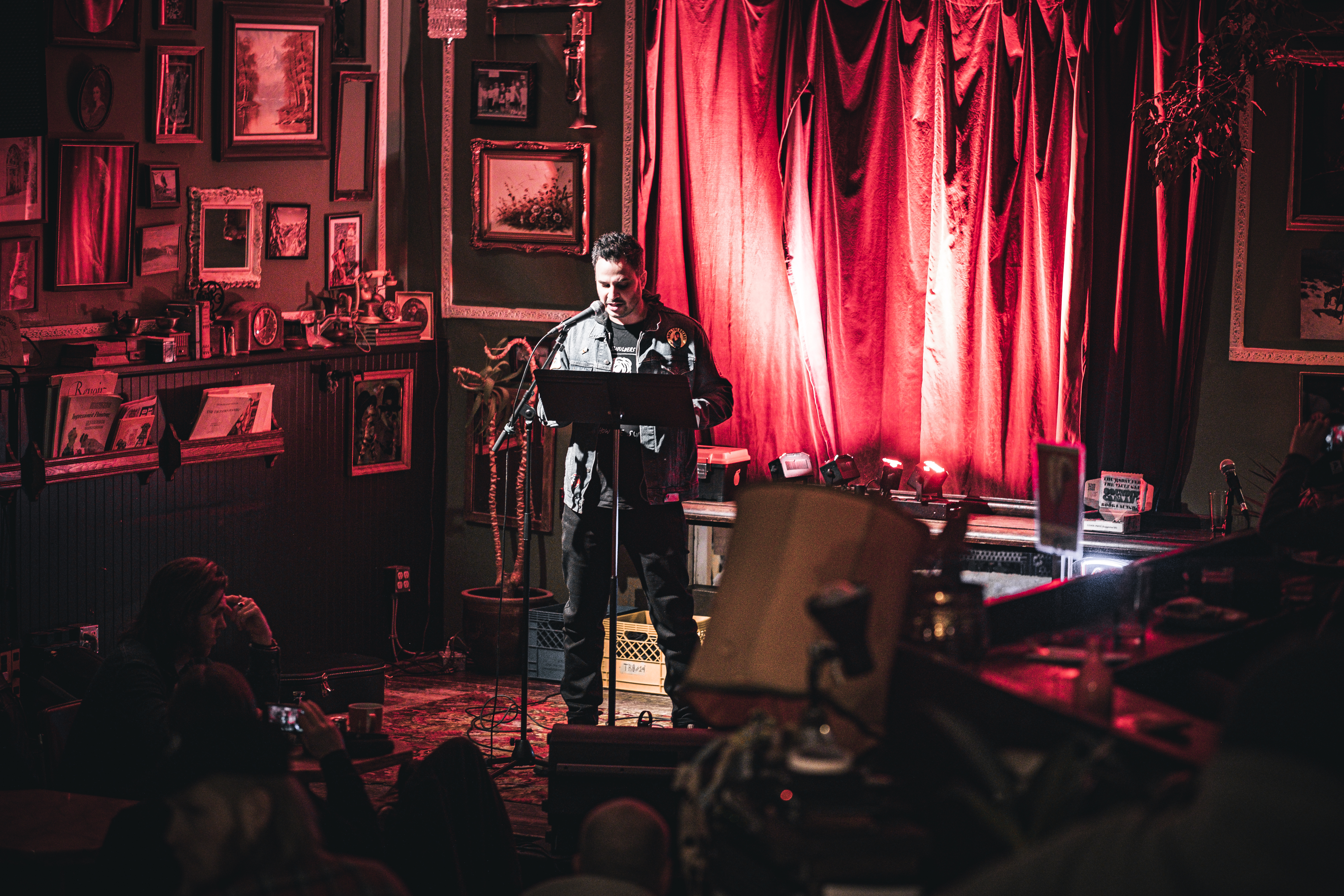
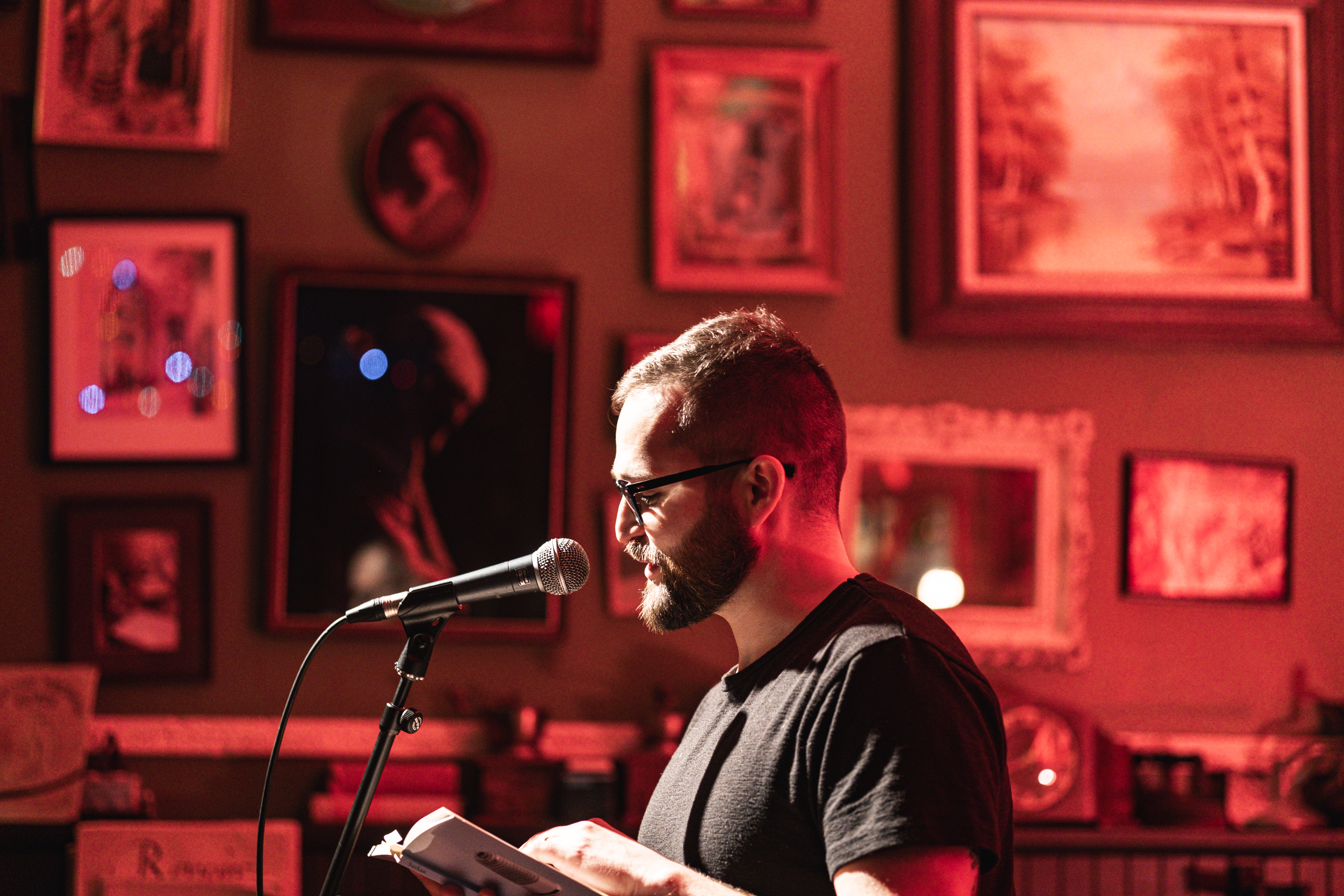
I will be reading at the Second annual Watermelon Seeds Festival of Literature.

Internationally acclaimed and award-winning novelists, poets, playwrights, and journalists read in solidarity with the Palestinian people in a time of genocide. The Festival features Lucy Alford (Forms of Poetic Attention), Duha Alshaqaqi (We Are Not Numbers), Danielle Janess (The Milk of Amnesia), El Jones (Abolitionist Intimacies), Sonnet L’Abbé (Sonnet’s Shakespeare), Leila Marshy (My Thievery of the People), Nyla Matuk (Stranger), Philip Kevin Paul (Little Hunger), Ziyad Saadi (Three Parties), Neil Surkan (Unbecoming), Craig Taylor (New Yorkers), Saeed Teebi (Her First Palestinian), Paul db Watkins (Soundin’ Canaan). A hybrid event with readings on site and by video.

More details, here.

From the Stage to the Site: Wayde Compton Interview and Soundin’ Canaan Updates

The website for my book is nearly complete — the final piece, a “create your own remix” section, is on its way.

Recently, I added audio and photos from the Victoria Book Launch on March 13. A huge shoutout to Susan Sanford Blades for organizing the event as part of the Wild Prose reading series (https://www.susansanfordblades.com/wild-prose-reading-series). 

After a remixed reading of my book, I sat down for an on-stage interview with Wayde Compton. This was an incredible full circle moment, and audio (as well as a transcript) are now available as well.

I’ve also added a new remix to the Remix section: “Kind of Blue in Green (for GEC),” which reimagines Miles Davis’s “Blue in Green” and offers a poetic riff/reading of George Elliott Clarke’s “Bluing Green.”

Head over to www.soundincanaan.com to explore this new material and more from the book. If you don’t have a copy yet, you can grab one here — and save 20% all April with the code POETRY2025.

Scenes from My Nanaimo Book Launch

Thanks to everyone who came out to my book launch on Feb. 6 at The Vault! We packed the house, and I sold my entire box of books. It was a night to celebrate my book, Soundin’ Canaan, but it was also a night of poetry and music—a night of community. It was a night of sonic solidarity in honour of Black History Month. I’m very grateful to both Neil Surkan and Sonnet L’Abbé for sharing the power of their words. The night left me feeling a little more hopeful about the state of things.

On March 7, from 10–11:30 a.m., I’ll be giving the final colloquium talk at VIU in the Malaspina Theatre. The talk will combine sound (including a live DJ mix), images, material from a new website to support the book, and text.

A second book launch will take place in Victoria on March 13 at Paul Phillips Hall (1928 Fernwood Road). This event will feature poet Wayde Compton (Performance Bond, The Outer Harbour, Toward an Anti-Racist Poetics). Doors open at 6:30 p.m.

Soundin’ Canaan Book Launches!

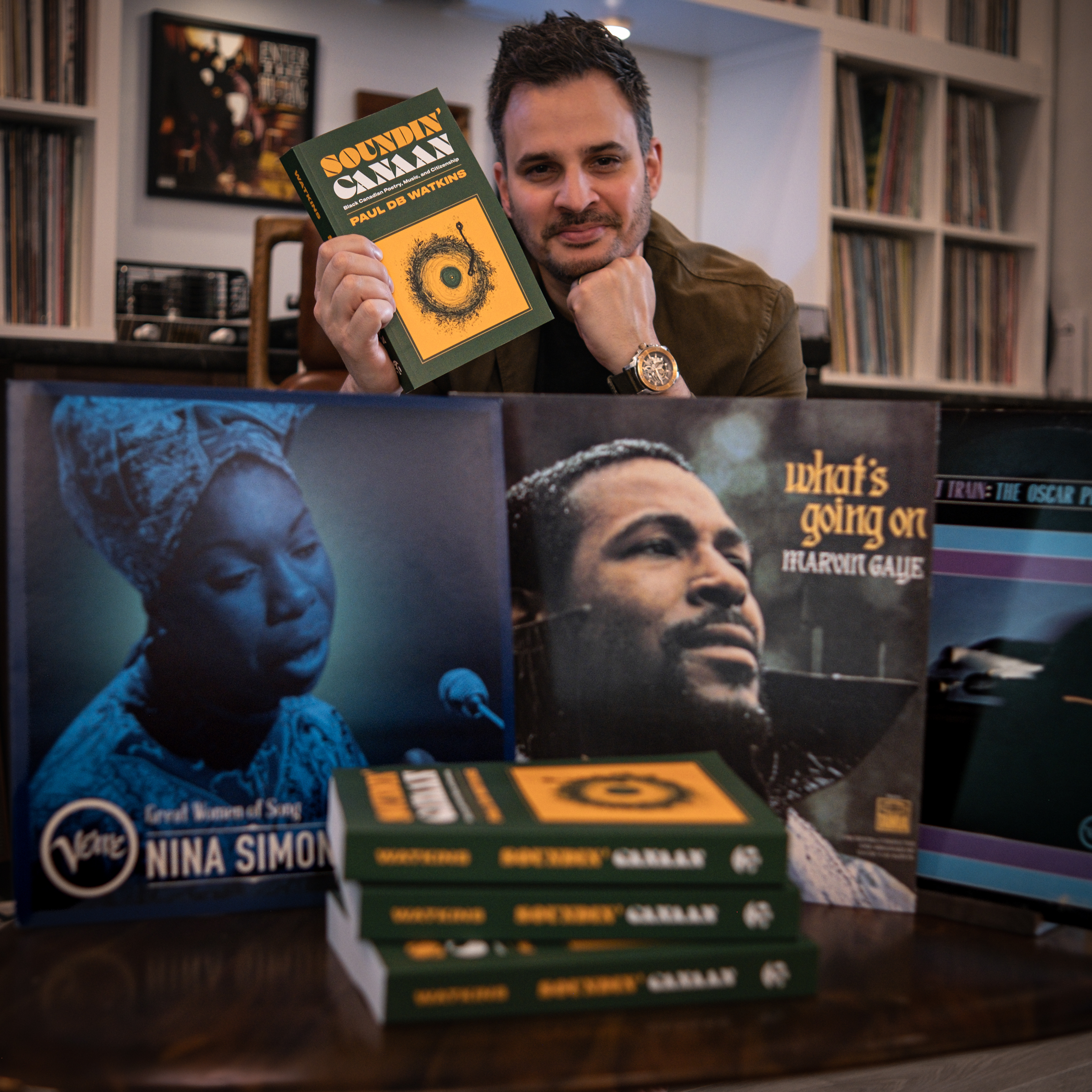
𝕊𝕠𝕦𝕟𝕕𝕚𝕟’ ℂ𝕒𝕟𝕒𝕒𝕟: 𝔹𝕝𝕒𝕔𝕜 ℂ𝕒𝕟𝕒𝕕𝕚𝕒𝕟 ℙ𝕠𝕖𝕥𝕣𝕪, 𝕄𝕦𝕤𝕚𝕔, 𝕒𝕟𝕕 ℂ𝕚𝕥𝕚𝕫𝕖𝕟𝕤𝕙𝕚𝕡 is officially out! Seeing it in physical form is truly special. Music weaves through the book, and just in the Prelude, I reference Marvin Gaye’s “What’s Going On,” Nina Simone’s “Mississippi G**dam,” and Oscar Peterson’s “Hymn to Freedom.” Get your copy today!

The first launch will take place on February 6th at The Vault Café (499 Wallace St) and will feature poet and musician Sonnet L’Abbé (Sonnet’s Shakespeare) and Nanaimo Poet Laureate Neil Surkan (Unbecoming). I’ll also be performing remixed versions of sections from the book. Doors open at 6:30 p.m., and the readings will run from 7:00 to 8:00 p.m. Come by and grab a signed copy!

A second launch will happen in Victoria on March 13th at Paul Phillips Hall (1928 Fernwood Road). This event will feature poet Wayde Compton (Performance Bond, The Outer Harbour, Toward an Anti-Racist Poetics). Doors open at 6:30 p.m., with an open mic at 7:00 p.m. Featured readings and an interview will start at 7:30 p.m.

Local folks: I hope to see you at one of the events! Also, for any local Nanaimo folk, you can grab a copy of the book from @windowseatbooks.

Warmly,
Paul

Preorder Soundin’ Canaan at 50% Off Today!

Hi friends,

I’m thrilled to announce that my debut academic book, published by Wilfrid Laurier University Press, will be released on January 21, 2025! The Press is currently celebrating its 50th Anniversary with a sale, so you can preorder the book at 50% off until December 15 using the code WLUP50. (Canada and US only).

Using a DJ Methodology, I blend close readings of poetry, music, cultural and literary history, along with interviews with the poets featured in the book. It also includes an accompanying soundtrack of playlists to enhance your reading experience, and a website is forthcoming.

You can learn more and preorder the book here: https://www.wlupress.wlu.ca/Books/S/Soundin-Canaan

All my best,
Paul db Watkins

Reviews

Soundin’ Canaan is an imaginative, innovative, original, and immensely generative study of the relations that connect Canadian Black poetry to music, multiculturalism, social membership, and citizenship.”
–George Lipsitz, University of California-Santa Barbara, author of The Danger Zone Is Everywhere (University of California Press, 2024)

“In Soundin’ Canaan: Black Canadian Poetry, Music, and Citizenship, Can-Lit-Crit scholar Paul db Watkins “brings da noise,” reading through Afro-Can poets to stress that our concern is to remix, adapt, sample, and echo African Diasporic literary and musical greats in confraternity or confrontation with the Bards of the Great White World—and of the Great White North.

Watkins is himself an adept DJ, scribing a bluesaic (not prosaic) and a Rap-sodic exploration of how a quintet of Black Can poets kick-start the toppling of Plato and his reactionaries, who dread that any shift in musical taste is equivalent to an insurrection of the masses. Well, so be it! Watkins is the polyphonous polymath, not just reading the words, but listening for and sounding the Rastafarian aesthetics that trouble Luciferian ethics. In short, Watkins reads Black Can poems as mosaics of transgressive conjunctions. He is himself the Sage of the Remix, and intersperses his prose with shout-outs to YouTube videos and Spotify tracks of pertinent artistes. His playlist? Shakespeare and Shad; Ma Rainey and Martin Luther King. You read this book; you’re now in the know. Why? Cos now ya’s in the groove….”
—George Elliott Clarke, author of Whiteout: How Canada Cancels Blackness (Véhicule Press) & J’Accuse…! (Poem Versus Silence) (Exile Editions)

A Review of Jordan Abel’s NISHGA 

With vulnerability and bravery, Jordan Abel mines his past in relation to Canada’s legacy of colonialism and residential schools to ask difficult questions about Indigeneity and Canada that don’t always have clear answers. Framing his project (the book grew out of his doctoral thesis) in relation to “research creation”—an innovative form of cultural analysis that troubles the book or thesis—Abel takes an innovative approach to addressing what it means to be dispossessed and disenfranchised as an Indigenous person. Abel is known for his concrete and conceptual poetry—The Place of Scraps won the Dorothy Livesay Poetry Prize and Injun won the Griffin Poetry Prize—and NISHGA applies his same creative skill to rework the memoir into something wholly unique, mixing and remixing art, legal documents, personal narrative, photography, transcriptions of talks, and concrete poetry. The book opens and closes with “An Open Letter to All My Relations.” These letters invite readers into a space of healing and prepare them for the painful subjects of “intergenerational trauma, Indigenous dispossession, and the afterlife of Residential schools.” While these are difficult subjects to write about, especially from Abel’s subjectivity as an intergenerational survivor of residential schools, as well as his dislocation from his Nishga’a community, he does so with a level of deftness and care that makes the book essential reading for everyone living on Turtle Island.

Read my full review at The Malahat Review.

“An Incontestable Beauty”: A Review of Esi Edugyan’s Washington Black

Washington Black—the third novel by Esi Edugyan and her second to win the Giller Prize—depicts the life of Washington (Wash) Black, who rises above the conditions of his time to shape a life based on his imagination, intelligence, and artistic talent. Wash seeks freedom and dignity in a society that would deny him the right to be fully human. The novel opens when Wash is eleven years old (it is narrated from his perspective as an eighteen-year-old) on Faith Plantation in Barbados in 1830. The contrast between a young and curious Washington and the injustice of his brutal surroundings is provided through the recollections of his older self: “What I felt at that moment, though I then lacked the language for it, was the raw, violent injustice of it all.” Edugyan does not shy away from the “unspeakable acts” of slavery and the way that slavery continues to affect Wash even when it is abolished throughout the British Empire in 1833. Edugyan’s writing—from her careful plotting to her complex characters—speaks a veritable truth about what it means to be truly free.

You can read my full review over at Canadian Literature, here.

New English Courses at VIU Explore Diverse Ethnic and Cultural Perspectives

Courses are open to the community through the University’s Love of Learning program

VIU’s English Department is pleased to present three new courses next semester that examine literature from a variety of non-traditional perspectives and mediums. From reconciliation, to post-colonial Caribbean lifestyles and cultures, to the quest for unforgettable journeys, these new courses incorporate a diverse range of perspectives and writing styles, and question people’s assumptions about literature and art.

In a rare and unique opportunity for students and community members, English 332: Topics in Indigenous Literatures will include class visits and public readings from some of the authors studied in class, including Eden Robinson, whose novel Monkey Beach won the BC Book Prize’s Ethel Wilson Fiction Prize. While many of the stories deal with the lasting effects of Canada’s colonial past, they are also about healing, reconciliation and hope. Dr. Paul Watkins will explore these stories through several mediums, including fiction, poetry, art, comics, film and music, and students will participate in a creative intervention project.

“The hope is to open up spaces that challenge the colonization that affects us all, whether we are aware of it or not,” says Watkins.

As students read, watch and listen, they will also Tweet with the hashtag #ENGL332. The readings are sponsored by VIU’s Faculty of Arts and Humanities, the First Nations Studies Program, the Office of Aboriginal Education and Engagement, and the Canada Council for the Arts.

If you’re itching for a little taste of the Caribbean then maybe English 333: Topics in Post-colonial Literature is your course. From Rihanna and Bob Marley, to the dub poetry of Jean ‘Binta’ Breeze and the magical realism of Junot Diaz, English 333 delves into anti-colonial, post-colonial, feminist and queer perspectives expressed through various mediums, including literature, art, music, film and literary theory.

“The Caribbean is on the move, and it moves me,” says Dr. Melissa Stephens. “I see it as a shape-shifting constellation of people and places, politics and art, feeling and intellect. This course will help you grasp the enduring impact of colonial violence, but also, and most importantly, the work of resistance and liberation.”

Finally, adventure seekers will want to check out English 222: Travels in World Literature, during which Dr. Jeannie Martin examines a range of provoking historical travel writing along with popular contemporary works that highlight journeys in search of the romantic, the pastoral and the picturesque.

“Books about travel and tourism are wildly popular these days, but often unwittingly extend the enterprise of imperialism,” says Martin. “This course raises questions about the ethics of presenting the truth of another place and another culture. In this age of globalization, we passport-carrying privileged, viewing the world through the limited lens of our own cultures and experiences, are not the only travellers. Raising questions about who travels, why we travel, and why we write about our travels encourages us to form more complex relationships with other peoples, places and cultures.”

These courses are open to the general public via VIU’s Love of Learning program, which allows community members to take an academic course without the stress of exams or assignments at a discounted rate of only $99 per 3-credit course plus ancillary fees. Pre-requisites will be waived for Love of Learning students.

To learn more, visit the VIU English Department news page.

-30-

MEDIA CONTACT:

Jenn McGarrigle, Communications Officer, Vancouver Island University

P: 250.740.6559 | C: 250.619.6860 | E: jenn.mcgarrigle@viu.ca | T: @VIUNews

Wednesday, November 9, 2016 – 1:45pm

Book Review: The Inconvenient Indian

Thomas King is one of Canada’s most prolific writers: a renowned novelist, broadcaster (The Dead Dog Café Comedy Hour), screenwriter, one-time NDP electoral candidate, and the first person of Aboriginal descent to be chosen to give the Massey Lectures (in 2003). In The Inconvenient Indian: A Curious Account of Native People in North America Thomas King shares his extended reflection on Native (King’s chosen term) identity through history, humour, and personal meditations. For King, stories define who we are and The Inconvenient Indiantakes this maxim and displays—through the weft and warp of history—why the stories we tell matter, especially since Canada’s story is often about the country’s strained relationship with First Nations people.

To read the full review over at The Bull Calf, click here.

On Lower Frequencies: Ralph Ellison’s Invisible Man

“Who knows but that on the lower frequencies, I speak for you?”
-Ralph Ellison, Invisible Man 581

Set primarily in 1948 tumultuous America, Ralph Ellison’s Invisible Man is an evocative novel that deals with black identity, technological manipulation (Afrofuturism), social disillusionment, racial oppression, and invisibility. More broadly, the novel concerns individuality, tracing the numerous ways we sound our identities within political or communal networks. In the novel, an unnamed black man embarks on a Dantean journey from the South—where local white men mock him in the infamous “Battle Royal” scene and offer him a scholarship to a black college—to the basement streets of Harlem where the narrator finds a new brand of racism and where everyone he encounters, whether white or black, has an idea of who he is and what purpose he can play in their destiny. Invisible Man, which appears as one of the 100 Best English Novels (Time), is, as Lev Grossman wrote, “far more than a race novel, or even a bildungsroman. It’s the quintessential American picaresque of the 20th century.”

Although published in 1952, Invisible Man remains as pertinent as ever, particularly against the recent backdrop of race riots and social unrest in Ferguson and all too frequent incidents of racial profiling, often with dire consequences as in the cases of Oscar Grant III and Trayvon Martin; within a Canadian framework, the novel’s theme of invisibility heartbreakingly relates to the general invisibility of First Nations people, specifically the disappearance and murder of Indigenous women. Beyond its continued relevance, Invisible Man remains controversial for its honest depiction of racist America, as well as its voyeuristic sexual content, particularly the story of incestuous rape told by the signifying blues singer, Jim Trueblood. In fact, last year the Randolph County School Board voted to remove Ellison’s novel from its library shelves. Aside from the graphic content, abstract language, and historical scope of the novel, Invisible Man is also a difficult novel to teach because of its sheer size—a robust 581 pages.

Yet it is for all these historical reasons and challenges that I recently taught Invisible Man and will continue to do so. In a course structured around Sonic Afro-Modernity and Social Change we used the theme of sonic Afro-modernity (a term that comes from theorist Alexander G. Weheliye) to examine how Ellison’s interplay between sound technologies (the phonograph) and Black music and speech produced new modes of thinking and becoming, particularly allowing for new ways to engage with identity, temporality, and community.

Ellison’s Invisible Man opens with the unnamed protagonist getting into the “grooves of history,” listening to Louis Armstrong’s “Black and Blue” on the phonograph—locating the music’s aura, as Wehelyie argues, “not in the original musical utterance but in the mode of mechanical reproduction itself, making him one of the foremost intellectual architects of sonic Afro-modernity” (47). Ellison’s unnamed narrator states: “Now I have one radio-phonograph; I plan to have five. There is a certain acoustical deadness in my hole, and when I have music I want to feel its vibration, not only with my ear but with my whole body. I’d like to hear five recordings of Louis Armstrong playing and singing ‘What Did I Do to Be so Black and Blue’—all at the same time” (7-8). Ellison’s choice to foreground Armstrong’s performance of “Black and Blue” (initially composed by Fats Waller) in the prologue to his circulatory text highlights how one articulates one’s historical somatic experience through the performance of identity.

The surreal hallucinatory episode of listening to the nodes of music via Armstrong’s own listening and discord of identity (with the aid of some reefer) becomes the act of improvised identity-performance for the narrator. The Invisible Man’s reimagining of the performance through a recorded performance—with a desire for simultaneous recordings—is the “authentic act” (in the non-authentic sense: that is, the performative nature of identity resists closure), where the grooves take the narrator inside and outside of history. Ellison—like a DJ mixing records to navigate a murky topology—creates a “mix” and becomes an innovator of “sonic Afro-modernity.” I use this example to show how there can be a politics at work in the DJ’s mixing (that “the mix” can articulate the layered nature of history, identity performance, and racial politics), and to emphasize that the DJ mix—certainly for Ellison—is an act of citizenship.

Through music I was able to index many of Ellison’s signifying strategies and show my students how identity—much like community and society itself—is a process that is always changing. As Ellison writes in his work Shadow and Act, “because jazz finds its very life in an endless improvisation upon traditional materials, the jazzman must lose his identity even as he finds it” (234), suggesting that Black identity, or any identity formed within improvising principles, is continually in process. Hence, jazz and, more ubiquitously, improvisation are about finding alternatives to dominant modes of being, which is why Ellison’s nightmare of living as a black man in America is also filled with possibility and hope.

There are moments when we realize (along with the narrator) that freedom can be as simple as walking down the street in our own skin proudly displaying our cultural heritage. For the narrator that comes in one moment (there are others) where he eats a cooked, syrupy yam on the streets of Harlem: “I walked along, munching the yam, just as suddenly overcome with a sense of freedom—simply because I was eating while walking on the street” (Invisible 263-64). No longer compelled to hide his Southern Black identity, the narrator ponders the connection between food and identity, feeling a profound sense of self-determination and autonomy—a sense that comes with progressing forward while simultaneously embracing, confronting, and remixing the past.

In this way, Ellison’s novel is prophetic (and Afrofuturistic): it speaks of change and resistance while acknowledging the cyclical nature and echo effect of oppression. History, as a metaphorical record, is distressed, scratched, and in need of a DJ (and an audience) to make it sound. Ellison, as a sonic architect, is an early progenitor of Afrofuturism: a movement that lets us know where we’ve been (from griot traditions and Egyptian pyramids and astronomy) to tell us we are going (mixing culture, technology, liberation, and imagination). As Afrofuturist Ytasha Womack writes of the movement, “It’s a way of bridging the future and the past and essentially helping to reimagine the experience of people of colour” (Guardian). Combating visions of tomorrow that view blackness as the failure of progress and technological cataclysm, Ellison shows that through the manipulation of technology, Black culture actually helped create modernity and notions of subjectivity, temporality, and community. History as remix, as a cyclical boomerang, allows Ellison to dig into the crates of the past to explore and expose the effects racism has on both victims and perpetrators.

Invisible Man deals with an entire “unrecorded history” (471) that is open for (re)interpretation and (re)examination, particularly by and for those groups of people who were once relegated to historical footnotes. We are thus challenged, as Robin D. G. Kelley argues in Race Rebels, to “not only redefine what is ‘political’ but question a lot of common ideas about what are ‘authentic’ movements and strategies of resistance” (4). Politics, as a “history from below” (5), also functions by what Kelley defines as “infrapolitics” (8), a term he uses to describe the circumspect struggle waged daily by subordinate groups who function beyond the visible spectrum. It is from “the lower frequencies” (581)—those subtonic bass notes—that the unnamed narrator (as a representative of the oppressed) continues to speak to a contemporary North America still recovering and living with the legacy and malaise of slavery, reformulated in some respects, under the guise of capitalism. Under this lens, we cannot trivialize contemporary acts of resistance by political youth movements like Occupy, Idle No More, or the Egyptian Revolution (2011, Tahrir Square), which effectively connected various people and global media outlets together to enact change—however grand or relative in scale and action. The recent First Nations Idle No More movement was the result of legislation (most directly Bill C-45) introduced by the Harper government, which violated treaty and land rights. Again and again: the record of history continues to spin.

Ellison’s Invisible Man remains a multifarious DJ mix of apposition and amalgamation. We encounter characters that personify actual historical figures like Booker T. Washington, Emerson, and Marcus Garvey and cultural references and influences that include Dante, Dostoevsky, T.S. Eliot, Melville, and Louis Armstrong. It is in this mixing, between Western classical and Negro Folk traditions (Shadow 190) that Ellison creates a polyphonic dialogue, displaying that Black music, literature, and culture are never fixed or stable, but rather layered and complex: the novel, like Brother Tarp’s chain, “signifies a heap” (388). Invisible Man matters because race and culture still matter. On a more global level, especially in the age of information and censorship, art still matters.

Reading (and making space to teach Invisible Man) remains an act of allowing one’s own identity position to be moved by the lower bass registers of sound. We are called to listen to those deemed to be on the lower registers of society. Ultimately, identity and, by extension, community involve the precarious act of yielding to others’ voices, which is at the crux of genuine multiculturalism and, often, interesting literature. I have an original first edition of the novel (3rd printing) and I can only imagine how people felt reading the novel for the first time in 1952. As I leaf through its taupe and textured pages, I realize that in spite of much change in terms of citizenship rights in North America, many of the power structures in the novel remain entrenched in our current society. When we finish the novel, a long endeavour, we (as the narrator does) are challenged to leave our holes of hibernation, “shake off the old skin and come up for breath […] even an invisible man has a socially responsible role to play” (581). The landscape might have slightly changed, certainly our understanding of the world via technology has, but our responsibility to make the world a better place remains as pertinent as ever. No wonder the highly visible want the book taken off the shelves.

Works Cited

Ellison, Ralph. Invisible Man. New York: Vintage International Edition, 1995. Print.

—. Shadow and Act. New York: Random House, 1964. Print.

Kelley, Robin D. G. Race Rebels: Culture, Politics, and the Black Working Class. New York: The Free Press, 1996. Print.

Weheliye, Alexander. Phonographies: Grooves in Sonic Afro-Modernity. Durham: Duke UP, 2005. Print.