To watch pop music videos is to enter a world of contradiction. Fako Fitts, who interviewed various women on the set of hip-hop music videos, argues that “women are subjected to harsh physical scrutiny because their bodies are among the many commodities used to create the music video as an extended advertisement for the music products (songs, albums) sold by the record labels” (219). It is important to remember that ideologies of sex and misogyny, from a cultural perspective, do not appear in a cultural vacuum. bell hooks views the misogyny and sexist attitudes portrayed in gangster rap as “a reflection of the prevailing values in our society, values sustained by White supremacist capitalist patriarchy” (Outlaw Culture 135). Historically black women have had very little agency over their bodies, exemplified in the systemic raping of black women by their slave masters, to having their bodies displayed as sexually perverse (think Saartjie Baartman, aka, the “Hotentot” Venus), to pop markets where the black female body is often subsumed or appropriated in acts of minstrelsy by white pop stars.
In Outlaw Culture bell hooks examines sex and misogyny from a cultural perspective and provides examples to show that such ideologies do not appear in a cultural vacuum. hooks examines the blatant cultural appropriation and the fetishization of race that appears in Madonna’s Sex book, her videos, as well as her film Truth or Dare. Such misogyny and “white supremacist capitalist patriarchy” are hardly a bygone product of 90s music videos, because as I write this post there have been thousands of responses in defense or chastisement of the highly sexualized performance by pop star Miley Cyrus at the 2013 VMAs, as well as for the overt and provocatively sexual images in her video, “Wrecking Ball.” While many of these critiques or defenses have noted the sexist and patriarchal nature of the music industry, few focused on the fetishization of race in Cyrus’s work, particularly her appropriation of twerking—a sexually provocative dance move created by black women—and her reduction of black women (who appear as sexualized props in the background of that performance), as “lewd, lascivious, and uncontrollably sexualized” (“Solidarity is for Miley Cyrus”). As an unidentified author of a piece on the blog Jezebel states, “the subsequent ignoring of the racial implications of what she did is just the latest incident in the long line of things that shows me as a black woman, that white feminism does not want me, or care to have me” (“Solidarity”).
That preamble brings us to Lily Allen’s first song/video in four years, “Hard Out Here.” The song is a not so nuanced parody of a Three-6 Mafia track (flipping “pimp” with “bitch”); Robin Thicke’s “Blurred Lines” video; Miley Cyrus; and, well, essentially most commercial rap videos from the early 2000s and on. Allen flips Mafia’s “Hard Out Here for a Pimp” and makes it about the truncated opportunities and pressures women face to be sexy, pure, homemakers, or an uncanny combination of all three. At the centre of Allen’s fervent parody are the patriarchal forces who will do anything to sell records and control women’s bodies, as the white gatekeeper in the video asks, “How does somebody let themselves get like this?,” in reference to the (reasonable) weight Allen gained from her two pregnancies. While Lily Allen has always been one of the few mega-pop stars I admire, the video is also problematic. Allen is the only one who doesn’t have to take her clothes off, and there is certainly an element of holier-than-thou in her performance. In the video, Allen is the lone woman—the outlaw—who rejects the objectification of women’s bodies, presenting herself as the exception, problematic since she is one of the few white women in the video. Do the black women in the video not get to resist? If the song is about reclaiming ownership of one’s body, why is Allen the only one in the video who gets to do so? Regardless of these disturbing possibilities, I’m glad that Lily Allen is back in the pop-conversation, and while I still don’t have a solid opinion of the video yet, at the least, Allen continues some important conversations about women’s bodies and race appropriation in music videos. Check out the video for yourself:
Works Cited
Fitts, Mako. “Drop it Like It’s Hot: Culture Industry Laborers and Their Perspectives on Rap Music Video Production.” Meridians 8.1. (2008): 211-235. Project Muse. Web.
hooks, bell. Outlaw Culture: Resisting Representations. New York: Routledge, 1994.
Eminem returns, or rather, Marshall Mathers, the madcap rap genius (who’s beginning “to feel a little bit like a rap god” (“Rap God”)) is back. Much about the content and soundscape has been, and will continue to be said about The Marshal Mather LP 2 (MMLP2) over the coming weeks—years even—and so I offer remarks in regards to the album’s overt and deliberate homophobia, as well as Eminem’s use of parody, and his lyrical prowess. I’ve listened to every album Eminem has put out, including the pre-Dre Infinite (1996), usually in the hopes he will be able to capture the gusto of his phantasmagorical mainstream debut, The Slim Shady LP (1999), and the even more extraordinary follow-up, The Marshall Mathers LP (2000). There is no album more influential on New Millennium Rap (2000—) than MMLP and its follow-up The Eminem Show. And there is no rapper more popular and notorious in that same period than Eminem: full stop. Like Rakim, GZA, Big Pun, The Notorious B.I.G, AZ, and Nas before him, Eminem uses polysyllable rhymes to create complex periodic sentences that delay thought for dramatic effect, thus resolving rhymes tendency towards obsolescence. The fact remains that Eminem has often done this better than his predecessors, and certainly with more shock value. Through the horrorcore persona and verbose lyricism of the Slim Shady persona on the MMLP, Eminem was able, as Stephen Thomas Erlwine writes, to “[blur] the distinction between reality and fiction, humor and horror, satire and documentary.” And yet, despite Eminem’s skill as an incredible word technician, we haven’t seen much new subject material from Eminem since The Eminem Show, as MMLP2 circles back to his common tropes, including homophobic insults.
Eminem’s indignant resolve has always been to stir the pot of controversy. As Eminem explained early on in his career, many of his songs are written from his alter ego, Slim Shady, and the cartoonish depictions of violence are “made-up tales of trailer-park stuff” (Lisa Verrico, “Bite me,” The Times). Further, Eminem has stated that his music and subject matter is entertainment, comparing his music to the horror film genre: “Why can’t people see that records can be like movies? The only difference between some of my raps and movies is that they aren’t on a screen” (“No Shame”). After all, as Henry Louis Gates, Jr. contends, “censorship is to art as lynching is to justice” (The Anthology of Rap xxv). Art is (almost) always representation: there’s a difference between rap lyrics and the hate speech of the Westboro Baptist Church. While homophobic insults in Eminem’s music are used as disses (although it’s disrespectful), hip-hop verbiage remains a multifarious part of the music, imbedded within a tradition of signifying and parody, and parody is one of the most venerated forms in art. Further, Eminem’s parodies are often incredibly self-aware, as in the epic album opener “Bad Guy,” written as a revenge fantasy from the perspective of Matthew, the younger brother of the fan Stan, who calls Eminem out for his hypocritical perversions (articulated through a complex use of free discourse speech):
I also represent anyone on the receiving end of those jokes you invent
[…]
I’m the bullies you hate, that you became
With every faggot you slaughtered
Coming back on you, every woman you insult
That, with the double-standards you have when it comes to your daughters.
Does Eminem’s conscious (and self-aware) choice to use homophobic language draw attention to the problematics of such language, perhaps hinting at a deeper-rooted problem in society? Or, is Eminem just lampooning homophobic slurs in a crass attempt at shocking entertainment? What purpose might Eminem’s calculated offenses serve? Of course, misogyny and homophobia often mar the enjoyment of mainstream hip-hop music, and even though such traditions go back to toasts and The Dozens (a game common in African American communities of spoken word combat between two contestants, where participants insult each other until one gives up), these signifying strategies are hardly absolute. The vehement reactions to much of rap’s sexism, misogyny and homophobia, deny the vast existence of accepted sexist social practices that endue the male gender role, especially since such heterosexual, heteronormative, and misogynistic behaviors are often propagated by the media as acceptable.
Too often music, particularly rap music, becomes the scapegoat that diverts attention from larger issues of heterosexual masculinity—simply read the message boards on YouTube to find how prevalently “faggot,” “queer,” or “gay” are used as slurs to anomalously demonize others online. To lambast rap music, or a single artist, as the problem is to evade the larger social issues of sexism and misogyny that pervade North American culture. Further, we must remember that hip-hop has formulated its own critiques of sexism, misogyny, and violence. Despite this, Eminem is aware that his use of homophobic language—the current media topic of censure—will draw offense, which it did, overshadowing his incredibly violent tales of murder, such as his repurposing (from the song “I’m Back” off the first MMLP) of the once censured (in radio play) reference to the Columbine massacre:
So I crunch rhymes
But sometimes when you combine
Appeal with the skin color of mine
You get too big and here it comes trying to
Censor you like that one line I said
On ‘I’m Back’ from the Mathers LP
One where I tried to say I take seven kids from Columbine
Put ‘em all in a line
Add an AK-47, a revolver and a nine
See if I get away with it now. (“Rap God”)
It seems that he has gotten away with it, as a plenitude of critiques (such as from Boy George) of “Rap God” dealt with the songs bastion of homophobic slurs, more so than with Eminem’s over the top violent—albeit often anti-bully (such as on “Legacy” and “Brainless”)—depictions, which include graphic violence towards women, recalling songs like “Kill You,” “Who Knew,” “I’m Back,” and “Criminal” from the first Mathers LP: “Yeah I’m rich as a bitch, but bitches ain’t shit / I’d rather leave a bitch in a ditch” (“So Much Better”). In a kind of horrorcore homage, Eminem hyperbolically reminds his listeners of the violent parodies on the first Mathers LP, a morbid lyrical defense of free speech, as he did in “Who Knew,” back in 2000: “I’m sorry, there must be a mix-up / You want me to fix up lyrics while the President gets his dick sucked? / [ewwww] Fuck that, take drugs, rape sluts / Make fun of gay clubs, men who wear make-up / Get aware, wake up, get a sense of humor / Quit tryin to censor music, this is for your kid’s amusement / [The kids!] But don’t blame me when lil’ Eric jumps off of the terrace / You shoulda been watchin him, apparently you ain’t parents.” The role of the performed villain is echoed on MMLP2 with a heavy dose of self-aggrandizement and self-awareness:
I came to the world at a time when it was in need of a villain
An asshole, that role I think I succeed in fulfilling
[…]
If anyone ever talks to one of my little girls like this I would kill him
Guess I’m a little bit of a hypocrite
[…]
dry up your teardrops I’m here
White America’s mirror […] You shouldn’t be as shocked, because everybody knows. (“Asshole”)
There was a time when Eminem played the antihero impeccably, although 13 years later it is starting to feel that the Slim Shady alter ego has overstayed his welcome. Nonetheless, Eminem remains a textbook study in persona, as he dually denies and acknowledges his psychosis: “And no I don’t need no goddamn psychologist / Tryna diagnose why I have all these underlying problems” (“Legacy”). Eminem’s alter egos are linguistic acts of transformation, as we try to figure out where Slim Shady steps in, where Eminem returns, and where the actual Marshall Mathers might mediate between the two.
Sadly, Eminem’s public defenses of his homophobic lyrics have been rather passive, which contrasts with his open support for the LGBT community—including his Grammy performance with Elton John on “Stan”—and his recent statement to Rolling Stone that “the real me sitting here right now talking to you has no issues with gay, straight, transgender, at all. I’m glad we live in a time where it’s really starting to feel like people can live their lives and express themselves” (Rolling Stone). Eminem’s open support for the gay community doesn’t divert our need to continually criticize artists for their use of homophobic slurs, and it reminds us how much has changed in the 13 years since the first MMLP was released. Even if Eminem hasn’t moved away from using homophobic language on MMLP2, a larger portion of hip-hop certainly has, announced last year with Macklemore and Ryan Lewis’ polemical pro same-sex anthem and powerfully charged music video, “Same Love.” Even Pope Francis recently said, “If someone is gay and he searches for the Lord and has good will, who am I to judge?” (New York Times). Openly gay MCs in hip-hop’s underground (Medusa, Deep Dickollective) have hardly made it to the mainstream, but we live in a time where homophobic language—often used so uncritically by Eminem— just feels outdated.
In fact, I’ve felt that Eminem has sounded a little outdated ever since The Eminem Show, a fact of his continued juvenilia, which he jokes about on the track “So far”: “But I blew, never turned back / Turned 40 and still sag / Teenagers act more fucking mature, Jack.” Criticism aside, Eminem continues to provide some incredibly vivid illustrations and macabre tales, even though the 41-year-old Eminem (his daughter Hailie was recently crowned homecoming queen of her high school) continues to tell fart jokes, make fun of gay people, and play the villain. With an attuned self-awareness of the role he once played, and still plays for many aggrieved youths, Eminem raps about how he is trapped in his own wicked imagery, like some kind of hip-hop Dorian Gray: “Trying to recapture that lightning trapped in a bottle / Twice the magic that started it all / Tragic portrait of an artist tortured / Trapped in his own drawings” (“Bad Guy”). Sonically MMLP2 is Eminem’s strongest album since The Eminem Show. Lyrically, the album is very dense, and verbally and technically Eminem is as proficient as ever with an alchemical control of language (like Yoda, who he parodically inflects in “Rhyme or Reason”).
More so than the singles (including the somewhat boring 80s influenced “Berzerk,” or the Rihanna collab on “Monster”), there are standout tracks, and some surprises on the album as well, such as the interesting flip by Rick Rubin of The Zombies’s “Time of the Season” on “Rhyme or Reason,” the hard-hitting “Survival,” the sprawling epic “Bad Guy,” and another Rick Rubin produced track, “So Far,” which speeds up the guitar riff on Joe Walsh’s “Life’s Been Good.” The biggest bombshell on the album is the open apology and plea for a united, albeit dysfunctional, union with his mother and family on “Headlights”: the same mother he once publicly tore to pieces in “Cleanin’ Out My Closet.” Often MMLP2 feels quite disjointed, while at other times it feels like Eminem’s jocular material is firing on all cylinders. Unlike Relapse and Recovery,which were about Marshall Mathers fighting addiction and enjoying soberness, MMLP2 showcases Eminem rapping (faster than ever) with more incendiary and viciously vivacious lyrics than he has rhymed in ten years. It’s too bad the album is often tarnished by a salvo of homophobic language and misogyny. But without such calculated offensives—insert dramatic pause here—could it be a proper sequel to one of the most controversial and rabble-rousing albums of all time? While Eminem and his evil twin, Slim Shady, might no longer be needed, there’s something to be said about remaining headstrong in the age of censorship: “Even if it is Charles Manson who just happens to be rapping” (“Rhyme or Reason”). I disagree with much of how Eminem continues to say what he says, and despite my better nature/character, for better or worse, for the time being, I will continue to “stay tuned and keep [my] ears glued to the stereo” (“Renegade”).
Ben Wheatley’s A Field in England (2013) is a British historical (although revisionist) thriller shot entirely in black-and-white and set during the mid-17th century English Civil War. The film is a gumbo concoction odyssey that breaks free of the historical thriller genre through the use of experimental film techniques: mixing humour, horror and hallucination, with a dissonant kaleidoscopic audio score—an homage to 60s psychedelia. Having seen Sightseers (2012) last year at TIFF, and Kill List (2011) before, seeing A Field in England at TIFF this year I was expecting Wheatley’s usual brand of gruesome violence through fairly straightforward storytelling.
To read more at Toronto Review of Books, click here.
I can speak of Slavery only so far as it came under my own observation—only so far as I have known and experienced it in my own person. My object is, to give a candid and truthful statement of facts: to repeat the story of my life, without exaggeration, leaving it for others to determine, whether even the pages of fiction present a picture of more cruel wrong or a severer bondage.
-Solomon Northup, 12 Years a Slave
So states Solomon Northup in the first page of his grueling autobiography 12 Years a Slave; 160 years later Northup’s words are visually echoed in perhaps the best portrayal of slavery on film. 12 Years a Slave is a fictionalized historical drama by British director Steve McQueen that adapts Northup’s 1853 autobiography of the same title. Given the palette of slavery, McQueen’s film is difficult to watch at times—as it should be—and I agree with critics who have called the film essential viewing. Having seen McQueen’s major theatrical releases, Hunger (2008, about the 1981 Irish Hunger Strike) and Shame (2011, about a struggling sex addict),I knew he wouldn’t shy away from starkly depicting the brutality of slavery, of which, believe it or not, the film could have shown even more.
African American scholar Henry Louis Gates, Jr., who served as a historical consultant on 12 Years a Slave, says the film actually minimizes the depiction of violence: “Slavery was a brutal, violent, sadistic institution. And I think that Steve McQueen showed remarkable restraint. It just hints at how violent slavery was… You can’t depict it and not show violence. That would be Gone with the Wind. But if you’re depicting it, there is a lot more violence in Solomon Northup’s slave narrative than there is in Steve McQueen’s film” (click here to read more from this article). Very true, and while the violence in 12 Years a Slave is visceral and unrelenting, it is fully necessary, much in the way that Schindler’s List needed to show the atrocities Jewish people faced in the concentration camps of Nazi Germany.
The unfortunate reality is that many suffer from a “collective amnesia” and fail to take into account that the Middle Passage—the capture of Africans and the brutal crossing of the sea into the New World—was a holocaust that ruptured, damaged, or destroyed the lives of over 20 million African people. 12 Years a Slave can’t tell the total story of slavery—the epigraph from Northup states the impossibility of this—but it is admirable for its heightened focus on the experiences Northup faced when he was captured, taken from his family, and sold into bondage. Given how realistic McQueen’s antebellum Southern opera feels, the film will set the bar for which other films about slavery will be compared.
McQueen’s early ventures into the art world are apparent, as many scenes are so horrifically beautiful (with very long and wide shots) that you feel as if you are watching a painting slowly combust before your eyes. Such as in the scene where Northup hangs from a tree—almost like a Tableau vivant—with his feet barely touching the muddy ground, which feels like an eternity on the screen. The beautiful southern landscape, along with the pious hypocrisy of the slave owners shows just how dehumanizing slavery was for all parties involved. And yet, despite this brutality the slaves found ways to make their lives meaningful, emphasized, for example, through the spirituals in the film. Recounting the emotive and philosophical power of slave songs, Frederick Douglass attests, “I have sometimes thought the mere hearing of those songs would do more to impress some minds with the horrible character of slavery, than the reading of whole volumes of philosophy on the subject could do” (Narrative 57). Douglass declares that the slave song is the final province of resistance to slavery.
Of course, none of the music, storytelling, or spectacular cinematography would be very affecting if the acting weren’t so phenomenal. As the lead, Chiwetel Ejiofor gave such a heart wrenching and brilliant performance that it would be a shame if he weren’t given an Oscar nomination. The rest of the star-studded cast also shine, or tarnish, as evil men and women who personify the malevolent machinations of slavery. Paul Dano is particularly vicious, that is until we encounter Michael Fassbender as Edwin Epps, a cruel plantation owner who is married to an equally cruel woman played by Sarah Paulson. However, the surprise standout performance, for me, was Lupita Nyong’o as Patsey, a slave on the Epps plantation who suffers the cruel brunt of the Epps’ guilt, jealousy, and perverted rage. Her performance will haunt me for some time to come, as will the film, which is the most painful, and lucid depiction of American slavery I’ve seen in cinema.
Watching a movie in Canada about American slavery, made by a black British director, reminded me of how global and transnational slavery was. And while Canada no longer practiced slavery at the time Northup was captured—he is aided by a Canadian carpenter in the film played by Brad Pitt—it is important to remember that slavery is “Canada’s best kept secret, locked within the National closet” (Afua Cooper, Untold Story68). In Canada, slavery was not denounced until 1793, and was not formally abolished until 1834. I mention this because the last thing we should do as Canadians is congratulate ourselves for not participating in slavery—because we did—and our continued poor treatment of First Nations people (who were also once kept as slaves) is a reminder of the legacy of injustice that still effects this country.
On a less somber note, 12 Years a Slave is additionally a film about the will to overcome injustice, to find hope where only despair seems plausible, and to remain ardent in the search for greater freedom, fraternity, and equality for all people. Dedicated to Harriet Beecher Stowe (Uncle Tom’s Cabin), Northup’s book was published less than a year after his liberation. It became one of the best selling slave narratives of all time, and yet it remains unknown what happened to Solomon Northup. Regardless, Northup lives on in his book, and now his incredible story manifests in this gripping and powerful historical drama about the brutal inhumanities we as humans inflict upon one another. 12 Years a Slave offers no artificial Hollywood catharsis; rather, it presents an honest and harrowing parable of the evil of slavery as told through the real life experience of a man who was sent to hell and lived to tell about it.
Solomon Northup
Works Cited
Cooper, Afua. The Hanging of Angélique: The Untold Story of Canadian Slavery and the Burning of Old Montreal. Toronto: Harper Perennial, 2006. Print.
Douglass, Frederick. Narrative of the Life of Frederick Douglass, an American Slave. New York: Penguin, 1986. Print.
My wife and I watch an intense thriller or horror film around once a month. We ramp it up every October to around 10 horror films to celebrate Hallowe’en. I admit there were a couple films on this list she couldn’t finish and I don’t blame her… although she did make it to the end of Martyrs, so who knows what qualifies as too much? And why do we enjoy scary films, anyway? Probably for the same reason we stop and gaze at a car accident: it is purgative and cathartic to live and survive someone else’s suffering. Catharsis is employed by Aristotle in the sixth chapter of his Tragedy as a defense of literature for its ability to release ourselves from the reception of our experience of shock and horror.
Even the Pasolini film, Salo: 120 days of Sodom, which is not a horror proper but is still included on this list, is a visual representation of the Sade novel: the film is full of abject horror, grotesque materiality and torture, and yet the violence in that film is infused with representation— symbolizing fascism, corruption and power. So horror films provide both abject representation and escape, and some—perhaps the Saw and Human Centipede franchises—might be simply what is often referred to as “torture porn.” Brazilian theatre director and pedagogue Augusto Boal argues against theatre as an Aristotelian construct because he saw it in this form as coercion to support the dominant ideology. And while Boal’s Theater of the Oppressed, which clearly states that the only liberating theatre is the kind that directly engages the spectator in action, hence allowing the people (spectators) the means to production in order to rehearse and potentially engage in revolution, I wonder if Boal somewhat misjudges the power of the directly uninvolved spectator, or at least his reading of spectators who, while they might not be able to control the production of a fixed text, they do, in fact, control its interpretation. And while theatre and film serve different yet similar purposes, I think it’s important to remember that horror and tragedy and its representations have a history that extends to the dawn of human time.
I’m not justifying our watching of horror films so much as stating that all humans experience fear and nightmare. We as a species will continue to find ways to represent those experiences. Despite our somewhat laid-back lifestyle, my wife and I tend to watch a lot of horrifying and disturbing films. Here’s a list of some of my favourites—although the list is hardly exhaustive—in time for All Hallows’ Eve. I’ve provided micro reviews of each film with horror haikus for the top 13! Enjoy these cinematic nightmares!
50. The Conjuring(2013): Well-crafted horror film that reminded me of classics like TheExorcist and The Amityville Horror.
49. 28 Days Later(2002): One of the best zombie movies out there; in addition, it has a fatal political bend to it.
48. The Descent(2005): Great performances from an all-female cast in this creepy and claustrophobic decent into nightmare.
47. Lost Highway(1997): I love Lynch and this is a bizarre drive worth taking.
46. Twin Peaks: Fire Walk with Me(1992): Not as good as the T.V. show, but it has many of the same themes that make this disturbing and vivid surrealist dream worth viewing.
45. Carrie (1976): Teen angst horror-prom blood fest at its best.
Rewatching Carrie a little while ago I noticed that Buck 65 samples the theme in his song, “The Centaur.”
44. Oculus (2014): A recent film that blurs reality and perception, showing that freight can be more effective than gore.
43. An American Werewolf in London(1981): Pitch perfect genre-crossing horror-comedy.
42. Leprechaun (1993): I could write an essay on all the reasons I love this B horror film. Perhaps the highlight of Jennifer Aniston’s acting career?
41. The Fly(1986): Wow, horror films before all the special effects crap were so inventive. The Fly is a macabre romance with all the early fleshy Cronenberg trademarks. Oh, and Goldblum.
40. Halloween (1978): A Hallowe’en horror film list would feel inadequate without this film that set the bar for modern slasher films like Scream.
39. TheBlair Witch Project(1999): Set the standard for all the mock-doc horror films that are now so popular.
38. Scream (1996): Nice homage to early slasher flicks—many of which were Craven’s own—and revival of the genre.
37. Salo: 120 days of Sodom (1975): The film updates Marquis de Sade’s most extreme novel to fascist Italy in the final days of WW II. I can’t actually recommend this film, as you probably won’t enjoy watching it, but it does a great job in showing how we are often complicit voyeurs of the world’s most disturbing and real horrors.
36. Videodrome (1983): Insanely awesome. Videodrome is a disorienting, wholly strange experience about technology and cybernetic flesh and lust that still resonates today.
35. High Tension(Switchblade Romance) (2005): One of the crazy bloodbath French slashers you need to see to believe. The ending could be a little stronger.
34. Funny Games(2007): Michael Haneke remakes his own film with a strong performance from Naomi Watts. Easier to watch than the crime drama Irreversible, but that isn’t saying much. Is this voyeuristic sadism? You decide.
33. Ringu(1998): I gotta go with the Japanese original. Elemental nightmares with a dose of technological anxiety create an unnerving mix.
32. The Cabin in the Woods(2012): Meta-horror flick that is funny, scary, weird and wonderful, often within the same scene.
31. The Innocents(1961): Atmospheric British classic based on Henry James’s TheTurn of the Screw.
30. Se7en(1995): I was a little reluctant to include a mystery thriller because there are many I like even more than Se7en, but Se7en is unique for its disturbing exploration of the seven deadly sins, and does so in a more creative way than most horror films proper do.
29. The Red Riding Trilogy(2010): This British crime drama might not quite classify as horror, but it is an immersive and gritty neo-noir epic based on the Yorkshire Ripper.
28. The Wicker Man(1973): While the Cage remake would likely end up on a slew of worst lists, the original is a classic with a truly unforgettable ending.
27. Drag Me to Hell(2009): Horror veteran Sam Raimi delivers a modern campy thrill ride.
26. Los ojos de Julia/ Julia’s Eyes(2010): Full of Hitchcockian suspense. Your eyes will be glued to the screen.
25. Suspiria(1977): This abstract, glossy, and gory giallo horror is full of phantasmagoric style. The soundtrack is incredible.
Check out the original theme, and then listen to hip-hop producer RJD2’s use of the sample in his track “Weatherpeople”:
24. Let the Right One In(2008): Reenergizes the vampire genre. See Twilight if you want bad horror romance (I assume, I haven’t actually seen it), but watch Let the Right One In if you want an intelligent film with affecting storytelling.
23. Spoorloos/ The Vanishing (1988): The original, of course. I mean how many great foreign horror films has Hollywood unnecessarily remade? This film slowly unravels until we are presented with one of the most shocking endings in any film.
22. Mulholland Drive(2001): “Silencio.” In many ways this film parallels Lynch’s Blue Velvet as we gradually awaken into a living nightmare. Once Pandora’s box is opened the film enters into a mysterious realm that few, if any films, can travel, traverse, and transcend as beautifully and well as this film does.
21. Alien(1979)/ Aliens (1986): A poetic sci-fi horror tour de force. The more visceral Aliens is also fantastic and so I cheated and lumped it in with Alien. I also enjoyed Prometheus (2012).
20. The Texas Chainsaw Massacre(1974): Also host to a surfeit of bad remakes, the original is low-budget exploitation gore at its optimum. Is this where chainsaw nightmare are made?
19. Rosemary’s Baby(1968): Polanski’s iconic thriller is a spellbinding film that will turn expectant mothers to prayer for safe passage.
18. Red White & Blue(2010): Well-acted and taut thriller that is also a severely distressing revenge film with a surfeit of torture. Need I say more?
17. Repulsion (1965): Schizophrenic decent into psychosis. One of Polanski’s best.
16. Antichrist(2009): Shocking and controversial art house horror. Another film on this list that is not for the squeamish. Check out the trailer below:
15. [REC] (2007): My favourite zombie film and one of the best uses of POV found footage.
14. Kill List (2012): Slow burn crime-thriller that gradually becomes a corporal horror.
13. Audition (1999)
the girl of his dreams?
eyes open, kiri, kiri
nope: mistress slasher
12. American Psycho (2000)
classic Christian Bale
psycho psychomachia
elegant malice
11. Martyrs (2008)
witness grisly form
french do more than wine & cheese
take your filmy skin off
10. Eraserhead (1977)
surreal & bizarre
reptilian cries pierce night
parenthood is hard
9. Silence of the Lambs (1991)
psychological
thriller: cannibal killer
hear screams: then silence
8. Dead Ringers (1988)
gynecologists
a trifurcated cervix
twins: macabre game
7. Blue Velvet (1986)
she wore blue velvet
Hopper wore a bug-like mask
I read Lynch meditates
6. The Loved Ones (2012)
observe with bright eyes
lobotomize your hard skull
prom’s complicated
5. TheEvil Dead(1981)
old woods . . .
the dead come in
evil’s sound
4.The Exorcist (1973)
Friedkin’s freaky film
fact, fiction, or fantasy?
exorcise some faith
3. A Clockwork Orange(1971)
viddy this brothers
blood oozes like eggiweg
on moloko world
2. Psycho (1960)
shower with lights on
psycho thriller that Hitchcock:
master of suspense
1. The Shining(1980)
blood: redrum, RƎⱭЯUM
what’s in room two-three-seven?
surprise: here’s Johnny!
Need a reprieve from all the scary carnage? Here’s The Shiningà la Seinfeld with a laugh track.
On this year’s Hallowe’en horror films to watch list: A Tale of Two Sisters, Inside, Pulse, Thirst, Re-Animator, Peeping Tom, Don’t Look Now, The Thing (1982), In the Mouth of Madness, Prince of Darkness, Invasion of the Body Snatchers (1978), I Saw the Devil, and The Little Girl Who Lives Down the Lane. Maybe I’ll have to update my top 50 list next year after watching these. Happy—and spooky—Hallowe’en!
Tomomi Adachi (足立 智美) is a Japanese vocal and electronics performer, improviser, composer, instrument builder, installation artist, theatre director, and sound poet. He is the only performer of sound poetry in Japan and performed Kurt Schwitters’ “Ursonate” for the first time in Japan. He has performed with numerous musicians, dancers, and filmmakers, and along with his incredible vocal improvisations, he is known for his unique improvisations on his self-made instruments, many of which are made from Tupperware: a material that is both affordable and portable. Adachi describes his creations as an extension of his improvisatory practice: “I began to build instruments by myself in 1994, it was almost the same period with starting my activity as an improviser.” Last month in Guelph, Ontario we were treated to a performance by Adachi on one of his self-made instruments, as well as a vocal performance, followed by a self-reflexive talk about his artistic praxis.
The event took place at the inaugural Thinking Spaces Reading Group in Guelph. After the performance, Adachi discussed his work as an improviser with a focus on his own approach to self-made instruments, as well as his newest project PUTIF (People’s United Telepathic Improvisation Front), a collaboration with Jennifer Walshe. In PUTIF, Walshe and Adachi improvise together at a specified time in two separate locations, listening to one another at distances beyond the reach of the human ear. These improvisations are recorded and later combined and compared. They also encourage others to listen telepathically to their improvisation and send in descriptions of what they hear. At the Reading Group, Adachi discussed how telepathy functions as a conceptual framework for musical improvisation, demonstrating how others can be present in their absence. He also discussed how improvisation can be a tool for being together despite physical distance, as well as posing questions about the advantages of telematic technology in an age where it is becoming increasingly common.
If you get a chance you should check out Adachi’s fantastically creative work. For now, here is a video of Adachi performing on a self-made instrument, similar to the one he performed with in Guelph:
And, here are a couple photos of Tomomi Adachi’s performance and visit to Guelph.
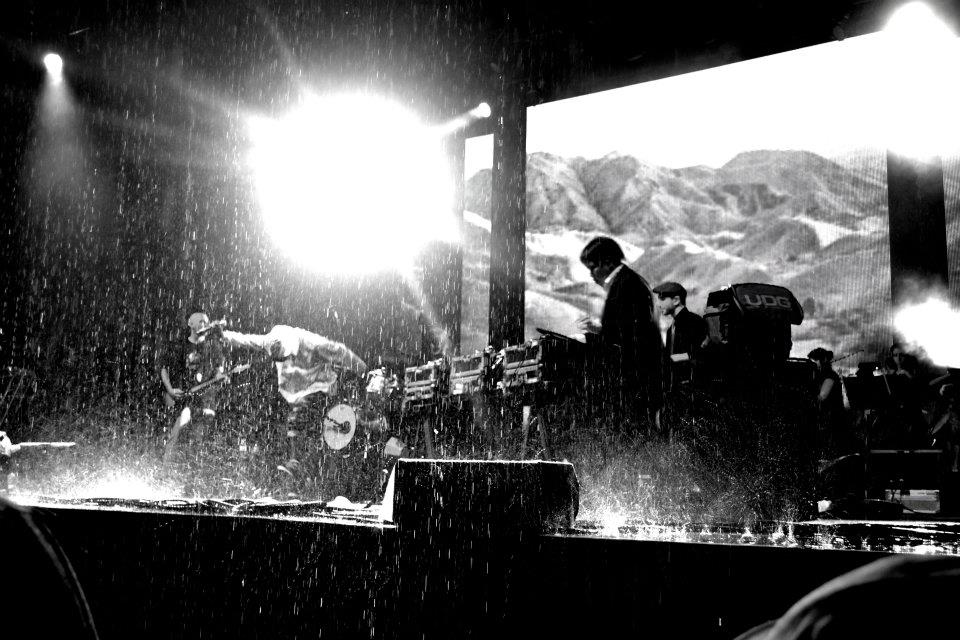
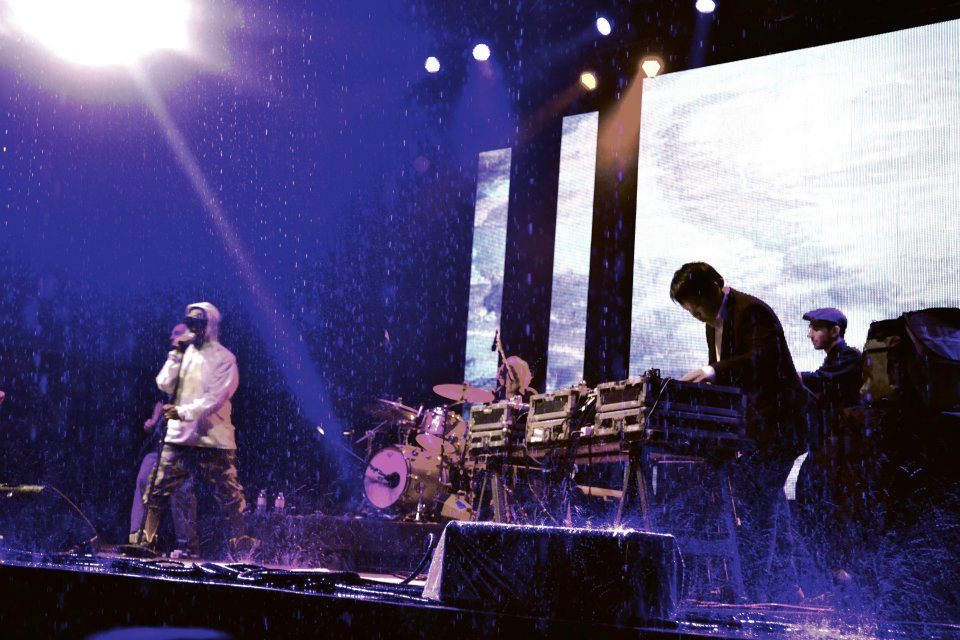
13 years after the self-titled left-field conceptual classic, Deltron 3030, Deltron returns with the long-awaited sequel, Event II, which takes place in the year 4010. Although only a fraction in space-time, 13 years is a long time to wait for a follow-up, and I can say it’s mostly worth the wait. Back are Dan “The Automater” Nakamura, turntablist extraordinaire Kid Koala, and funky lyricist, Del the Funky Homosapien. All three continue to make music and release albums, which is why it is surprising that it took so long for this album to come to fruition. Largely this was a result of Del’s writing process, which was in top form, even if his vocal delivery doesn’t always quite live up to what he pens. Last summer (2012) I had the pleasure of seeing Deltron 3030 perform with an orchestra in a free outdoor concert at the Hub in Toronto (part of the Luminato festival). Despite the rain, appropriate as nuclear fallout, the concert was fantastic, and although it was an album preview of sorts (without an album) for Event II, we had to wait over another year for the physical product.
Deltron 3030 at Luminato Festival, 2012. Photo by Paul Watkins.Deltron 3030 at Luminato Festival, 2012. Photo by Paul Watkins.
It’s hard to please everyone, and another watershed album with the impact of the first is as unlikely as Dan “The Automater” making dubstep beats, Kid Koala using a computer to scratch on digital vinyl, and Del using autotune. Fortunately none of those things happen on Event II, as the supergroup mostly stays within their comfort zone, working with much of the format that made Deltron 3030 so appealing. Event II opens with a straightforward monologue by actor Joseph Gordon-Levitt who provides the backstory like the opening of a sci-fi flick. Back is the imaginative sci-fi universe painted with Dan “The Automator’s” operatic space oddity of hip-hop beats, punctuated by futurist cuts by Kid Koala, with rapid-fire madcap lyricism from Del overtop the production. Del’s lyricism is still incredibly verbose, although his voice has mellowed and lacks some of the alacrity of the previous Deltron Zero character. Given Del is now in his 40s and has been rapping since his 1991 debut, I Wish My Brother George Was Here, shortly after forming the Hieroglyphics collective, it is understandable that some of his vigor is gone, although the storytelling is as first-class as ever. In fact, Event II will benefit from multiple listens given that there is so much happening in Del’s labyrinthine and dystopian lyrical supernovas. Further, on tracks such as “Talent Supercedes” and “Citing Rising from the Ashes” (with the gifted and inventive Mike Patton on the chorus) Del hardly misses a beat, delivering his poetic words with as much gusto as any Del track.
I know you need a little backgroundclear though
About your boy Deltron Zero, your hero
In three thousand thirty
We ain’t in the clear though
We was near toast, doing too much, who to trust
In a land so scandalous and grand?
Even the President got his hand in the contraband
They done control the band of information
Leading to education to a brainwaves pulsatin’
Event II is a largely self-reflexive and fun album, full of humourous skits that provide reprieve from the heavy subject matter of Del’s lyrics. There are a few too many skits, which slow down the momentum of the narrative a little, but the oddball cast of characters (with appearances from Lonely Island, David Cross, and others) adds to the comic sci-fi pastiche of Event II. There is also an excellent cast of artists, including Damon Albarn, Emily Wells, Zach de la Rocha, Jamie Cullum, and Mike Patton, who appear on choruses and add a theatrical layer of the grandiose that reminds me of the Gorillaz, a group Del was involved with, being featured on tracks such as on the eclectic “Clint Eastwood.” While the first Deltron album encompassed concept-driven tracks like “Mastermind,” “Things You Can Do,” and “Virus,” and mind-altering tracks like “Positive Contact” and “Memory Loss,” (and the whole album really), Event II does have some highly enjoyable standout tracks, including: “The Return,” “Pay the Price,” “Talent Supercedes,” and “City Rising From the Ashes.” While Event II will unlikely reach the audience spectrum the first did, which managed to move out of the milieu of underground hip-hop, it will indeed satisfy most of the original fans, and perhaps win over a few new ones.
I still can’t get over the fact that this album actually came out, gifting us with a new rap opera from Deltron 3030. Even though the album relies heavily on the concepts of the first, sometimes you need to look to the past to understand the future. And given how boring much of the present state of hip-hop music is, Deltron 3030’s Event II is a welcome reminder of where we’ve been and where we can still go.
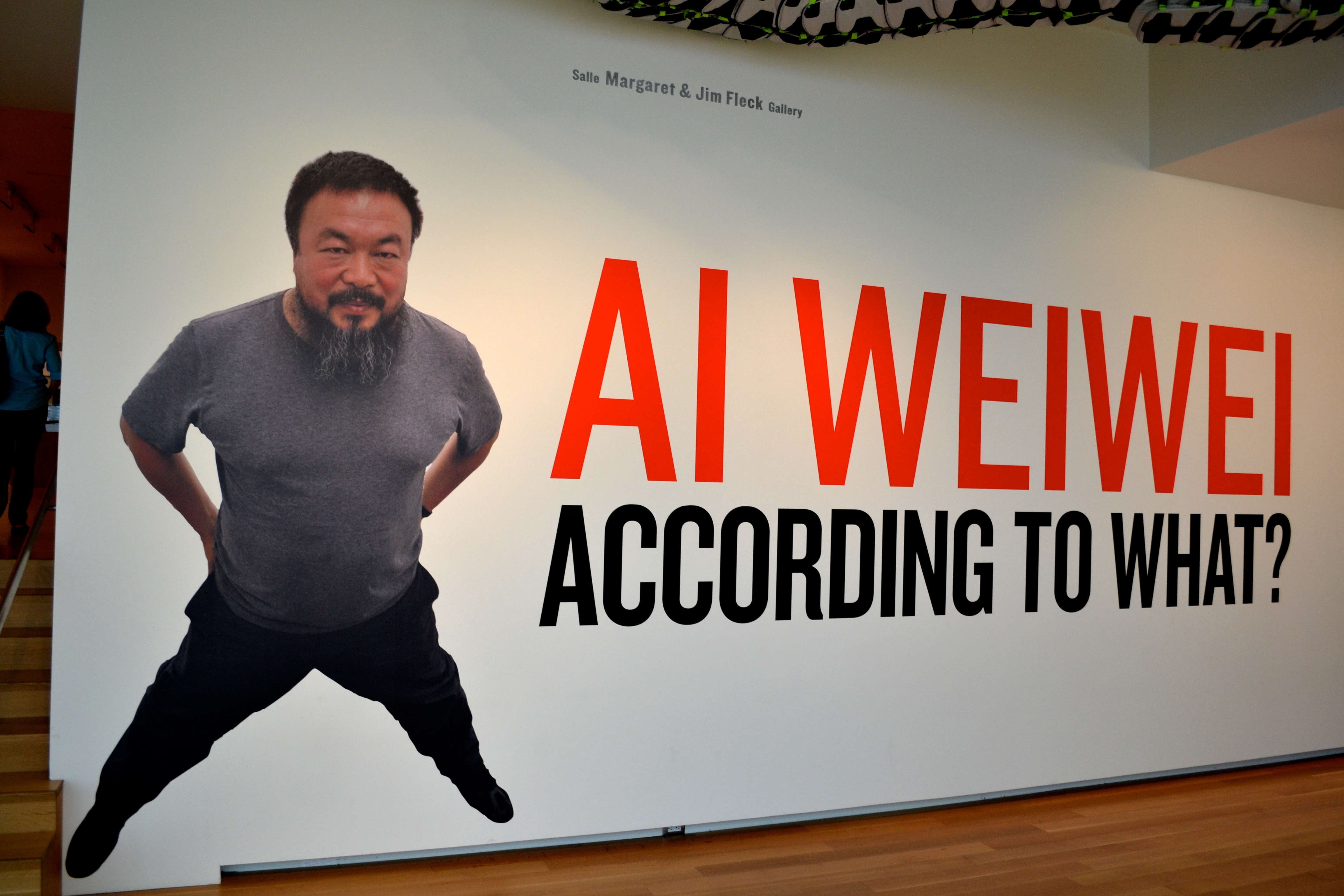
Dissident artist Ai Weiwei (艾未未) remains relentless in his pursuit of free expression through art, social media, and political protest. For Ai Weiwei there is no clear division between art and politics. For him, art is a vehicle for social change, and a vehicle for the possible. After recently watching the documentary, Ai Weiwei: Never Sorry, I was particularly excited to see his major exhibit, According toWhat?, currently at the Art Gallery of Ontario (AGO) until October 27th, 2013.
For those who don’t know, Ai Weiwei is one of China’s most prolific and provocative contemporary artists. Through his art he advocates for freedom of expression and places value in individual lives within the totalitarian state. After an earthquake in China’s Sichuan province in 2008 killed more than 5,000 children he has become ever more outspoken in his criticism of the Chinese government. His activism and controversial artwork has led to the seizure of his passport and he is currently not allowed to travel outside of China.
Everything is art. Everything is politics.
-Ai Weiwei
In addition to working in a wide range of media, Ai Weiwei utilizes social media to make art and connect with the world. If I wasn’t already so busy, I’d sign up for Chinese language lessons so I could read his twitter feed. For now, I’ll have the artwork from his latest exhibit in Toronto to reflect upon.
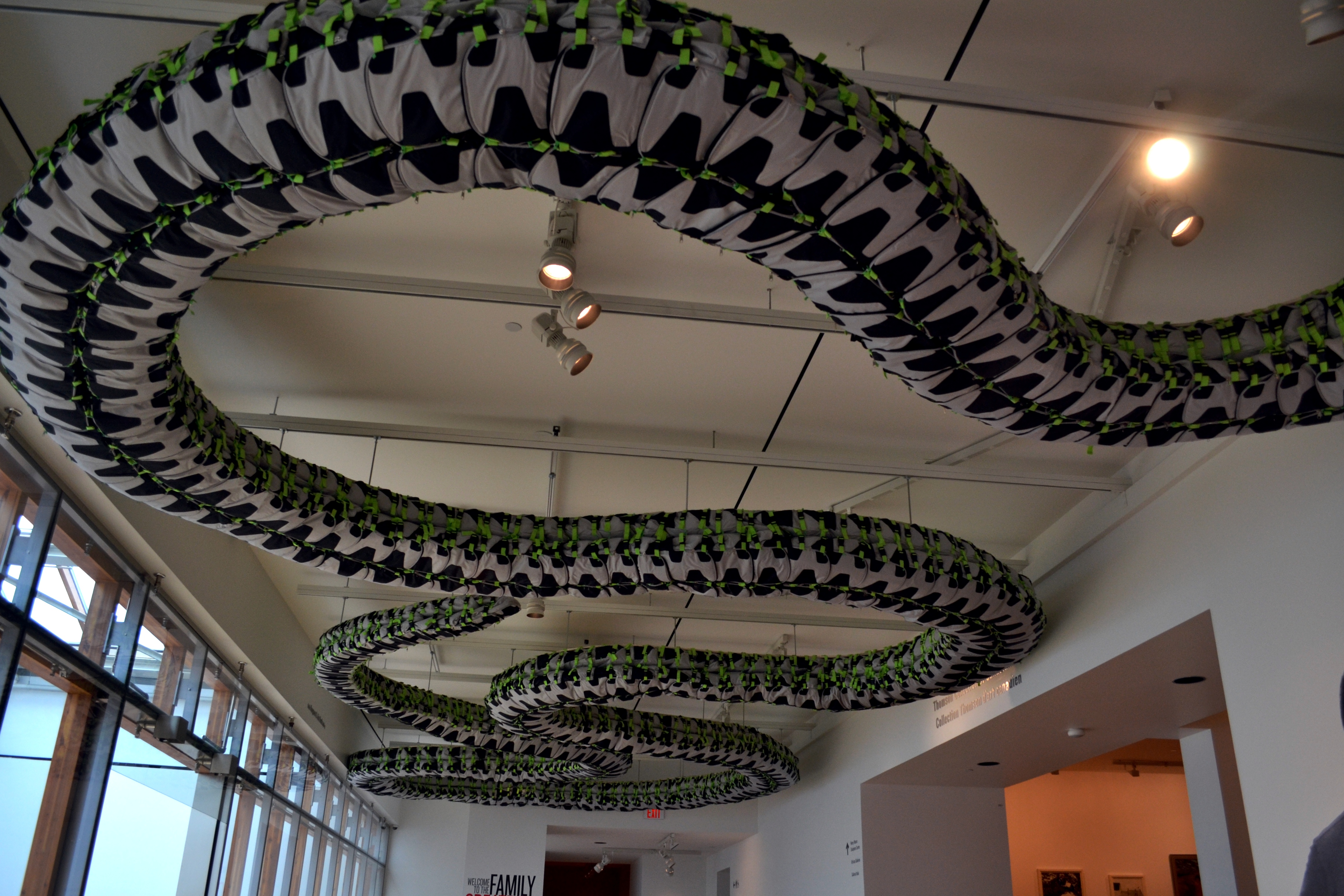
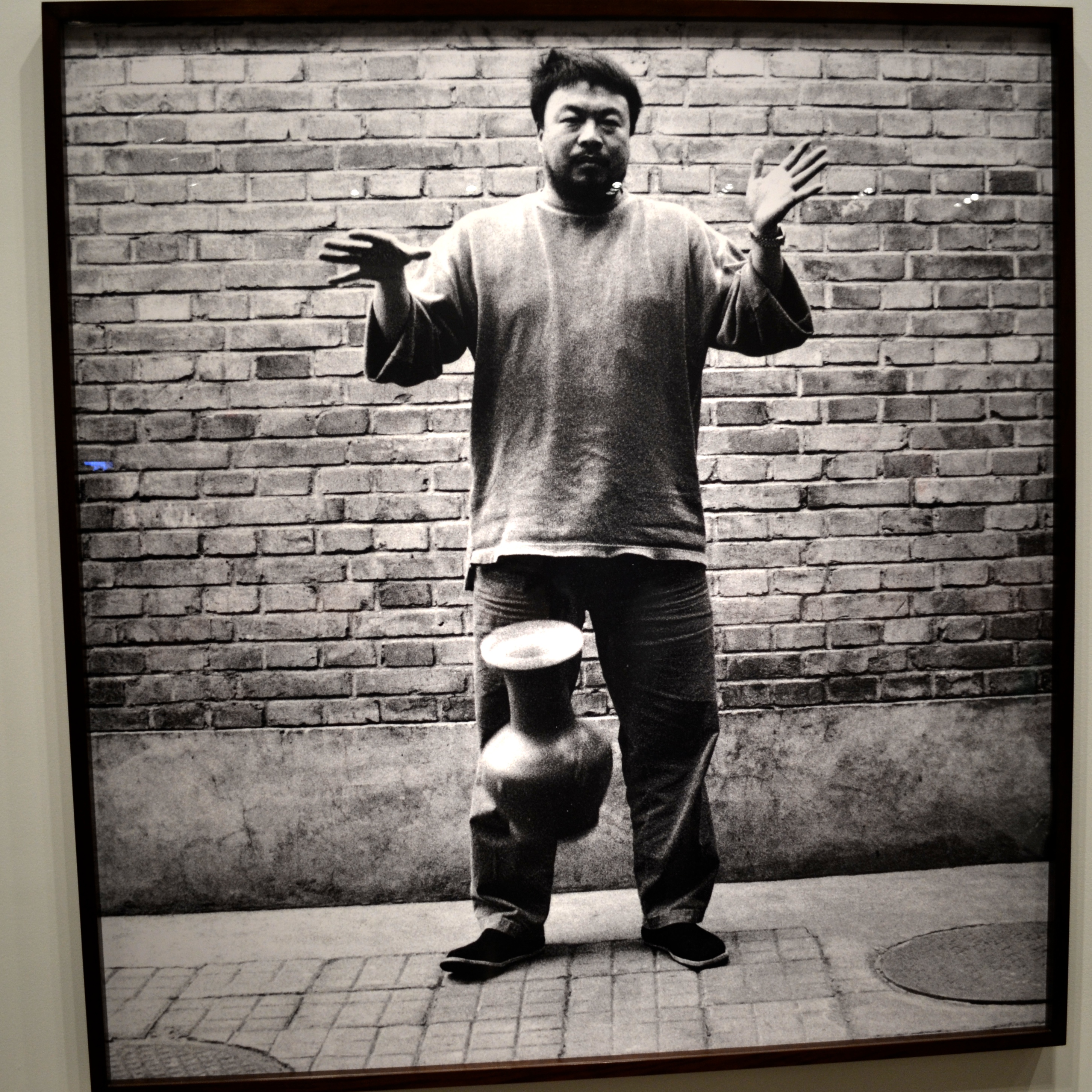
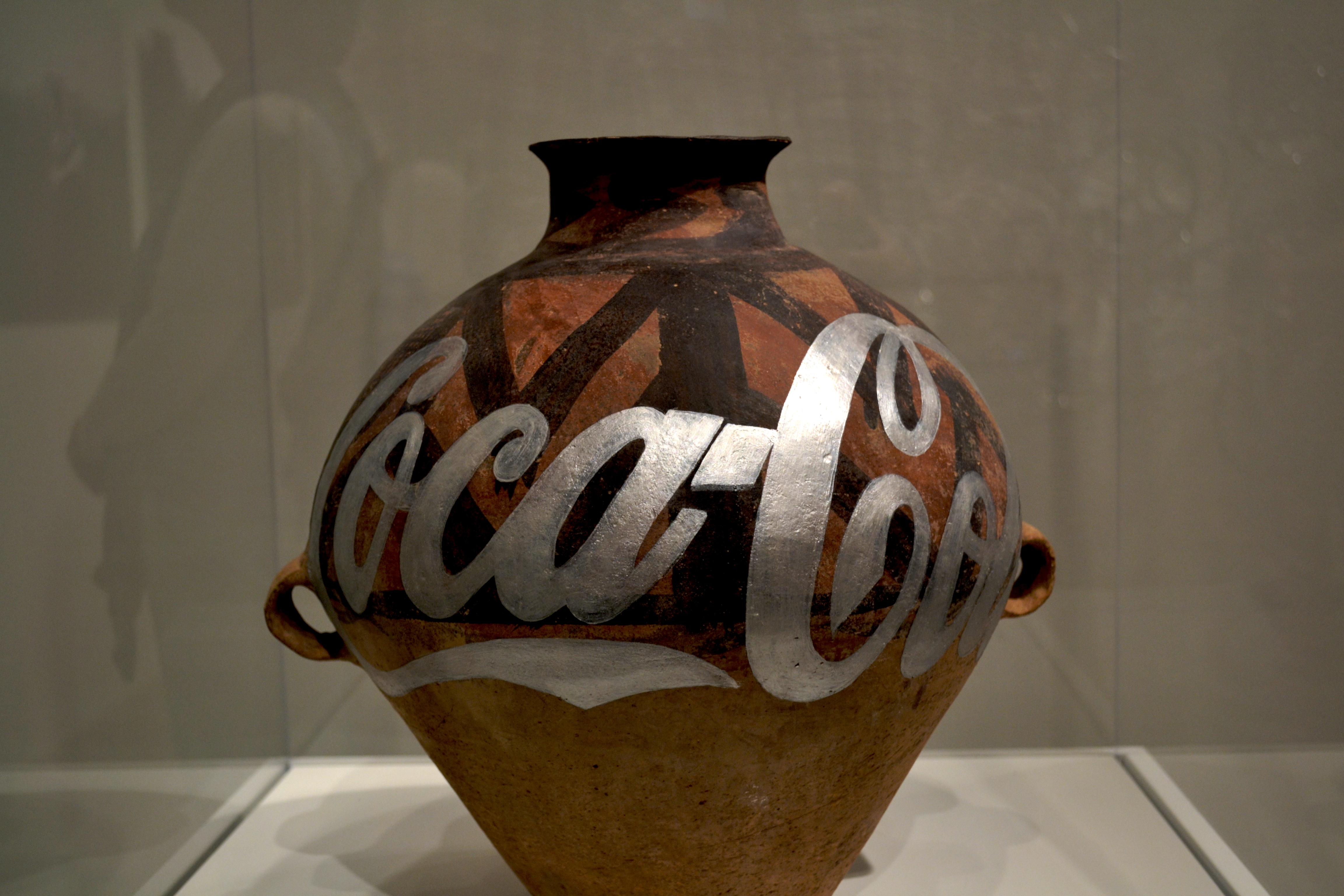
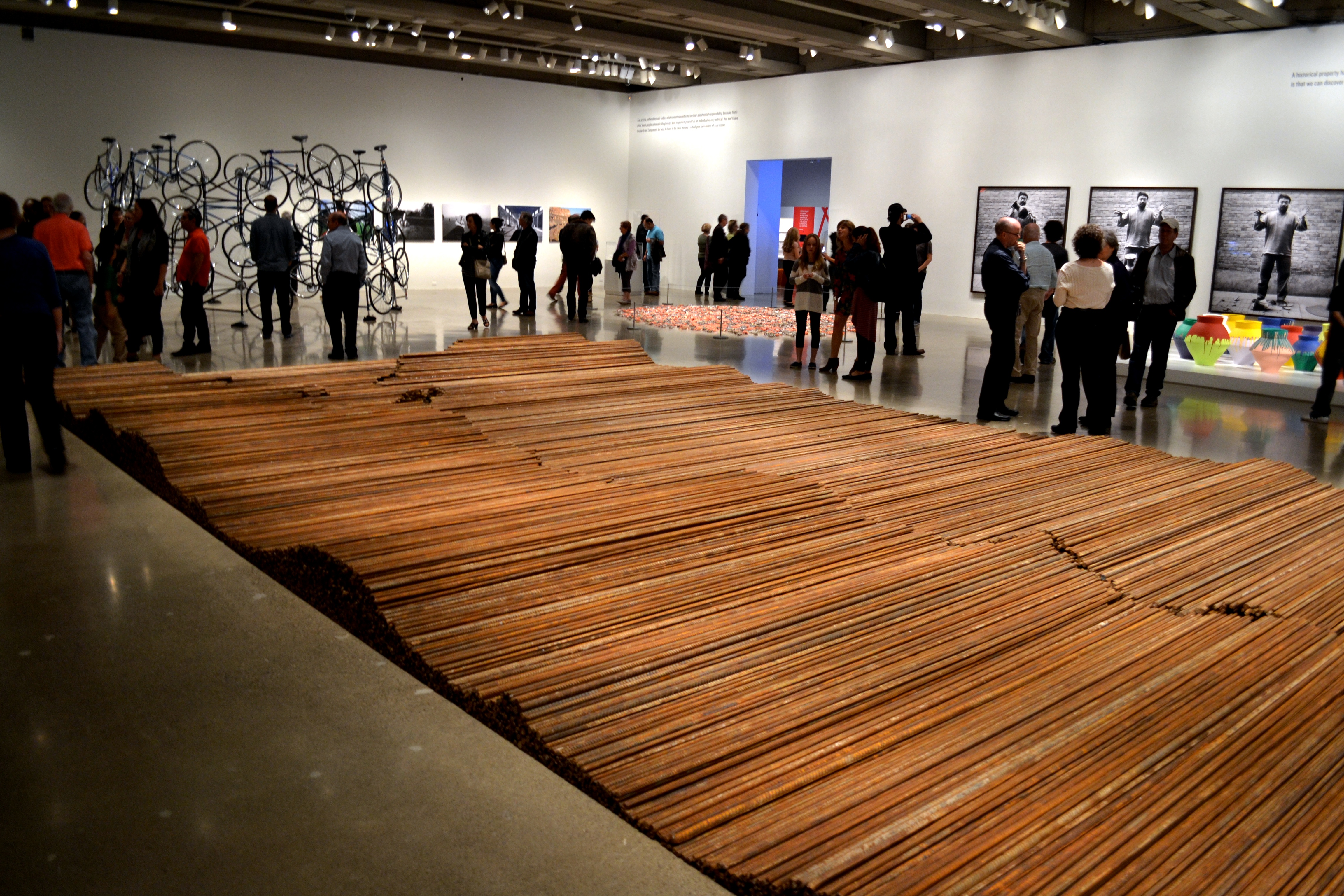
Ai Weiwei’s Snake Ceiling, a serpentine form made from children’s backpacks, commemorates the thousands of students who died in poorly constructed schools during the 2008 Sichuan earthquake.This piece demonstrated the different moon phases.Grapes (wooden stools from the Qing Dynasty, 1644-1911).Cat toy.Teahouse: these three sculptural forms are made from solid blocks of Pu’er tea grown and harvested in southwest China. Fermented and aged using traditional methods, the tea has been compressed and moulded into the shape of houses, which are surrounded by a field of loose tea leaves. Teahouses were the social centre of traditional Chinese culture.Ai Weiwei’s most controversial work involves altering revered objects, like these paint-covered ancient Chinese vases.Here Ai Weiwei is dropping a Han Dynasty Urn (part of a photographic triptych).Another graffitied urn.Ai Weiwei created this piece, Straight, from rebar he recovered from collapsed schoolhouses following the 2008 earthquake in Sichuan Province. Each mangled piece of rebar was straightened through a laborious process.He Xie, or “river crab,” consists of more than 3,200 porcelain crabs. “He xie” is also a homophone for the Chinese word for “harmonious,” which is part of the Chinese Communist Party slogan. Today, “he xie” has become an ironic Internet euphemism for official censorship.China in the rings of a log.Ai Weiwei and me.The image says it all.
LEMON HOUND has evolved from the single-author blog of Sina Queyras, to a multi-authored blog, with the aim to be a dynamic bi-monthly Literary Journal. I’ve published a review with Lemon Houndbefore, and I’m proud to share my latest review in Volume 6 of the journal.
My review, “A Poetics of “Meditaysyun” covers new texts by Cecilia Vicuña and bill bissett. Vicuña’s Spit Temple and bissett’s hungree throat are two new poetic works significant not for what they edit out, but for what they edit in. Vicuña and bissett employ an “editing in” that allows for constellations of dialogue within and outside the texts. Edited in are improvised performances, incantatory phrases, chanting, signing, stories, meditations, webs and threads, languages and sounds, mediations, polyphonies, rhythms, silences, and listenings. To read more, click here.
~
I also contribute reviews on an ongoing basis to Toronto Review of Books’s blog, Chirograph. My latest review (“Forgive Us Our Trespasses”) is of Quebeçois auteur Denis Villeneuve’s film Prisoners, which I viewed at TIFF. I have another TIFF review coming soon on Ben Wheatley’s A Field in England.
Happy weekend reading (whatever that may be), watching (whatever you may watch, I’ll be watching Breaking Bad‘s tense conclusion on Sunday), and venturing (wherever you may go).
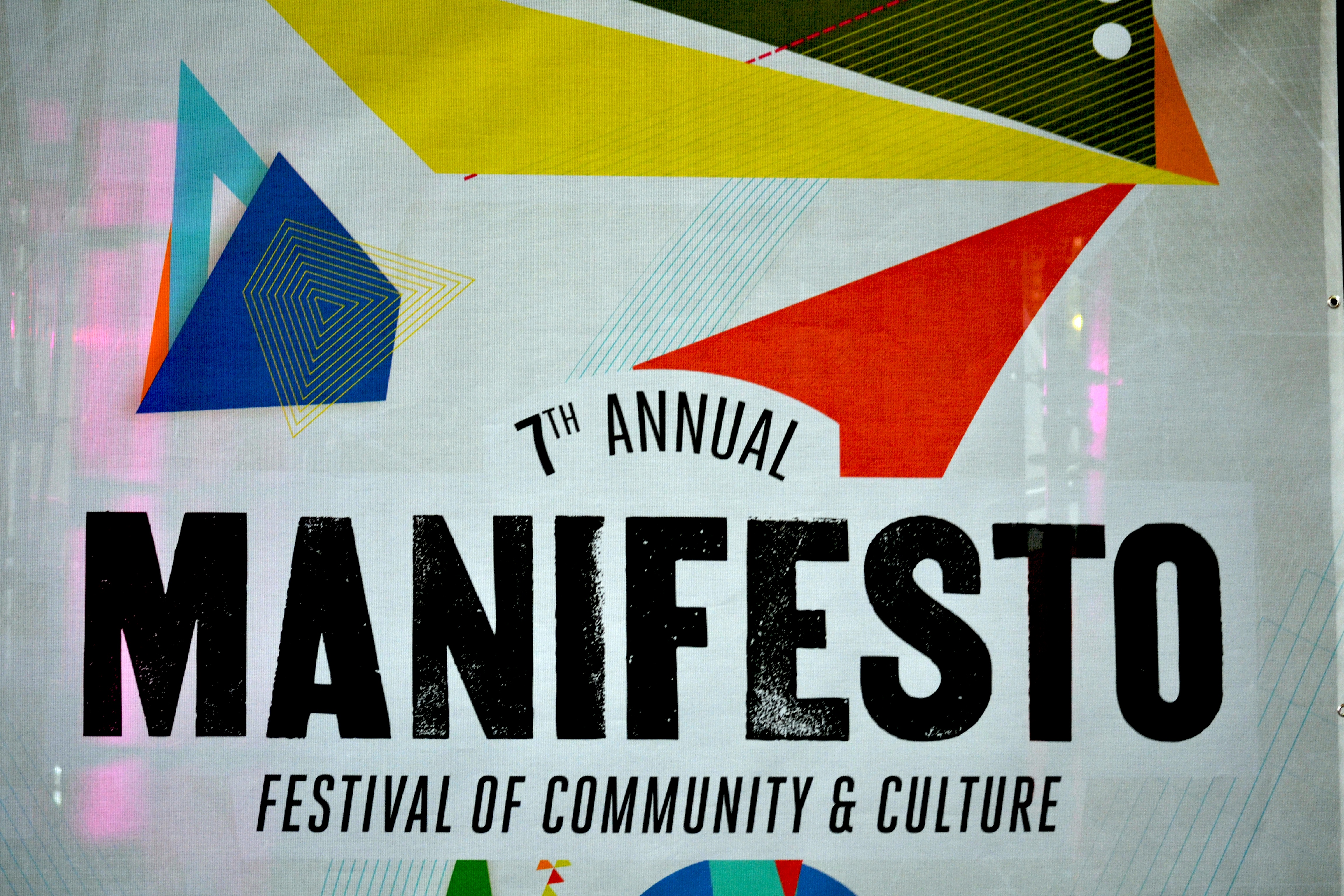
“Manifesto’s point of origin lies in hip hop culture – in its spirit of ingenuity, raw creativity, and people power, but we strive to stay out of boxes and create a platform with the potential to act as a catalyst for cross-pollination, collaboration, and the growth of new forms in this city of wildly talented people.” -Manifesto website.
7th Annual Manifesto Festival
The annual Manifesto Festival of Community & Culture is one of the reasons I love living right beside the Yonge-Dundas Sq.
Manifesto is a non-for-profit grassroots organization with a focus on youth and hip-hop culture, with the aims to educate, unify, and provide amazing music to the masses. The local and the global combine for four days of live events featuring musicians, producers, visual artists, and dancers, to panels with industry experts and even mentor sessions, and this year’s festival had even more in store than previous iterations. Another great thing about Manifesto is that it brings hip-hop legends to Toronto – for free! In 2011, I saw Rakim rock the stage, and in 2012 Pharoahe Monch killed it live with hip-hop and local jazz upstarts, BadBadNotGood.
Rakim at Manifesto, 2011.Pharoahe Monch at Manifesto, 2012.
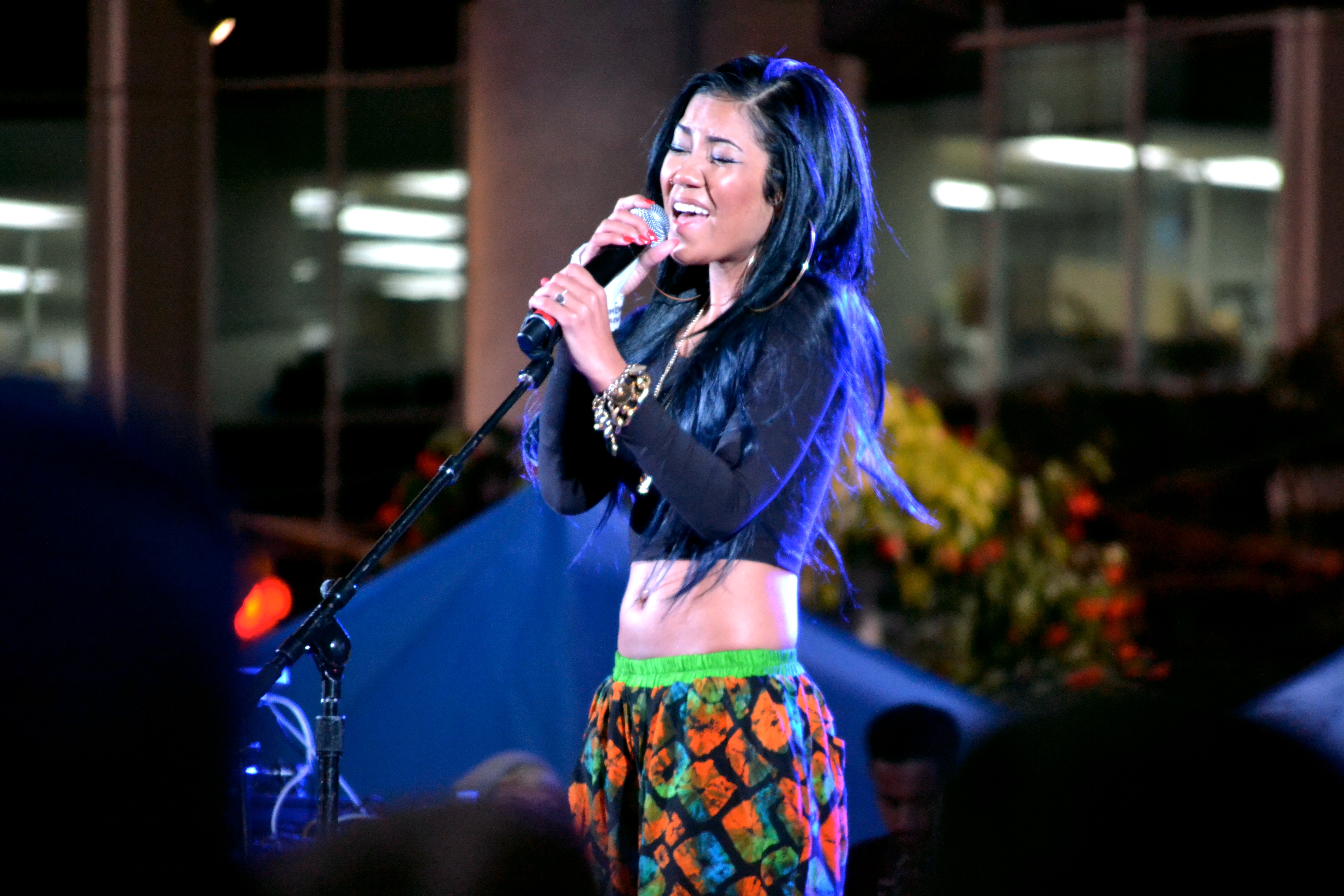
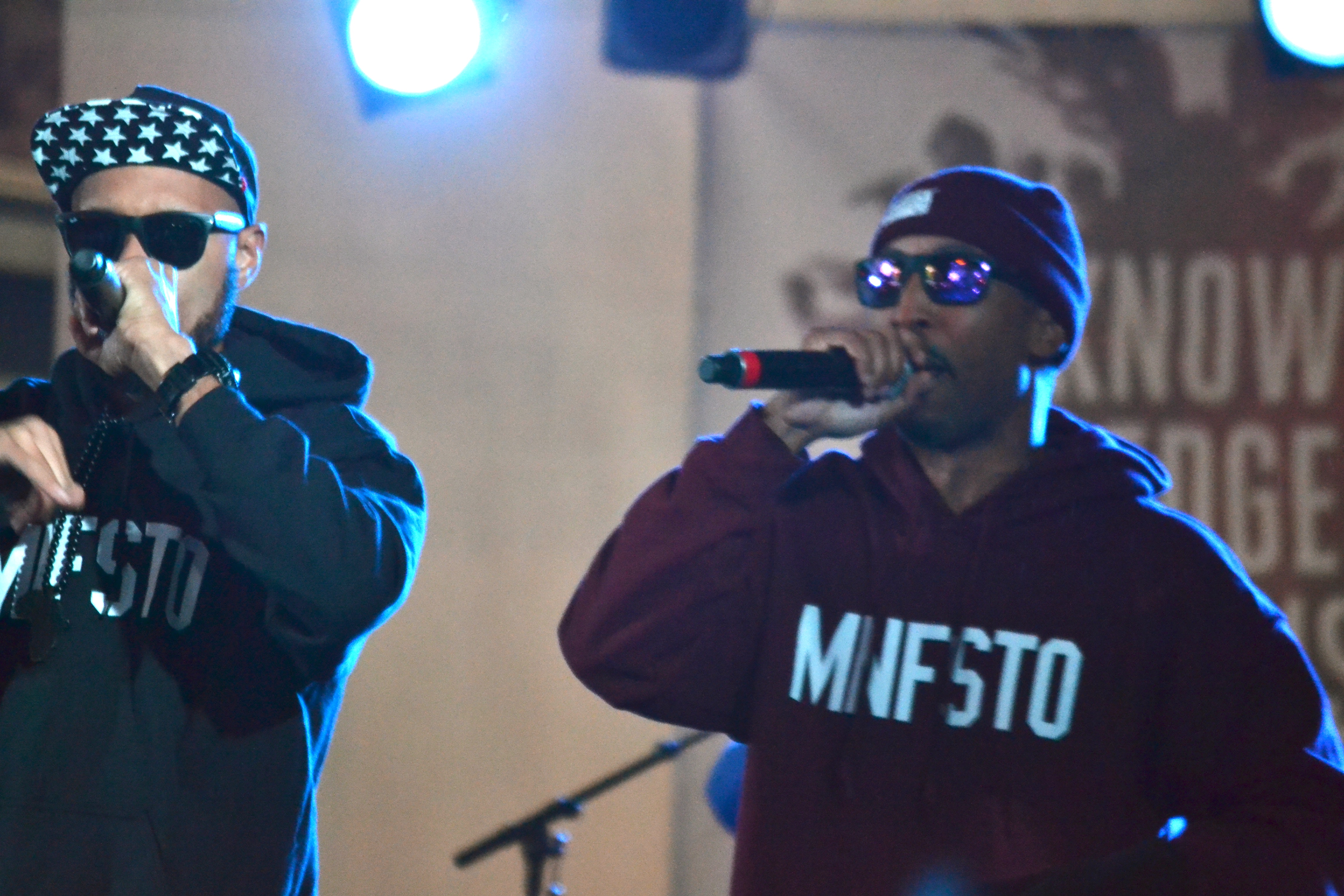
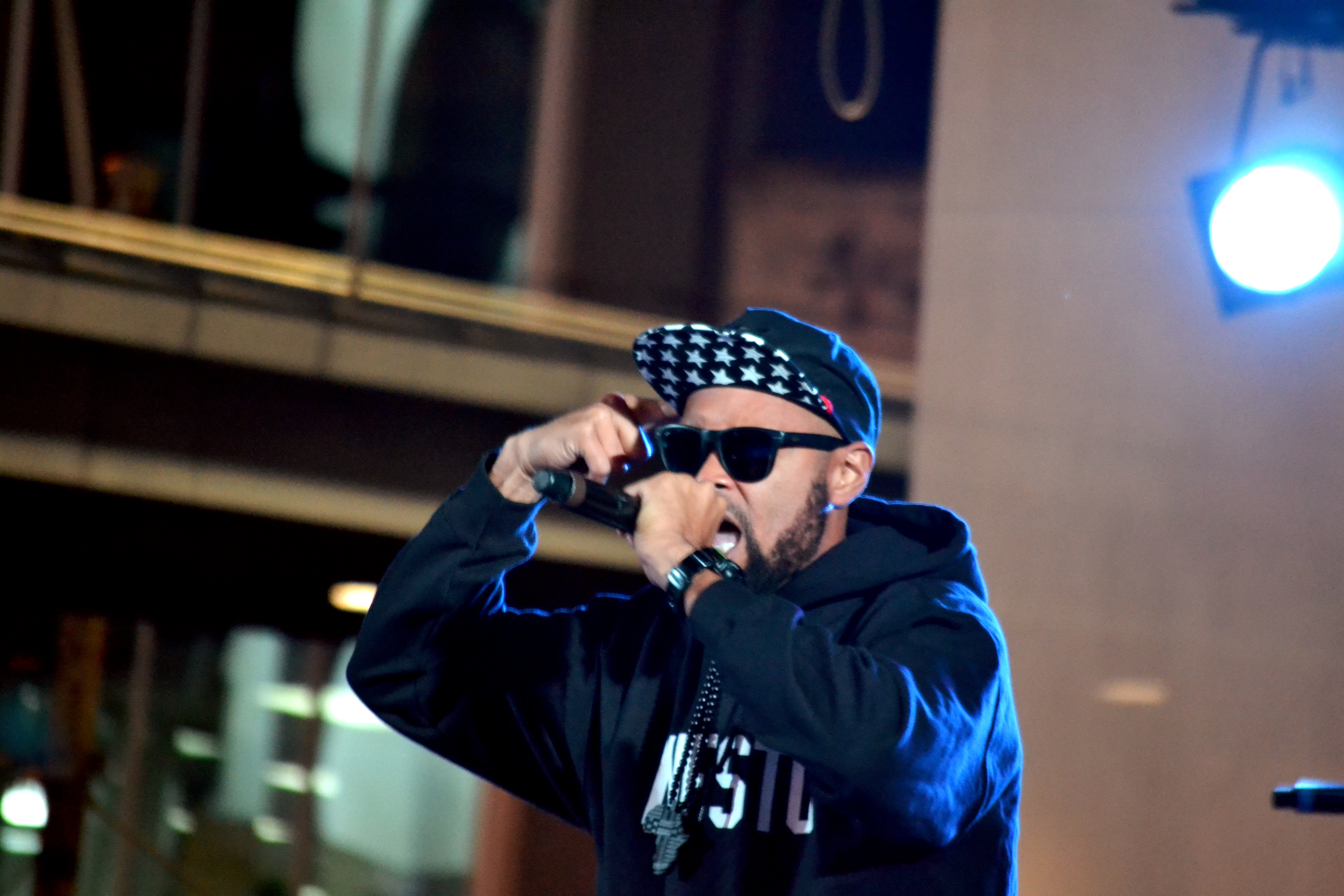
This year’s festival featured amazing headliners, including soon to be big Jhené Aiko, and the legendary Souls of Mischief crew, celebrating their 20-year Anniversary of their classic, 93 ‘til Infinity! Souls of Mischief is a hip-hop group from Oakland, California, part of the hip-hop collective Hieroglyphics and consists of emcees A-Plus, Opio, Phesto, and Tajai. I remember seeing them back in 2003, and I can say with assurance, they are still every bit as dope 10 years later.
For those unacquainted with 90s hip-hop, here’s the video for “93 ‘til Infinity.”
…and here’s a recent remix of 93 ‘til Infinity aptly titled 93 Still by Gummy Soul.
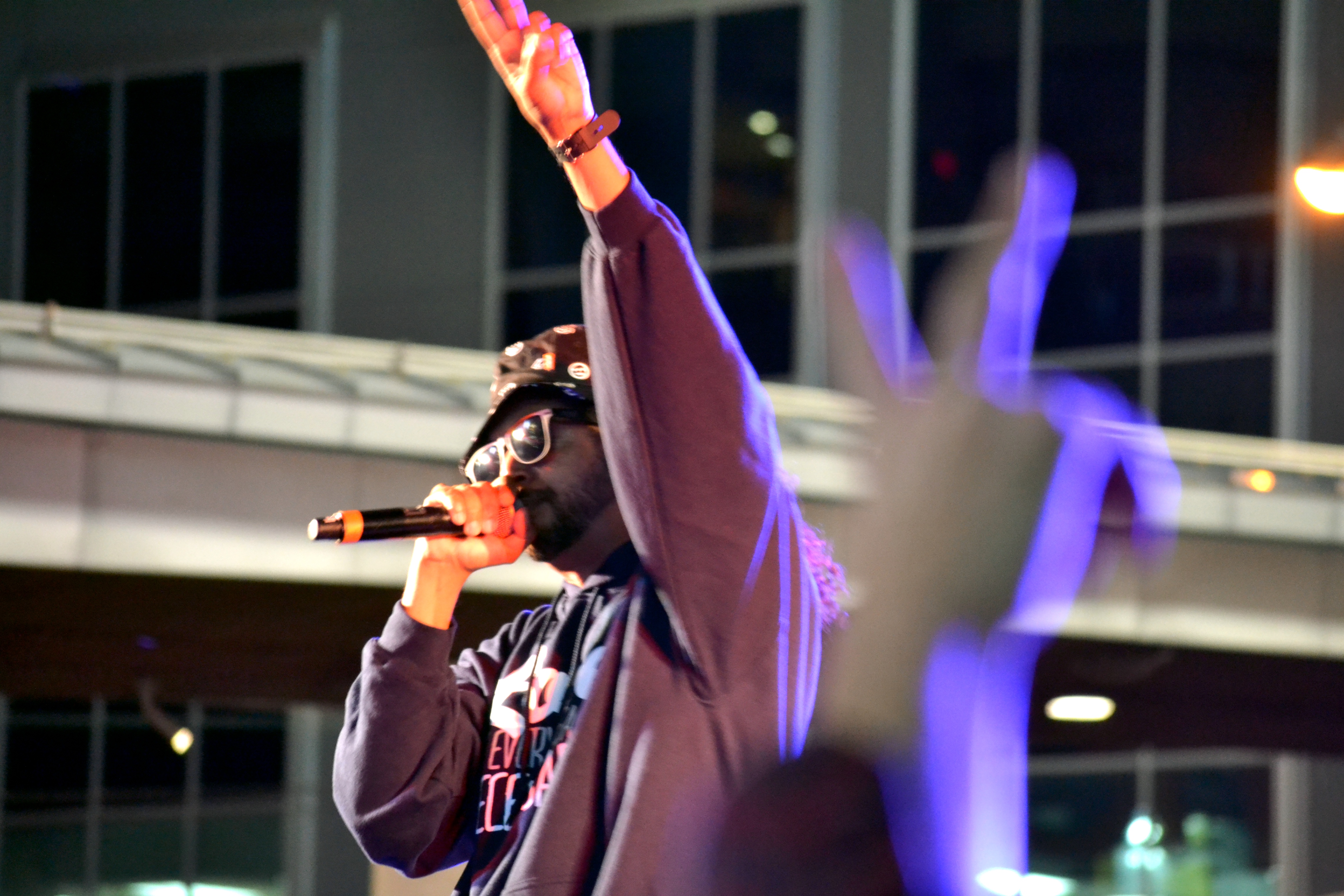
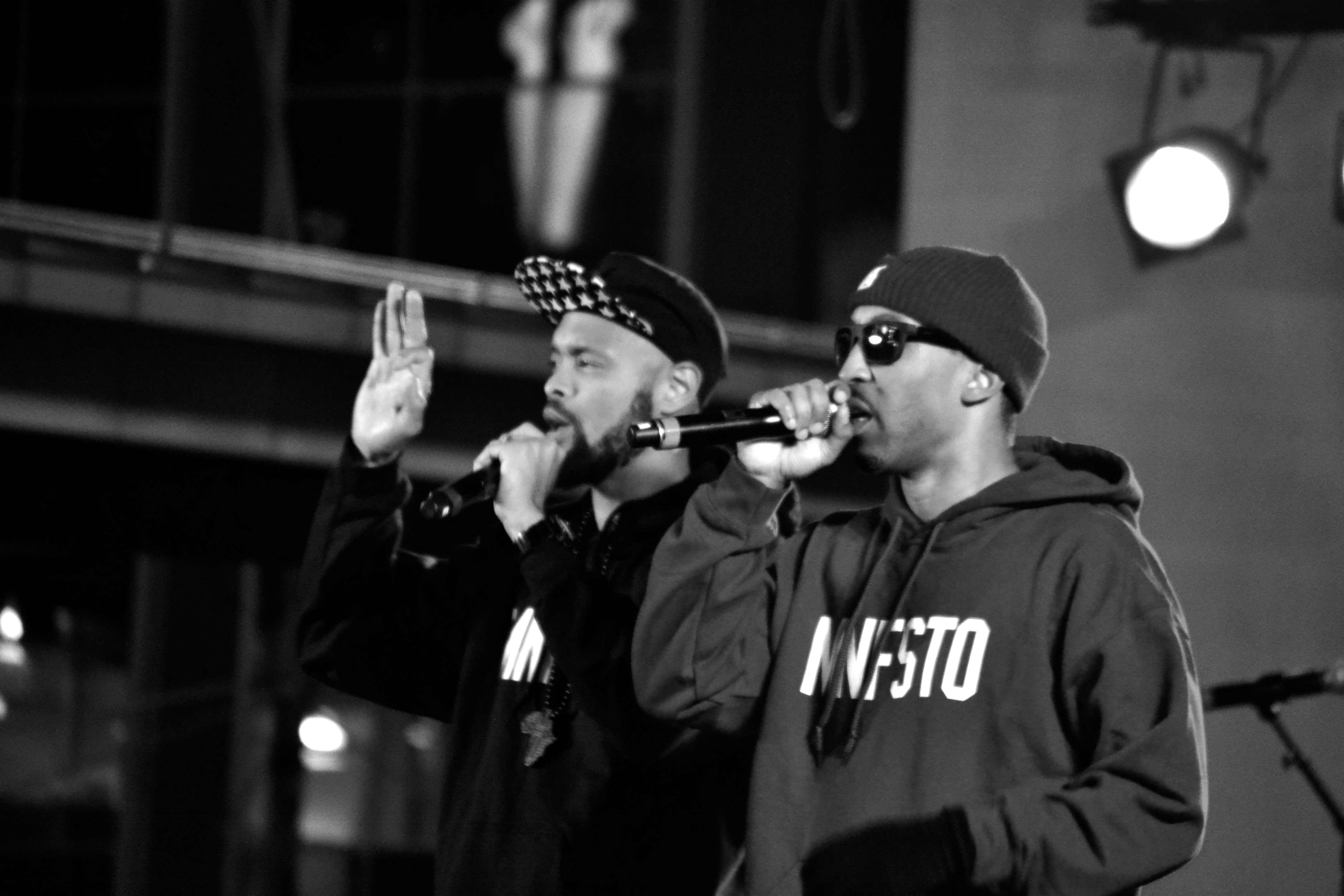
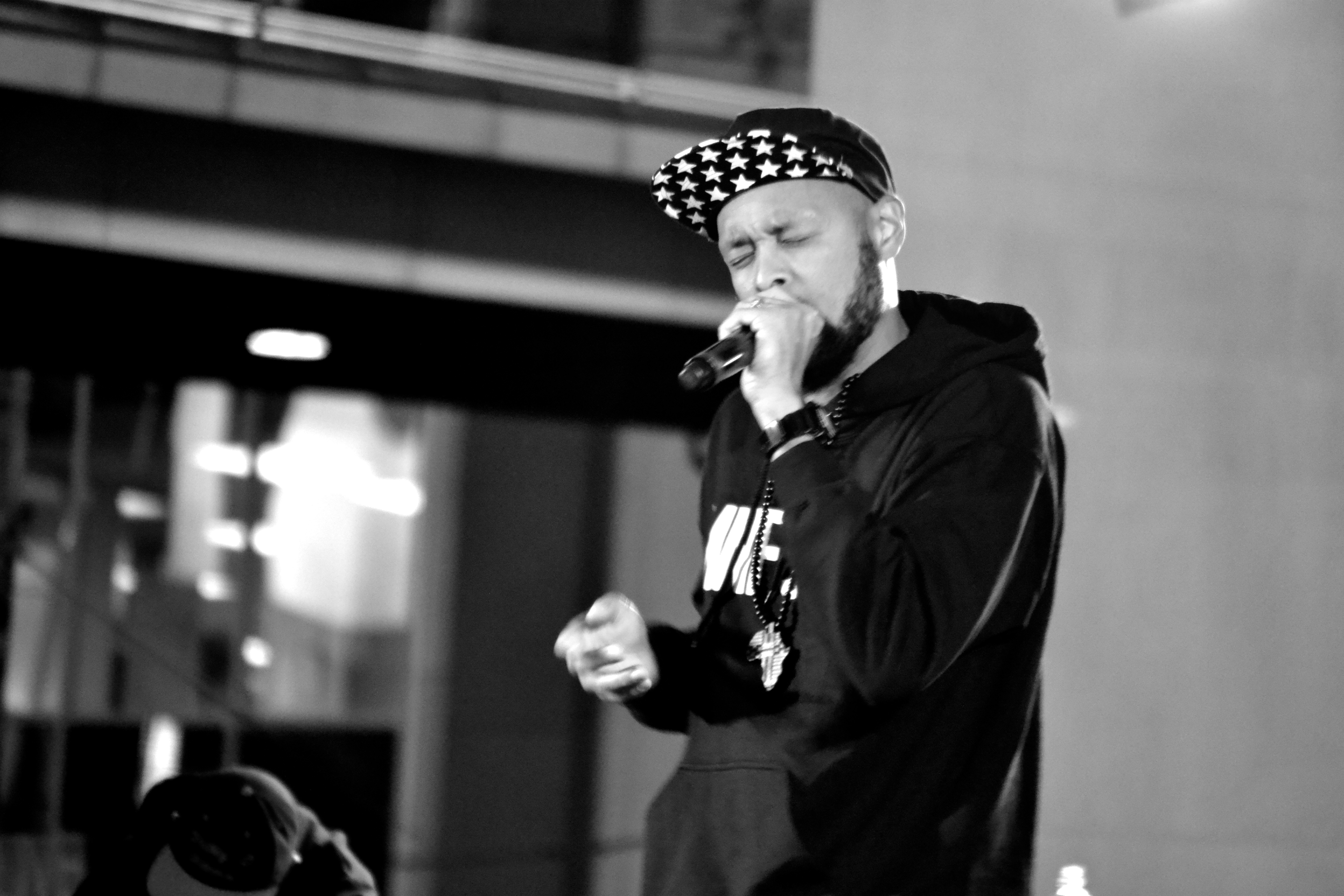
…and here are some pictures I snapped of this year’s headliners.
Shad rolled through as a surprise guest, playing “Rose Garden” and some new material.The talented (and sexy) Jhené Aiko .Souls of Mischief take the stage.


 (3.5 spins out of 5)
















 PAUL db WATKINS