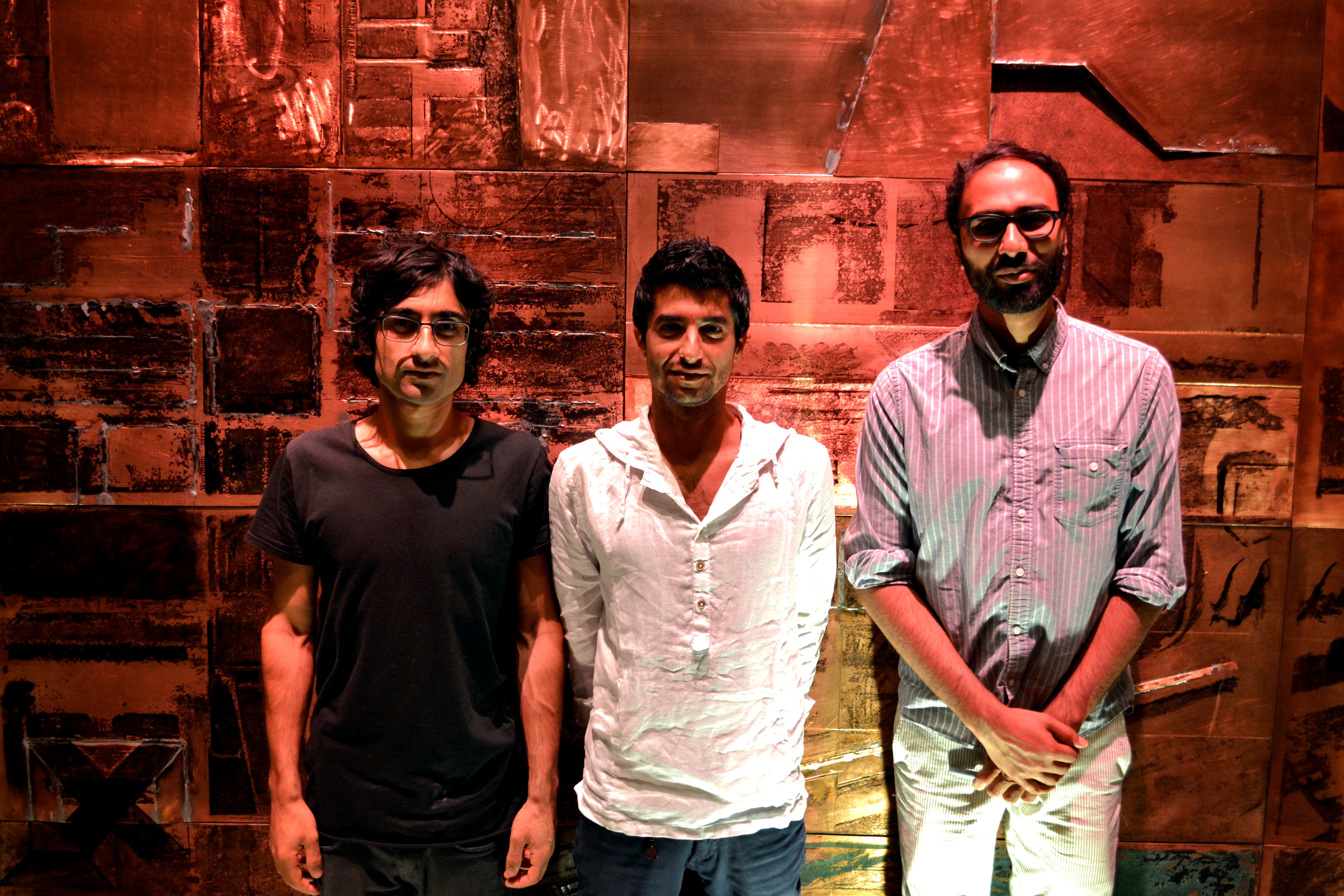
Dawn of Midi is an instrumental trio from Brooklyn comprised of pianist Amino Belyamani, bassist Aakaash Israni, and percussionist Qasim Naqvi. They make minimalist dance music that sounds as if their instruments are run through a digital midi interface. In actuality, all that is being played and heard is acoustic piano, drums, and standup bass. Dawn of Midi continue to craft their unique sound, building upon their semi-improvised and critically acclaimed debut (and aptly titled) First (2010). Their second effort as a group, Dysnomia (2013) is tirelessly composed, replete with polyrhythmic and locked grooves, and garnered praise from music critics from the New Yorker, Pitchfork, and Radiolab, among others. Rightly so, as Dawn of Midi’s performance at this year’s Guelph Jazz Festival did not disappoint. The trio has a way of replicating a single beat or note, as their festival performance covered Dysnomia in real-time (front to back), with each musician in tandem, hardly slipping out of a single polyrhythmic groove. While the concert wasn’t improvised in the typical sense, it was quite apparent that a slew of improvisation sessions are what lead to their disciplined, well-oiled super-trio generating a dizzying array of textures that blend and bend together in the immersive listening experience of Dysnomia. As Sun Ra reminds us, “there is discipline in freedom, and freedom in discipline.”
Belyamani echoes Ra when he describes that “Playing a locked groove like we do on this record involves a lot of discipline and hard work […] You don’t start out that way unless you’re a group of folk musicians from the same village” (group website). Watching Dawn of Midi live it was apparent how measured and cadenced their playing was, which provided a great counterpoint to Marianne Trudel, William Parker, and Hamid Drake, who followed Dawn of Midi as the second part of double bill with an abundantly improvised set. It was almost as if time stood still for the 45 minutes or so that Dawn of Midi played, as one rhythmic phrase blended into the border of another one until the rhythm gradually changed like an autochthonous machine moving seamlessly between different musical episodes. Dawn of Midi’s composition occupies a space of paradox as their sound puts electronic and acoustic music into productive dialogue, reminding us that all instruments are tools to express human emotion and convey a concept.
That concept for Dawn of Midi might be as lucid as blending sonic possibility within the aesthetics of format. A format found in the emotive potential for creating locked grooves that emulate computer music, and yet which sound incredibly human—meditative even. Dawn of Midi are masters of their instruments: they were able to achieve complex sonic patterns with as little as a single note. I watched in awe, as pianist Belyamani played a few notes on the piano with his right hand and then damped them with his free hand inside the piano to create muted harmonics that were at times resonant of a drum. The rapport between the three members made for an incredible set of music, seamlessly blending tracks like a DJ would with a gentle touch on the crossfader. The music circles back and we are left with a dawn of possibilities.
Pianist Belyamani.
The new album Dysnomia, I assume, is named after the recent discovery of Dysnomia (2005), the only known moon of the dwarf planet Eris, which is the largest dwarf planet in our solar system. The word comes from the Greek word meaning “lawlessness.” Dawn of Midi continues to defy expectations and break the laws of how electronic, jazz, or improvised music is often marketed. We can only anticipate what other mixes, sonic discoveries, and dawnings Dawn of Midi has in store for us in the future.
Check out a clip from their latest work, Dysnomia.
The entire album can be streamed or purchased digitally here.
The 20th Anniversary of the Guelph Jazz Festival and Colloquium was another resounding success. Over the last twenty years the Festival has burgeoned from what Artistic Director Ajay Heble describes as “very modest origins into a vital social-purpose enterprise.” It has become an inclusive meeting place where enthusiasts of creative, innovative jazz and improvised music gather once a year to be inspired, engaged, even healed, while participating in one of the planet’s most diverse listening communities. The festival is a reminder of how you can create something from little more than a good idea and a love for the music. This year’s festival and colloquium was no exception, boasting sold out shows, packed colloquium talks, world premieres, enchanting Nuit Blanche performances, and a constellation of musical styles, with musicians and listeners in dialogue with the music in the space of the now.
In honour of the 20th Anniversary, the festival was extended by an extra day to launch a new-partnered research institute, the International Institute for Critical Studies in Improvisation. The launch of the institute culminated in a symphony of drums with the World Percussion Summit. The improvising percussion quartet featured master drummers Jesse Stewart (Ontario), Hamid Drake (USA), Dong-Won Kim (South Korea), and Pandit Anindo Chatterjee (India).
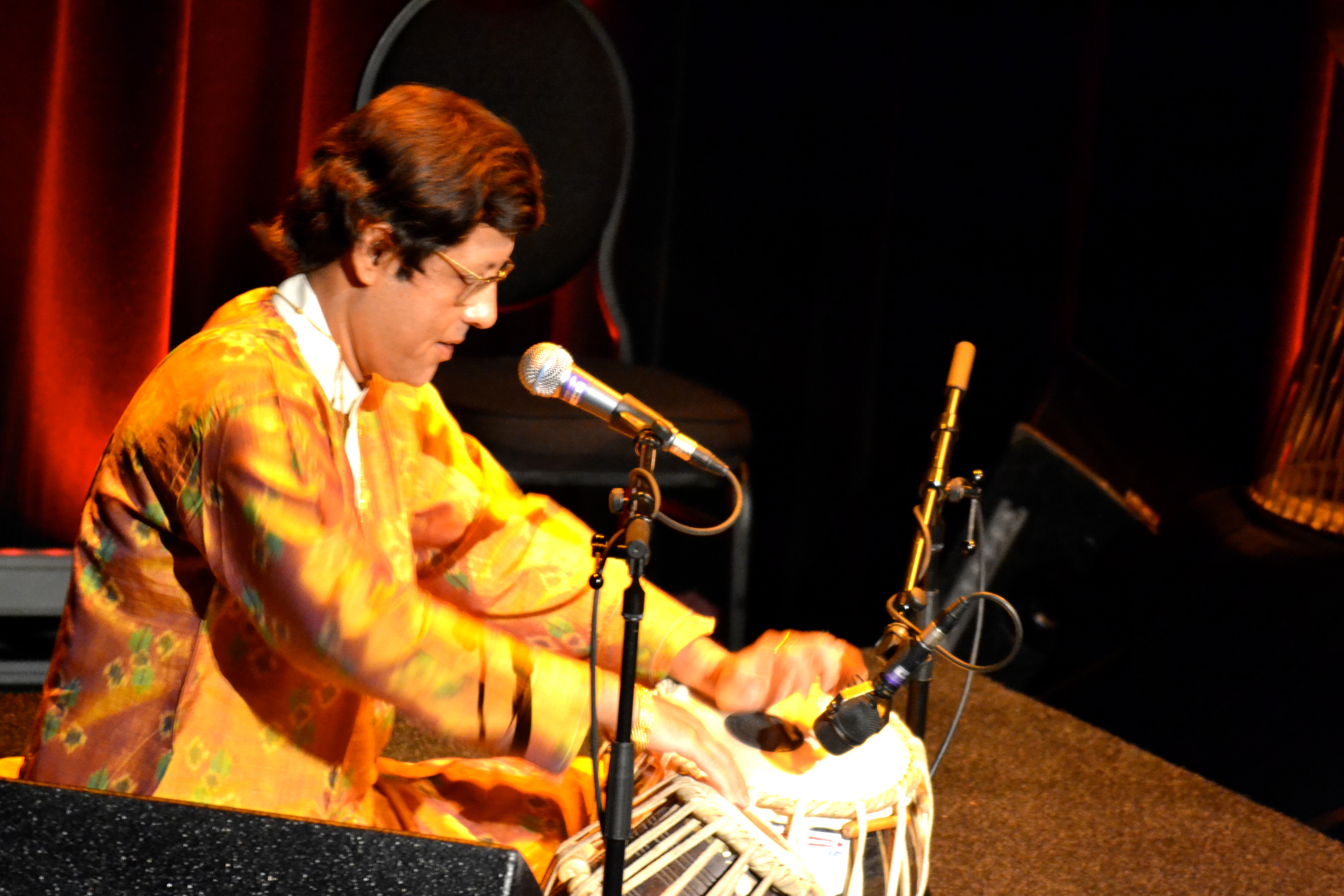
Don-Won KimPandit Anindo Chatterjee.Jesse Stewart and Pandit Anindo Chatterjee.Jeff Schlanger, musicWitness-in-Residence, captures it all.
As usual, the Colloquium (co-presented between ICASP and the Guelph Jazz Festival) was top-notch and remains one of the few events in North America to combine scholarly activity with a music festival. The talks and music performances at the Colloquium were full of academic fervor while remaining generally accessible to the larger Guelph community with a stimulating mix of panels, keynote addresses, assorted workshops, and concerts and interviews that featured festival artists.
George Lipsitz keynote.William Parker keynote.Wadada and Pharoah after their interview.
The Colloquium was held at the Macdonald Stewart Art Centre, which was adorned with the jazz photography of Thomas King. King is a master storyteller who also possesses an incredible ability to tell the story of the Guelph Jazz Festival through the chronicle of his photography. King also collaborated with Guelph visual artist Nick Craine to create this year’s festival poster and logo.
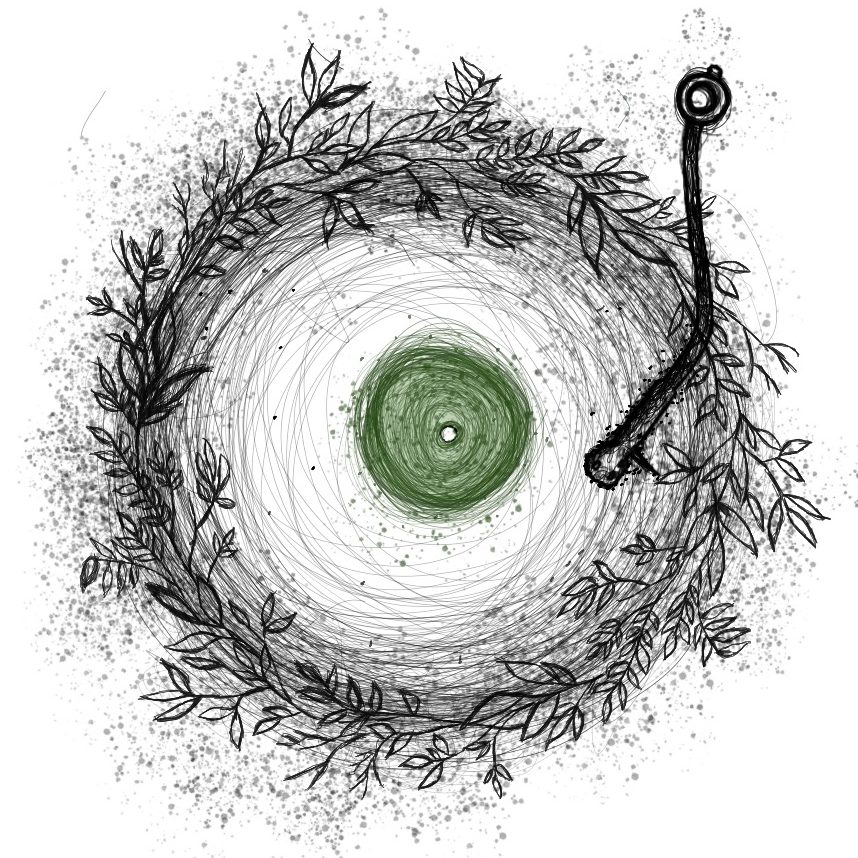
Festival Logo.
The 20th Anniversary was full of amazing performances, which included Toronto based jazz upstarts BadBadNotGood, Matt Brubeck, Atomic, free shows by DRUMHAND, Jane Bunnett, Friendly Rich’s Scheherazade,Marianne Trudel, as well as the amazing double bill featuring Wadada Leo Smith’s Golden Quartet alongside Pharoah Sanders and The Underground. The festival continues to affirm that there is something special happening in Guelph. There is much more that could be said about the music, but I’ll leave that for other critics, although I do have a review of the trio Dawn of Midi coming soon. After all, in jazz there is no final chord. We can only dream what the next 20 years of the festival will manifest. For now, here are some additional pictures from this year’s anniversary celebration.
Dawn of Midi.
Trudel/ Parker/ Drake.
Esmerine with guests.
Friendly Rich’s Scheherazade.
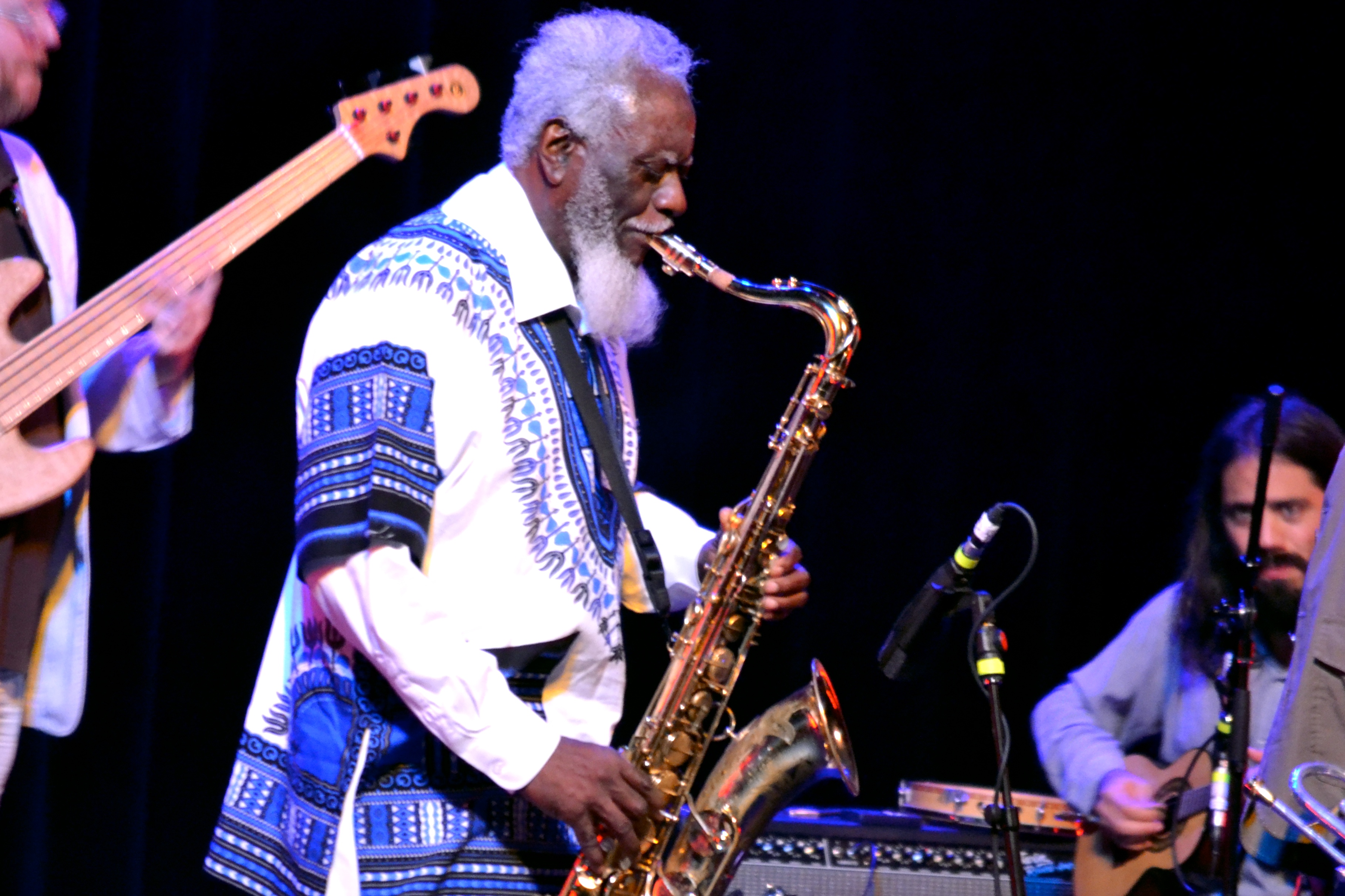
Pharoah and The Underground.
Market Square was packed!
Street dancing.
Nuit Blanche performance by Ben Grossman and Matt Brubeck at 4:30 am at Silence.
Jesse Stewart and the Penderecki String Quartet close the festival.
I was sad to learn that Seamus Heaney, Irish poet & Nobel Laureate, died this morning. I first encountered the work of Heaney some six years ago in an undergrad English class entitled, “British Poetry, Lately.” The class examined recent developments in contemporary British and Irish Poetry. In the class we engaged with poets such as Eavan Boland, Kathleen Jamie, Ted Hughes, Carol Ann Duffy, Tom Raworth, and, of course, Heaney—all masters of tone, language, subject matter, working with/against the long British devotion to rhyme and meter.
Poetry in the twentieth century has largely been about defamiliarization (ostranenie (остранение)), the artistic technique of persuading the audience to see familiar things in an unfamiliar or strange way, often using metaphor to help depict the mechanics of the world we inhabit. Heaney was a master of using incredibly rich and dense metaphors. He was also a master of listening. Ever the attentive poet, Seamus Heaney made use of melopoeia (charging words beyond their normal meaning, like the cadences of music) as a part of his fluidity to create his dense rhythms. In Glanmore Sonnets he stands and listens to the mysterious corporeal sensualities that surround him to cultivate words: “Words entering almost the sense of touch / Ferreting themselves out of the dark hutch — / ‘These things are not secrets but mysteries’” (II).
Yet, it was in “Digging,” a poem full of onomatopoeia and poetic excavation, and the first poem from his very first collection, The Death of a Naturalist (1966), where Heaney first displayed his poetic method:
The cold smell of potato mold, the squelch and slap
Of soggy peat, the curt cuts of an edge
Through living roots awaken in my head.
But I’ve no spade to follow men like them.
Between my finger and my thumb
The squat pen rests.
I’ll dig with it.
It’s been a number of years since I’ve read Heaney, and it’s unfortunate that it took his death for me to reread a couple of his well known poems, which I still remember so well from that undergrad class. He was a poet of the highest order and will be missed. His poetic cultivations and living roots charge on.
To borrow from free jazz bassist William Parker, we can think of music as “sound painting”: “A composer arranges sounds in a particular order, alternating between sound and silence. The result is a sound painting. Sound painting over a canvas of silence. The range, shape, and quality of the sounds used to make up a sound painting are limitless. Any sound that exists in the universe can be used in a sound painting” (26). Thinking of music as “sound painting” opens up music as a tool—even as its conscripted by major corporations—from the living organic world, for as Parker elaborates: “No one owns music, no one invented music, it existed before the human species was created and may have played a part in the creation of man and womankind. Music lives in a world separate from the musician, a world of which we have only touched the surface” (34). Parker’s autochthon approach to music—as of the earth—is similar to Christopher Small’s assertion, in Musicking, that “No human being ever invents anything from nothing but is guided always in his invention by the assumptions, the practices and the customs of the society in which he or she lives—in other words, by its style” (203). Music—whether in performance or in listening—is a malleable activity about making sense of the world, and not a “fixed” product. I agree with Small’s assertion that “[t]here is no such thing as music. Music is not a thing at all but an activity, something that people do” (2). By replacing the noun “music” with the verb “musicking,” Small highlights that each musical work is not an autonomous creation of one-way communication between creator and audience, but rather a social undertaking where musical works ultimately exist in order to give performers something to perform. There is no correct way to play music.
—
“Once you free your mind about a concept of harmony and music being correct,you can do whatever you want. So, nobody told me what to do, and there was no preconception of what to do.”
-Giovanni Giorgio Moroder, “Giorgio by Moroder”
While Parker and Small are working in jazz and classical mediums I think that the same ideology can be said for popular musics, as the above quote from Giorgio Moroder emphasizes. The quote from Moroder is taken from the song “Giorgio by Moroder” from electronic music duo Daft Punk’s latest release, Random Access Memories (2013). The song features a monologue by Giorgio Moroder, who speaks about his early life and musical career.
Giorgio Moroderis an influential record producer, performer and songwriter, known as an innovator of synth-pop, dance, disco, rock, and various electronic musics, as well as for his work on various film soundtracks. In the 1970s in Munich he started his own record label called Oasis Records, which became a subdivision of Casablanca Records. Through Oasis/Casablanca he released many disco era hits, including Donna Summer’s “Love to Love You Baby.” He is also the founder of Musicland Studios in Munich, a popular studio that was used by Queen, Elton John, Electric Light Orchestra, and Led Zeppelin, among others. He has widely collaborated and his compositions have been sampled numerous times in electronic and hip-hop music.
Have a listen to what might be my favourite song off the new Daft Punk record:
Works Cited
Parker, William. Who Owns Music? Cologne: Buddy’s Knife, 2008. Print.
Small, Christopher. Musicking: The Meanings of Performing and Listening. Hanover: Wesleyan UP, 1998. Print.
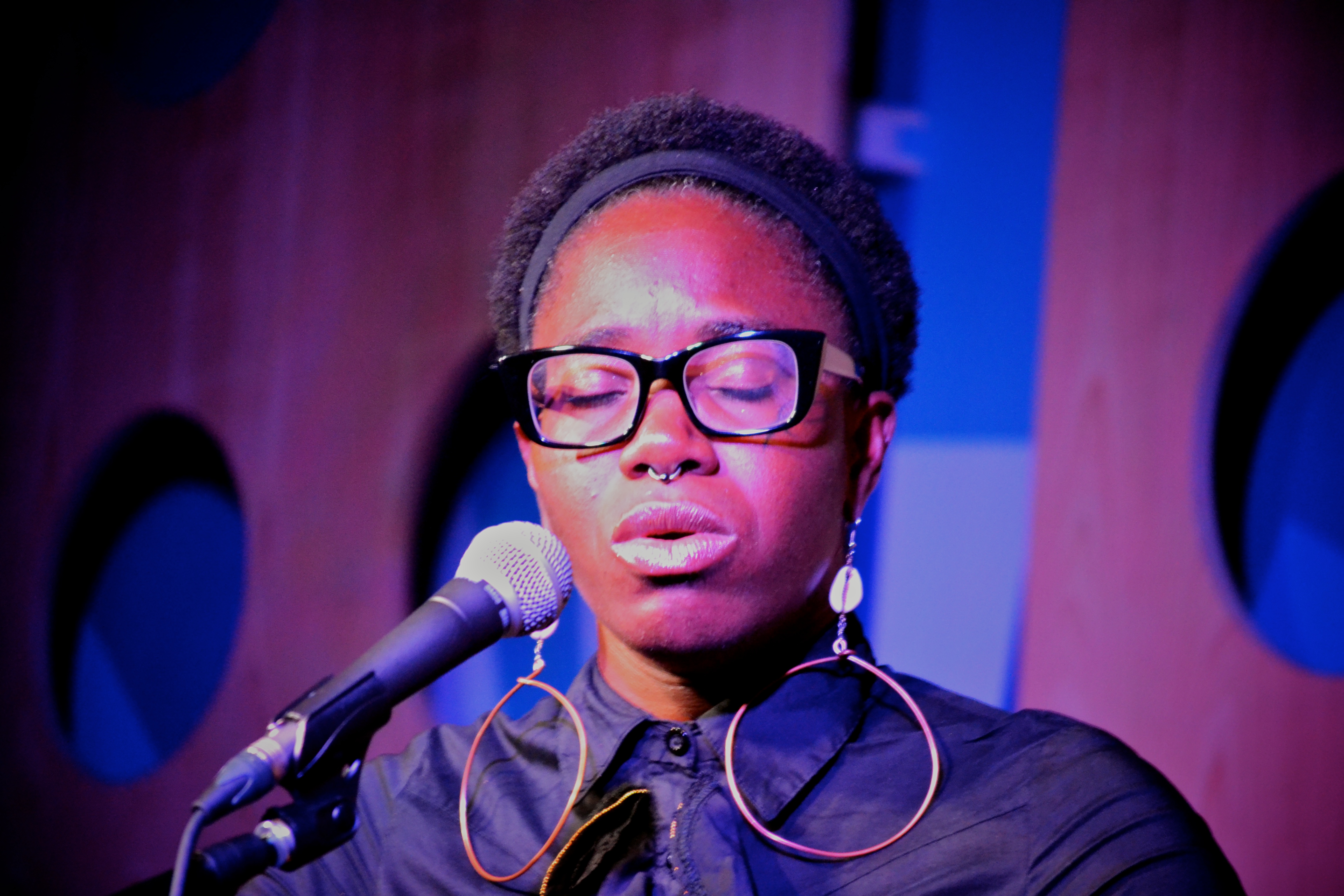
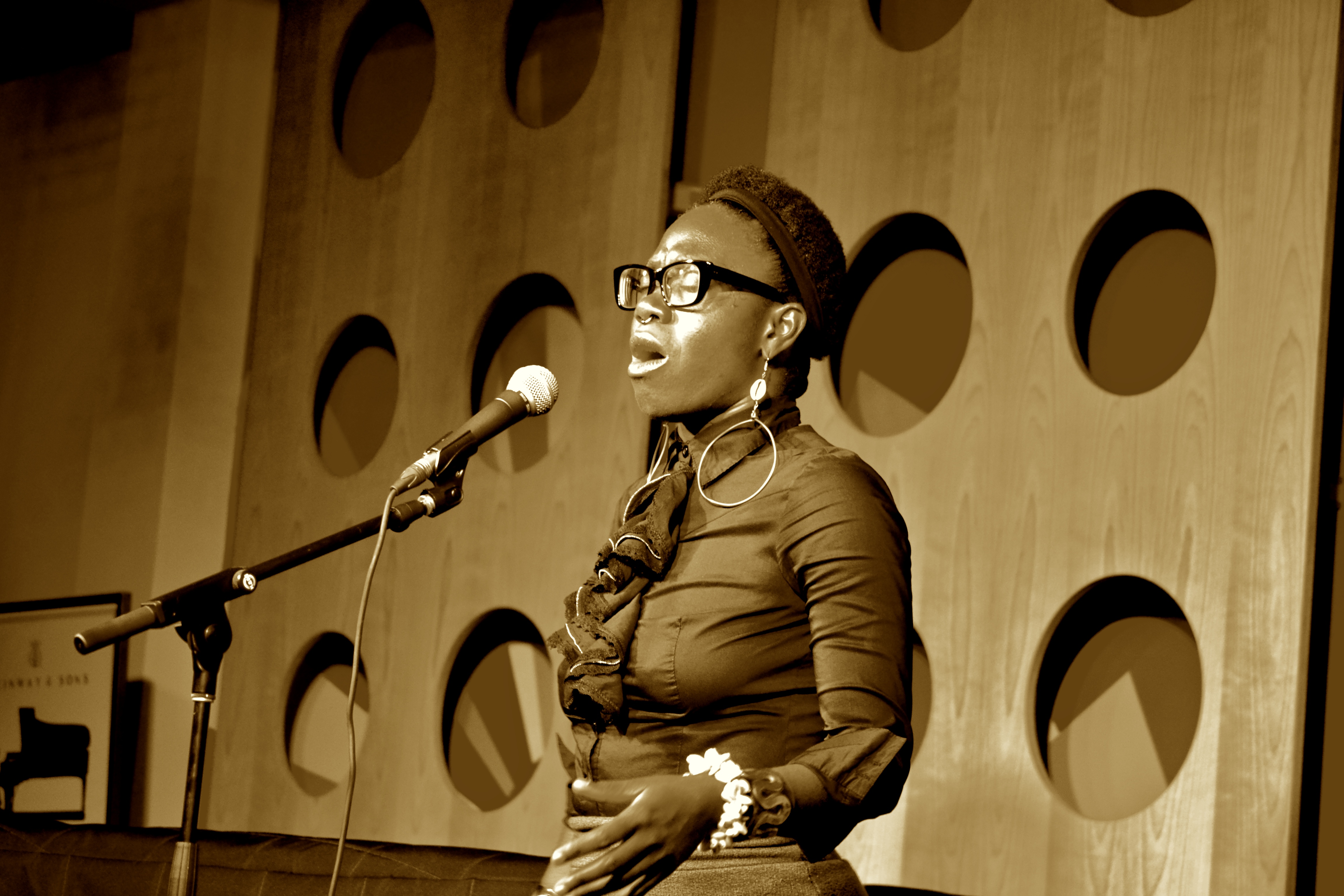
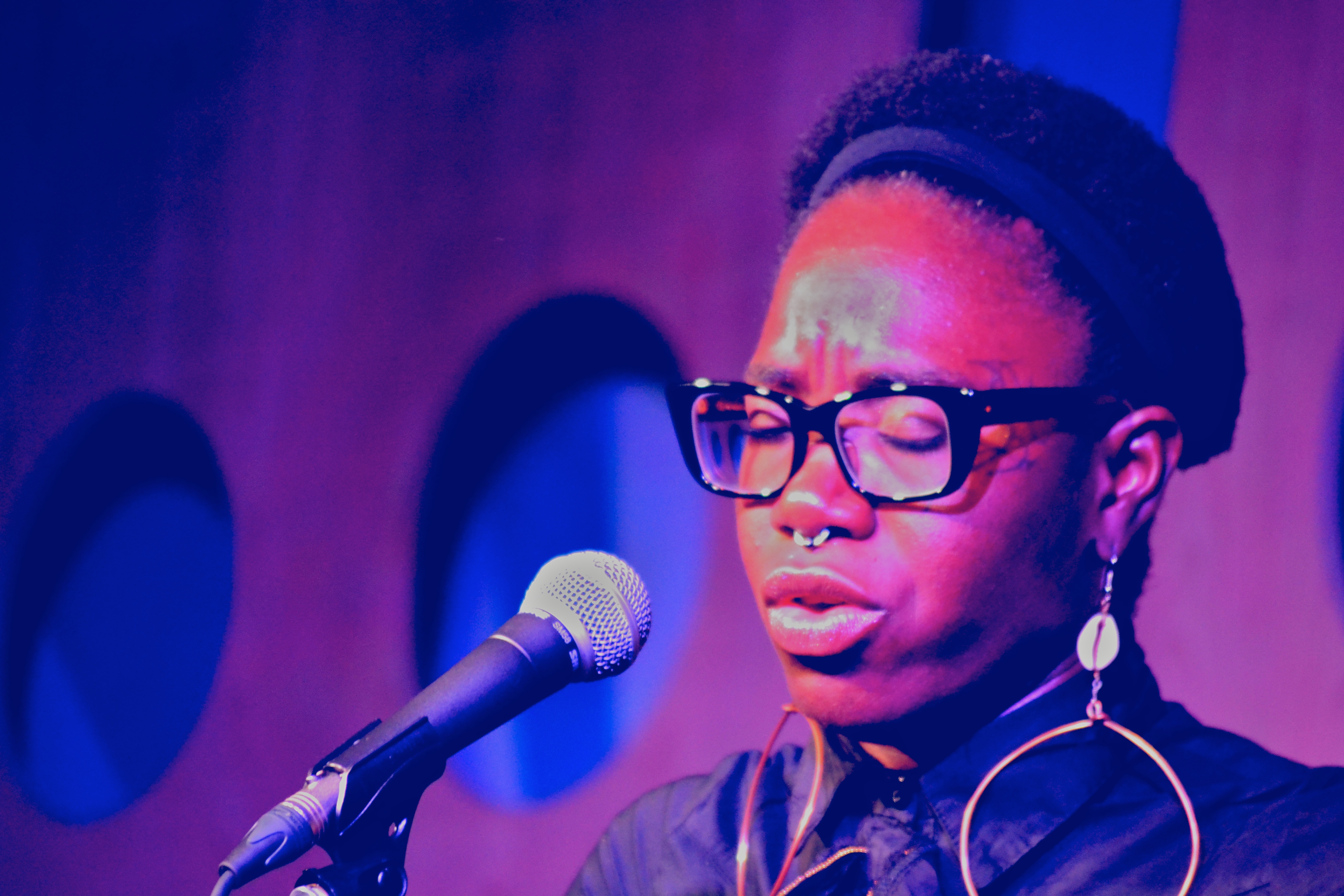
“we tellin’ stories yo”: A Performance and Interview with renowned dub poet d’bi.young with an opening DJ Set by DJ Techné. Thursday, August 8th, 2013 (7-9 pm) @ Paintbox Bistro.
Photos of d’bi by Paul Watkins.
Photos of Paul Watkins and d’bi together by Meg Watkins.
Edits by Paul Watkins.
“This poet is a griot in search of a village.”
-Kwame Dawes, “Holy Dub,” Midland 18.
Dub poetry is a form of performance poetry with a West Indian aesthetic and origin. It evolved out of dub music comprised of spoken word pieces over reggae rhythms and Nyabinghi traditions[i] in Jamaica beginning in the 1970s. Rather than the Jamaican form of “toasting” (a significant stylistic influence on hip-hop), which also featured (often improvised) spoken word, sometimes as chant, to the music of the dancehall DJ, a dub poet’s performance is usually pre-written and prepared. Spoken or chanted with the background of reggae rhythms, or a capella or ital, and using Jamaican Creole/Patois, dub poetry effectively blends African and Caribbean oral and griot traditions with more standard approaches to poetry and performance. Basically, dub performances were created by removing vocals from side A of a record with a dub machine to create a B side containing a rhythm/instrumental track, often amplifying the bass and drums. Traditionally dub poets are closely aligned with DJs—yes DJing is both traditional and tradition—as they reanimate and (re)sound the past in the present through a musico-poetic performance atop a tentative original.
Conventionally, “Jamaican Creole is the natural language of dub poetry” (Afua Cooper, Utterances 1) and while dub poets often privilege reggae music, nearly all forms of African American and Afro-diasporic musics, and others, can be used in the performance of a dub poem as the mode continues to evade a single homogenizing definition or approach. Nevertheless, dub “began as, and remains, rebel poetry” (2). This is not to say that dub poetry eludes the possibility of definition. d’bi.young.antifrika—one of Canada’s most renowned dub poets and dub monodramatists—thinks through dub vis-à-vis her own mother’s manuscript on dub, which identifies the four major elements of the then emerging form: music, language, politics, and performance (“r/evolution” 27). Dub as such bridges the personal and the political, and as d’bi developed her own understanding of dub she added four more elements for a total of eight principles to form the acronym s.o.r.p.l.u.s.i: “urgency, sacredness, integrity, and self-knowledge. I then renamed the earlier elements of music, politics, and performance to rhythm, political content and context, and orality” (27).
In the following video d’bi outlines how these eight principles can empower artists, particularly African artists across the diaspora.
For d’bi, the principles of dub poetry—consisting of self-knowledge, orality, rhythm, political content and context, language, urgency, sacredness, and integrity—combine to comprise “a comprehensive eco-system of accountability and responsibility between my audiences and me. each principle in the methodology challenges me to not only be self-invested but to (re)position to the centre of my micro and macro communities, being both accountable and responsible (able to account for and respond to these communities)” (“r/evolution” 27). As such, dub poetry has the power to connect disparate communities together through lines of solidarity. Two days from now, on August 8th, I will have the privilege of interviewing d’bi.young about her practice as a pioneer in the art of dub poetry and theatre. I hope to see you there for what promises to be an exciting and engaging evening of “Word! / Sound! / Powah!”
Here’s the poster for the event, d’bi’s personal page and youtube page, as well as the facebook event page.
Cooper, Afua (Ed.). Utterance and Incantations: Women, Poetry and Dub. Toronto: Sister Vision, 1999. Print.
[i] The Nyahbinghi Order is the oldest of all the Rastafari mansions and the term translates as “black victory” (niya = black, binghi = victory). The Niyabinghi resistance inspired a number of Jamaican Rastafarians, who incorporated niyabinghi chants into their celebrations (Wikipedia). The rhythms of these chants—full of improvised syncopation— greatly influenced popular ska, rocksteady and reggae music.
Featuring an opening DJ Set by DJ Techné FREE and Open to the Public
Thursday, August 8th, 2013 (7-9 pm)
Paintbox Bistro (555 Dundas Street East, Regent Park, Toronto)
ICASP (Improvisation, Community, and Social Practice) and Paintbox Bistro present Jamaican-Canadian dub poet, monodramatist, educator, and Dora Award-winning actor and playwright, d’bi.young.anitafrika in an intimate free performance. Following the performance there will be an interview with the poet conducted by Paul Watkins (DJ Techné). Make sure you catch this event with one of Canada’s most visionary storytellers.
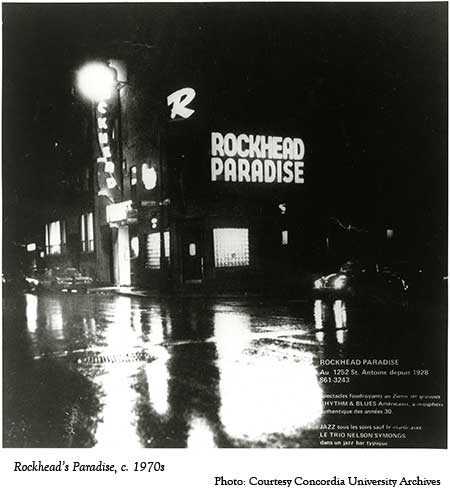
I’ve drafted a writeup of the historically renowned Rockhead’s Paradise in wikipedia style. I actually intend to make a wikipedia page for Rockhead’s, since there surprisingly isn’t one for Rufus or his legendary club.
Rockhead’s Paradise—along with other jazz clubs in Montreal, such as The Nemderoloc Club [colored men spelled backwards], The Boston Café, and The Terminal Club—helped established Montreal’s reputation as “Harlem of the North” (See Gilmore, Swinging in Paradise; Winks, The Blacks in Canada 332-35; Williams, Road to Now 44; Israel, “Montreal Negro Community” 189-95.) Of all the jazz clubs in Montreal throughout the twentieth century Rockhead’s Paradise, located at 1254 St. Antoine Street, was the most popular until it closed its doors permanently in 1980 when it was sold and then shortly thereafter demolished, followed by the creation of the Ville Marie Expressway overhead which solidified the club’s demise (Brownstein). During it’s fifty year tenure numerous renowned jazz players were drawn to Rockhead’s Paradise, including Duke Ellington, Louis Armstrong, Fats Waller, Cab Calloway, Billie Holiday, Ella Fitzgerald, Leadbelly, Nina Simone, Dizzy Gillespie and Sammy Davis Jr., among countless others.
The three-story club was founded in 1928 by Rufus Rockhead, a Jamaican-born railway porter who was able to draw some of the biggest names in blues and jazz during Montreal’s Sin City heyday from the 1930s to the 1950s (Brownstein). Rufus Rockhead opened the club with the income he earned on the rails as a porter, and then later as a bootlegger, allegedly running booze for Al Capone (Mathieu, North 71; 201; 240). Initially Rufus Rockhead opened the operation at the Mountain Tavern on St. Antoine and Mountain St. with hotel rooms on the top floor; eventually, he converted the second and third floors into a cabaret (Miller 172). Even though African Canadians were unable to get liquor licenses, Rufus used what sway he had among friends to help him get the license. After three years of running the Mountain Tavern, Rufus parlayed the tavern into the jazz club Rockhead’s Paradise (Gazette).The club was located in Little Burgundy, an area known for producing talented jazz musicians, most notably Oscar Peterson and Oliver Jones. While the club was particularly popular—given its long tenure and the caliber of jazz musicians who played there—many white Canadians felt that jazz and the crowd it attracted, “jeopardized white Canadians’ morality and white womanhood in particular” (6), as Sarah-Jane Mathieu contends through historical documentation in her book, North of the Color Line: Migration and Black Resistance in Canada, 1870-1955.
Norman Marshall Villeneuve – Rockhead’s Paradise 1963 – Jam (with pictures of the club)
During its last years of operation, the club was the home of Rising Sun (Soleil Levant), which was a jazz, blues, and reggae club (Miller, 170; 173). In 2012, 32 years after Rockhead’s Paradise was demolished, pianist Billy Georgette organized “Rockhead’s Last Jam” to honour the now legendary iconic jazz figure and club along with some of Montreal’s luminary jazz musicians and stalwarts who got their start at the Little Burgundy jazz club, including: Oliver Jones, Billy Georgette, Norman Marshall Villeneuve, Leroy Mason, Glenn Bradley and Richard Parris, among other notables, for what was perhaps their last collective jam (Brownstein). As Georgette recalls: “It was quite the place. I believe it was the first club owned by a black in Montreal and maybe in all of Canada. And the tavern was reputed to have the longest bar in the city at 75 feet. There was so much going on at the time. Not just the music. I remember the hookers, who were almost motherly to us. There was so much excitement there. But then modern construction just wiped it all off the map. It’s such a pity” (Brownstein).
I can’t wait to see the documentary, Burgundy Jazz, about jazz in Montreal, and which will likely feature Rockhead’s Paradise.
Works Cited
Brownstein, Bill. The Gazette. June 28, 2012.
Gilmore, Swinging in Paradise: The Story of Jazz in Montreal. Quebec: Vehicule Press (Dossier Quebec Series), 1988. Print.
Mathieu, Sarah-Jane. North of the Color Line: Migration and Black Resistance in Canada, 1870-1955. USA: North Carolina UP, 2010. Print. 71; 201; 240.
Miller, Mark. The Miller Companion to Jazz in Canada and Canadians in Jazz. Canada: The Mercury Press. Print. 172.
The Gazette. Montreal, Sat., Jan. 20, 1979.
Williams, Dorothy. The Road to Now: A History of Blacks in Montreal. Quebec: Vehicule Press (Dossier Quebec Series), 1997. Print. 44.
Winks, Robin. The Blacks in Canada: A History. 2nd Ed. Montreal: McGill-Queen’s UP, 2000. Print. 332-35.
I encountered hip-hop music for the first time when I was ten years old. I remember bringing home a cassette of Snoop Dogg’s Doggystyle; the album’s iconography was brash in its explicit display of pugilistic eroticism (I borrow this term from a bell hooks film entitled Cultural Criticism and Transformation). Aesthetically the music was smooth, full of funk-infused hard-thumping gangster rhythms.Shortly afterwards, my parents found the cassette and took it away; this experience was also my first introduction into the world of censorship. Perhaps John Milton might have rethought his defense for the freedom of the press in his Areopagitica had he encountered gangster rap, although perhaps he would have deemed it a good starting place for a conversation. One of the things I appreciate about Kanye’s latest record, Yeezus, is the zealous discussion it started.
Kanye has always had a unique ability to spark conversation, controversy, debate, praise, and vehement responses to his persona and music—the two are often inseparably conflated. We all remember Kanye’s controversial statement that then American President George W. Bush “doesn’t care about black people” or his interruption of Taylor Swift’s acceptance speech at the 2009 MTV music awards. Few musicians today are lauded or despised with the same fervor Kanye provokes. He went from a sought after producer to a rap god of his own making. Essentially, from “Jesus Walks” to I am “Yeezus,” or “I am a God” as he repeats over and over (with some hyperbole) as the egoist’s mantra on his sixth studio offering, Yeezus. I admit the first time I heard Yeezus I didn’t quite enjoy the experience or know what to make of it. Kanye’s music has always been intensely well produced, but here the concentration reaches new heights of desperation, self-deprecation and self-praise, as he howls into the void of his own notoriety with a clanging industrial reboot of his 2008 effort, 808s & Heartbreak.
In some ways Yeezus is the antithesis to the maximalism of West’s last solo effort, My Beautiful Dark Twisted Fantasy. The beats are often sparse and what I really appreciate about Yeezus is how the record dances with silence. Traded in for the smooth soul samples are jarring electro and industrial grindings somewhat in the vein of Trent Reznor. And while Yeezus might change or influence the course of rap and pop music it does so largely on the craftsmanship of those who have come before him. The album would be much more impressive if hip-hop poet Saul Williams and Trent Reznor hadn’t already releasedThe Inevitable Rise and Liberation of Niggy Tardust! back in 2007, an ode to David Bowie’s Ziggy Stardust. The differences and similarities between Niggy Tardust! and Yeezus are startling, although gone from Kanye’s album is much of the slick wordplay and social commentary found in Williams’s lyricism, which makes sense given Williams is a gifted poet, and while Kanye is a talented producer, he is hardly the poet laureate of hip-hop.
West’s album owes much of its sound to a long list of industrial hip-hop innovators, from the British trip-hop of Massive Attack, Dizzee Rascal, Roots Manuva, and Portishead, to modern innovators of the American industrial hardcore hip-hop sound including Death Grips, Odd Future, and the incredibly talented EL-P. This is not to say that the production on Yeezus is subpar. It’s actually quite fantastic— Kanye’s ability to make dope beats has never really been a concern. What was most alarming to Kanye fans was his choice to trade in soul samples for more electronic, synth-heavy, and abrasive dense drums, subtonic bass sounds, and trebles that clip off the meter—although there are a couple soul samples thrown in here and there, particularly on the track “Bound 2” which samples “Bound” by Ponderosa Twins Plus One. One of the first samples I noticed was on the thumping “Black Skinhead,” which samples the drums of Marilyn Manson’s “The Beautiful People.” The involvement of veteran producers Rick Rubin and Daft Punk—rule breakers and consummate craft makers of popular music—help the album sound incredibly tight: the whole dizzying affair is only forty minutes long. In fact, the album grows on you like a fungus until you can’t help but be taken in by its infectious ziggurat of sound.
Kanye reminds us that pop music has always been a hybrid activity, mixing styles while creating new trends in the process. Static pop music as a kind of symbolic whiteness becomes dubious under the threat of atrophic productions that marry a variety of styles and themes. As music journalist John Leland argues in Hip: the history, it was the recording industry of the twentieth century that created the arbitrary separation of music into genres in order to meet market demands. In the early twentieth century many itinerant African American as well as white performers played a mix of minstrel tunes, ballads, folk songs, blues, and rags. Leland contents that “Black performers became blues singers in the studio, dropping their other master at the door; whites became hillbilly singers. The blues singer, then, was an invention of the studio, and often white record executives” (36). Are not the blues, jazz, and hip-hop mercurial forms that welcome deviance by their very nature? Kanye’s Yeezus does an excellent job of challenging and defying genre expectation—who would have thought that Nina Simone’s “Strange Fruit” (most famously sung by Billie Holiday and written by Jewish teacher Abel Meeropol as a poem) would be remixed into a piercing electro-pop anthem about consumption, alimony, and abortion with West’s emblematic and dichotomic blending of the sacred and profane.
Most of the lyrics on the album aren’t all too deep; rather, they are sexually provocative and often misogynistic, such as: “Fuck you and your Hamptonhouse / I’ll fuck your Hampton spouse/ Came on her Hampton blouse / And in her Hampton mouth” (“New Slaves”); “Careless whispers, eye fucking, biting ass / Neck, ears, hands, legs, eating ass / Your pussy’s too good, I need to crash / Your titties, let em out, free at last” (“I’m in It”); “Uh, black girl sippin’ whitewine /Put my fist in her like a civil rights sign/ And grabbed it with a slight grind/ And held it till the right time / Then she came like AAAAAHHH!” (I’m in It”). I could go on, but I think you get the idea. Given the historical arch on songs like “Black Skinhead,” “New Slaves,” and “Blood on the Leaves,” sex and miscegenation is put into a historical present where Kanye’s own relationship with Kim Kardashian is a case example of the negative attention he gets (in his opinion) in the spotlight for dating and having a child with a white girl—or for dating a Kardashian. I am reminded of the young Haitian narrator of Danny Laferrière’s How to Make Love to a Negro without Getting Tired, whoanswers back with virulent force to a history “not interested in us” (30) through sexual intercourse with white women: “I’m here to fuck the daughter of these haughty diplomats who once whacked us with their sticks […] history hasn’t been good to us, but we can always use it as an aphrodisiac” (95). Miscegenation is a running thread in the album, which can be extended to the technique of Kanye’s own productions creating a mix that can only be described as an “unholy matrimony” (to borrow from Kanye’s own words in “Blood on the Leaves”).
No song is more captivating and explicitly concentrated then “Blood on the Leaves” whose title riffs on a line from “Strange Fruit,” referring to lynched black bodies. I still don’t know quite know how to feel about the use of the Nina Simone sample (particularly the chosen lines: “Strange fruit hanging from the poplar trees”; “Blood on the leaves”; “Black bodies, swinging in the summer breeze”). The line “blood on the leaves” first appears on “New Slaves” and there is a direct connection between being a modern slave (largely to corporate superstructures) to Kanye being hung by his own guilt around his notoriety, fame, coupled with themes of divorce, betrayal, abortion, and the loss of a past love, he raps:
Before the limelight stole ya
Remember we were so young
When I would hold you
Before the blood on the leaves
I know there ain’t wrong with me
Something strange is happening
“Blood on the Leaves” uses the background of lynching to talk about infidelity and the loss of love as if the two are somehow equivocal:
Now you sittin’ courtside, wifey on the other side
Gotta keep em separated, I call that apartheid
Then she said she impregnated, that’s the night your heart died
Then you gotta go and tell your girl and report that
Main reason cause your pastor said you can’t abort that
[…]
That going to that owing money that the court got
All in on that alimony, uh, yeah-yeah, she got you homie
Til death but do your part, unholy matrimony
“Unholy Matrimony” is right. Only Kanye would think that divorce, betrayal, and the dilemma of dealing with a mistress who evidently will not abort your baby are akin to lynching. Or perhaps, in the way that “Strange Fruit” was an anti-lynching anthem, the song is as Nicholas Troester describes, an “anti-abortion anthem.” Conceivably, the inherent juxtaposition and grotesque discomfort experienced by the listener from the “Strange Fruit” sample with West’s lyrics is the point—but is it the right point and is it lost on his listeners? For me, auto-tune has never sounded more haunting than it does on “Blood on the Leaves” as Kanye’s voice flutters and breaks with a heightened dose of self-pitying clatter.
Kanye is the centerpiece of his album—as he usually is—and he inserts himself as a case study for his critiques of materialism and race within the context of his fame: “They see a black man with a white woman / At the top floor they gone come to kill King Kong /Middle America packed in/ Came to see me in my black skin” (“Black Skinhead”). The album is full of self-parody and monstrous spectacle and more than anything it gets us talking about Kanye, which might actually get us talking about the performance of race and the consumerism Kanye critiques in his own complicity. Given the mere 40 minutes running time, Yeezus packs quite the punch, which is why I think critics loved the album so much. As Griel Marcus argues, “The job of the critic would be to maintain the ability to be surprised at how the conversation goes, and to communicate that sense of surprise to other people, because a life infused with surprise is better than a life that is not” (23). As long as Kanye continues to surprise his fans and critics alike he will have a forum to make music (despite the album leaking a week early, it debuted at number one on the Billboard 200, selling 327, 000 copies in its first week). Yeezus is often a great album, but it is hardly the unequivocal industrial hip-hop album of its style. Is it full of misogyny and hedonistic self-aggrandizing bravado? Of course—it wouldn’t be a Kanye West album if it weren’t. While Yeezus is not an album for everyone, nor is it an album everyone should like, it started some interesting conversations and helped to open up a level of musical critique that I felt was absent for too long in popular music criticism.
Works Cited
Laferrière, Dany. How to Make Love to a Negro without Getting Tired. Toronto: Coach House, 1987. Print.
Leland, John. Hip: the history. New York: HarperCollins, 2004. Print.
Marcus, Greil. Lipstick Traces: A Secret History of the Twentieth Century. Cambridge, MA: Harvard UP, 1989. Print.
I’m new to this whole website/blog thing, but I look forward to the possibilities it provides. My website has just gone live, so please check out the various sections, perhaps starting with the About Me, and look forward to future reviews, music, performance videos, and the occasional blog post.















 Giorgio Moroder is an influential record producer, performer and songwriter, known as an innovator of synth-pop, dance, disco, rock, and various electronic musics, as well as for his work on various film soundtracks. In the 1970s in Munich he started his own record label called Oasis Records, which became a subdivision of Casablanca Records. Through Oasis/Casablanca he released many disco era hits, including Donna Summer’s “Love to Love You Baby.” He is also the founder of Musicland Studios in Munich, a popular studio that was used by Queen, Elton John, Electric Light Orchestra, and Led Zeppelin, among others. He has widely collaborated and his compositions have been sampled numerous times in electronic and hip-hop music.
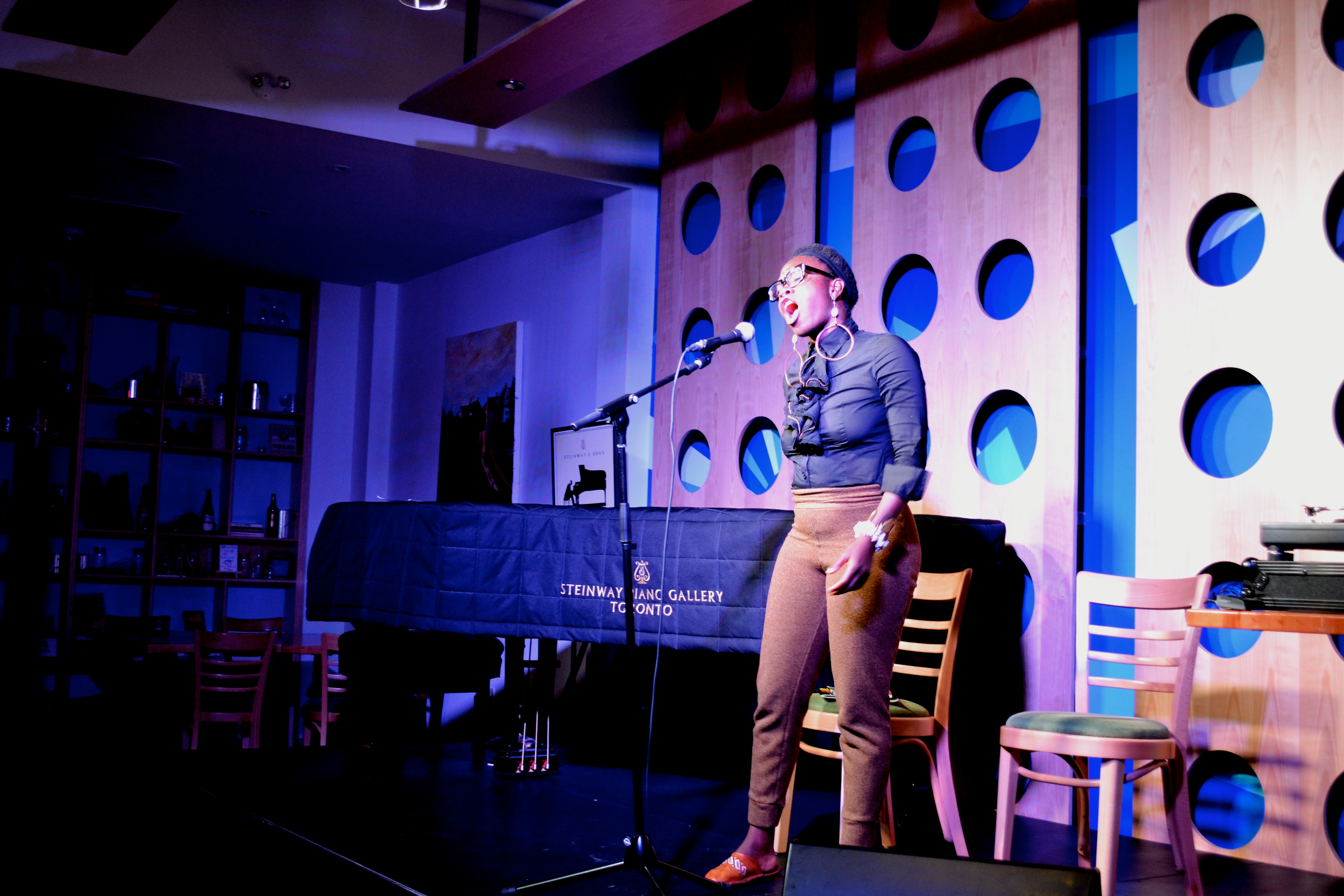




 PAUL db WATKINS
