BLOG: RIFFINGS

Top 5 Records of 2015

There was a lot of great music released in 2015. I could easily compile a list of the 50 Best Albums of the year, but instead I am keeping things simple and mentioning the 5 albums that made the deepest impact on my listening last year. If the list was longer, it would include such fantastic releases as Jamie xx’s In Colour, BadBadNotGood and Ghostface Killah’s Sour Soul, Panda Bear’s Panda Bear Meets the Grim Reaper, Four Tet’s Morning/Evening, Max Richter’s Sleep, and Colin Stetson and Sarah Neufeld’s Never Were the Way She Was, among many others. Here’s the list of my 5 favourite albums of 2015 with a selected track from each record.

5. Father John Misty, I Love You, Honeybear

Josh Tillman’s second release under the moniker Father John Misty tells the story of his courtship of his wife, Emma. This is a really fun record that reads like one long self-reflexive joke that we are let in on. This album is all about juxtaposition, placing caustic irony beside blunt declarations of love.


4. Kasami Washington, The Epic

For those of us who listen to jazz, it’s exciting to see how the genre is being taken in new directions. Last year’s You’re Dead! by Flying Lotus drew on the spiritual jazz of Alice and John Coltrane to the progressive jazz fusion of Weather Report to the humourous and cosmic tones of Sun Ra. Kasami Washington’s The Epic, also on Lotus’s Brainfeeder imprint, builds on that format in a three hour jazz odyssey that digs deep into the past and pushes forward as a kind of generational intervention. The Epic features a 10-piece jazz band with augmentation from a string section and a full choir and holds its own with the best of fusion records. This is consciousness-raising music and it is getting lots of spins over here.


3. D’Angelo and the Vanguard, Black Messiah 

14 years after the critically acclaimed Voodoo, D’Angelo returns with the militant, powerful, and funky Black Messiah. The album is incredibly layered with murky vocals, unsettled grooves, and fuzzy guitars, with deep roots in rock, funk, jazz, and gospel. It’s an album that recalls Sly and the Family Stone’s 1971 funk album There’s a Riot Goin’ On. An unbelievable comeback record from D’Angelo.


2. Sufjan Stevens, Carrie & Lowell

Sufjan Stevens’s beautiful Carrie & Lowell has been on repeat in our house since its release. The songs on the album are inspired by the 2012 death of his mother, Carrie, and the family trips they took to Oregon in Stevens’s childhood. For me, this album is up there with Seven Swans and Illinois. This album is Stevens’s most personal and mature and it is also his most stripped down record, which allows his abilities as a songwriter to shine through.


1.  Kendrick Lamar, To Pimp a Butterfly

Kendrick Lamar’s To Pimp a Butterfly provides an Umwalzung—that is, revolution—through a complete overturning of prior mainstream hip-hop album templates, as Lamar enacts one of the most ferocious black chants ever to appear on a hip-hop record. The album’s unforgiving blackness is important, because it reminds white listeners that sometimes we need to sit down and listen to the conversation that is taking place rather than try to control or shape it. This is art and music that is both relevant and functional, showing that you can make music that is both rhetorically powerful and aesthetically pleasing. Without a doubt, Lamar’s To Pimp a Butterfly is my favourite release of 2015. It certainly restored a lot of my faith in mainstream hip-hop. As David Jeffries puts it, “To Pimp a Butterfly is as dark, intense, complicated, and violent as Picasso’s Guernica, and should hold the same importance for its genre and the same beauty for its intended audience.”

DJ Phoenix (my son) getting into the mix. #DJPhoenixDailyRecord
DJ Phoenix (my son) getting into Lamar’s powerful record. #DJPhoenixDailyRecord


Improvisation and the Syrian Refugee Crisis

At the end of the summer the conversation around the Syrian refugee crisis changed when shocking images of a drowned Syrian boy went viral. Since then numerous videos have appeared that humanize the millions of displaced and dispossessed refugees. The conversation drastically shifted to one around security after the Paris attacks, and has changed again in Canada after Justin Trudeau gave a welcoming response to Syrian refugees.

I’ve published a short paper about the crisis where I suggest that improvisation might be one way we can frame a meaningful response to the crisis. The current Syrian refugee crisis—the civil war and the displaced peoples that resulted from it, but also the crisis with respect to how Western countries have responded to it—affirms a renewed need to learn to deal with social dissonance. In this piece, I discuss the ways in which social and musical improvisation (particularly when immersed in the ethics of “cocreation”) can teach us about the merits of creative risk-taking in relation to the current Syrian refugee crisis, a form of social dissonance. Learning to improvise imbues citizens with the important notion that creative risk-taking makes for more exciting and, while unpredictable to a degree, egalitarian societies. Ultimately, I insist that we can fight the insular mechanics of an improvisation of fear with an improvisation of hope that challenges the anxiety that refugees destroy borders and culture, as if these things are pure, static, given, unchanging, and authentic.

See the full article, here.

Featured image from here.

The Presence of the Past

Winfried Siemerling’s The Black Atlantic Reconsidered and Austin Clarke’s In Your Crib prioritize transatlantic Black perspectives from within national paradigms to explore Black Canadian identity, belonging, and the presence of the past. The two works are quite different: Clarke’s text is an introspective long poem that channels the radical spirits and rhythms of the civil rights movement, and Siemerling’s text is a considerable historical undertaking that reconsiders Canada’s place in the Black Atlantic. However, both texts deepen our understanding of Black writing and radical thinking within a Canadian space that belongs to a larger historic transatlantic nexus.

Click here to read my full review at Canadian Literature.

PRESS RELEASE: Celebrated ‘Africadian’ Poet George Elliott Clarke Reads at VIU Oct. 22

Toronto Poet Laureate, playwright, and literary critic George Elliott Clarke, VIU’s 2015 Gustafson Distinguished Poet, will deliver a free public lecture, On Entering the Echo Chamber of Epic: My “Canticles” Vs Pound’s Cantos, Thursday Oct. 22nd at 7pm in building 355 on the Nanaimo campus.  Clarke introduces his epic poem, “Canticles,” in response to Ezra Pound’s contentious Cantos, a 20th-century post/modern epic both vilified for its integration of fascist propaganda and heralded for its haunting lyricism. Pound, a classicist, nodded to T. S. Eliot’s “The Waste Land” and Stephen Vincent Benet’s “John Brown’s Body,” both of which skirted racist material yet refused to be contained, or restrained, by formalism.

Clarke will recite excerpts from his work-in-progress “Canticles,” which echoes slave and imperialist debates from Cleopatra to Celan. Clarke will also invoke contemporary poets Derek Walcott and NourbeSe Philip who invite harmonious, multiple, and multicultural voices in their revisions of Pound’s controversial masterpiece. Clarke champions writers of African descent and coined the term, “Africadian” to identify the Black culture of Atlantic Canada, a term he says is both “literal and liberal—I canonize songs and sonnets, histories and homilies.”

Clarke traces his own inspiration to “poet-politicos: jazz trumpeter Miles Davis, troubadour-bard Bob Dylan, libertine lyricist Irving Layton, guerrilla leader and poet Mao Zedong, reactionary modernist Ezra Pound, Black Power orator Malcolm X, and the Right Honourable Pierre Elliott Trudeau.” Clarke finds their “blunt talk, suave styles, acerbic independence, raunchy macho, feisty lyricism, singing heroic and a scarf-and-beret chivalry quite, well, liberating.”

Clarke’s colleague and VIU English professor Paul Watkins says, “For George, poetry is not only a printed form, but also an oral art. His boisterous readings present the listener with a gumbo-concoction of jazz rhythms, blues-infused gospel vernacular, and plenty of play upon the standards of the larger literary tradition. This is poetry presented with the ‘lightning of prophecy’.”

Clarke has published: a 13 works of poetry including Whylah Falls (2002 Canada Reads contender), Execution Poems, winner of the Governor General’s Award for Poetry, and his latest Traverse; 4 plays, screenplays, or libretti One Heart Broken Into SongBeatrice ChancyQuébécité, Trudeau; the novel George and Rue; and 4 anthologies of African-Canadian writing including Directions Home: Approaches to African-Canadian Literature. He has been the E.J. Pratt Professor of Canadian Literature at the University of Toronto for the last 12 years and holds 8 honorary doctorates from Royal Military College and Dalhousie, New Brunswick, Alberta, Waterloo, Windsor, Acadia, Saint Mary’s universities. He received the Martin Luther King Jr. Achievement Award, the Pierre Elliott Trudeau Fellows Prize, and Order of Nova Scotia and the Order of Canada.

After Clarke’s lecture, a catered reception, cash bar, and book signing will follow in Bldg 300’s Royal Arbutus Room. Several of Clarke’s books will be sold at the VIU Bookstore. Courtesy parking is available in Lot N, in front of building 355. Clarke will also perform with musician James Darling at the Corner Lounge Wednesday October 21st 7:30-8:30. These events are sponsored by VIU’s Faculty of Arts & Humanities, Writers on Campus, and the Canada Council for the Arts.

The Gustafson Distinguished Poetry Lecture was established in 1998 from the estate of the late, pre-eminent Canadian poet Ralph Gustafson and his wife, Betty. The Chair has been held by celebrated poets Don Domanski, Dionne Brand, Tom Wayman, Daphne Marlatt, Robert Bringhurst, Don MacKay, Jan Zwicky, Dennis Lee, Michael Crummey, and Katherena Vermette among others, most of whom have had their lectures published as chapbooks. An interview will also appear in Portal2016, VIU’s full-colour literary magazine, on stands in April.

For more info contact Chair of the Gustafson Committee Toni Smith at Toni.Smith@viu.ca or to buy a chapbook contact the series’ publisher Joy Gugeler at joy.gugeler@viu.ca. For more information about the lecturers visit http://www.mediastudies.viu.ca/gustafson/

See more at: http://www.mediastudies.viu.ca/gustafson/#sthash.Y6hAy6n0.dpuf

RED REVISED Gustafson Poet Poster PRINT[3]

clarke Poster-final copy

Special Issue of Critical Studies in Improvisation on Hip-Hop is Now Live

Cyphers: Hip-Hop and Improvisation

Vol 10, No 1

Edited by Paul Watkins and Rebecca Caines

To cypher is to rap, break, beatbox tightly together in a circle where each person just might get a moment in the spotlight. To cypher is to borrow and to lend, to playfully freewheel through whilst taking an exacting care for each word and carefully considering all the sounds, meanings, and interpretations. It is to fight back, to borrow, to steal, to represent, and to collaborate, whilst suddenly—surprisingly—at times aggressively claiming your own voice, your own right to speak. A cypher is a gathering of rappers, beatboxers, and/or breakers in a circle, extemporaneously making music together. In recent years, the cypher has also grown to include the crowd and spectators who are integral to maintaining the energy of a given cypher. In a cypher, one emcee will rap about a certain topic, which is quickly taken up or flipped by another emcee who plays off the prior words and themes. Each artist takes his or her respective turn, much like in a jazz solo. Cyphers flow freely between diverse performers who improvise their words, sounds, or movements to create a complex matrix of sharing. The circle can go on continuously, as long as emcees, beatboxers, dancers, and the crowd keep the fluidity of the cypher going. The cypher is welcoming and thus models a pedagogy that is inclusive and improvisational in nature.

This issue of Critical Studies in Improvisation/ Études critiques en improvisation aims to act as a cypher, engaging with the embodied practice of locally specific yet globally implicated hip-hop, as we consider the cypher as a metaphor for the complexities of critically thinking about improvisation more broadly. Appropriately, our theme of “Cyphers” attracted a wide range of analyses with many points of intersection. Our final selection ranges from discussions with historically significant scholars and practitioners in hip-hop and Black expressive culture to newer texts at the intersections between hip-hop and other art forms, as well as those tracing the improvisatory affects of hip-hop across cultural and technological boundaries.

Each paper in this issue addresses specific responses to the improvisatory impulse in hip-hop. We start the issue with a number of interviews. We are honoured that George Lipsitz agreed to interview Tricia Rose for this issue, bringing two significant scholars in Black Studies into conversation. This interview emphasizes Rose’s vital contributions to the field of hip-hop scholarship and addresses the broader importance of improvisatory Black expressive cultural practices as “sites and sources of knowledges, as repositories of collective memory, as sights of moral instruction, as ways of calling communities into being through interaction and through performance.” Rebecca Caines’ interview with leading Canadian hip-hop researcher Charity Marsh focuses on Marsh’s creation and leadership of the Interactive Media and Performance Labs in Saskatchewan as an innovative, exploratory space for disenfranchised communities to meet and learn about themselves through hip-hop practices. In conversation with Vancouver-based poet/scholar/DJ Wayde Compton, Paul Watkins addresses Compton’s work on history, identity, and race, exploring the idea of improvising Blackness from within both local (BC) and transnational contexts. This audio interview is then remixed a number of times to allow the conversation to interact with Compton’s readings of his own poetry and with a number of different music samples. Watkins then continues this exploration of critically engaged approaches to artistic practice with his review of Flying Lotus’s (aka FlyLo, born Steven Ellison) 2014 release, “You’re Dead!

Jesse Stewart examines the form of “jazz-rap” that emerged in the 1980s and ’90s. He charts the use of improvisational jazz forms in this type of hip-hop music and perceives this act as a kind of cultural memory practice that “mobilizes the musical past in the service of a socially progressive cultural politics of difference.” Niel Scobie addresses dissonance and “noise” in improvisation and in hip-hop music, with special attention to the music of Public Enemy. For Scobie, “anti-musical” aesthetics allow the group to create lineage with the “discordant cries” of African-American past practices whilst developing a potent improvisatory musical urgency and a call to arms.

Both Marcel Swiboda and Mark Campbell address technological mediation in hip-hop practices. Swiboda addresses “the break,” developing a new critical history of electronic tools for beatmaking to supplement existing scholarship, which has tended to focus more on the use of turntables for isolating and manipulating the breakbeat. Swiboda suggests that technological and material histories of improvisatory beatmaking practices can be “technologically driven, idiomatically specific vernacular modes of critical knowledge practice” and can also bear an “intimate link to improvisatory practices.” Campbell, on the other hand, focuses on current digital DJ practices. His ethnographic project is to discover how newer digital interfaces affect younger DJs in live performance and in radio settings. He argues that digital DJ interfaces might represent “ways to continue to humanize technology as a subversive afrosonic activity, while evolving the practice of DJing.”

See the full editorial and issue, here.


Critical Studies in Improvisation / Études critiques en improvisation is generously supported by the Social Sciences and Humanities Research Council of Canada (through both its Major Collaborative Research Initiatives and Aid to Scholarly Journals programs) and by the University of Guelph Library.

Book Review: The Inconvenient Indian

Thomas King is one of Canada’s most prolific writers: a renowned novelist, broadcaster (The Dead Dog Café Comedy Hour), screenwriter, one-time NDP electoral candidate, and the first person of Aboriginal descent to be chosen to give the Massey Lectures (in 2003). In The Inconvenient Indian: A Curious Account of Native People in North America Thomas King shares his extended reflection on Native (King’s chosen term) identity through history, humour, and personal meditations. For King, stories define who we are and The Inconvenient Indiantakes this maxim and displays—through the weft and warp of history—why the stories we tell matter, especially since Canada’s story is often about the country’s strained relationship with First Nations people.

To read the full review over at The Bull Calf, click here.

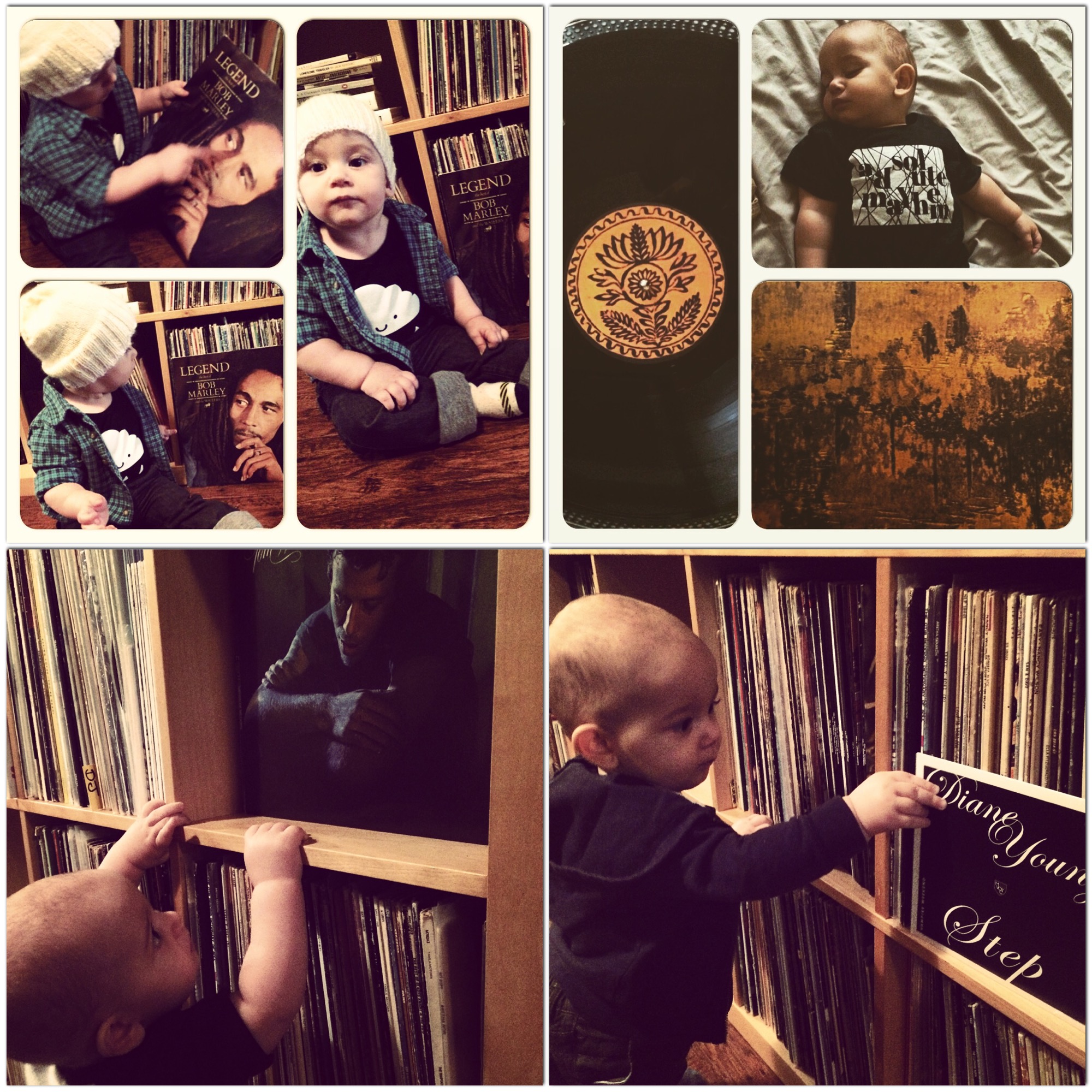
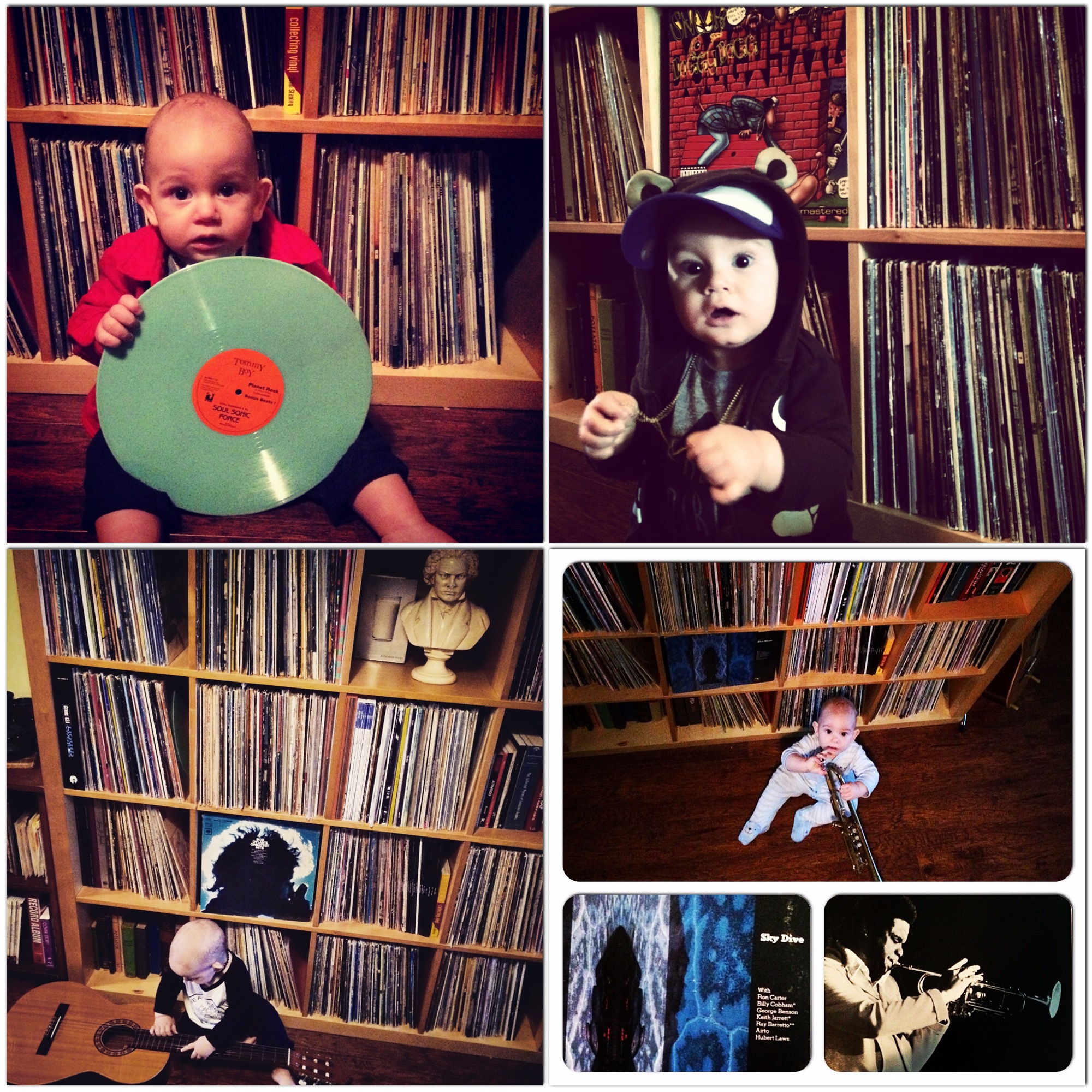
#DJphoenixdailyrecord: January

Along with the complex smell of spices from my wife’s cooking, a steadfast in our home is the warm sound of vinyl records: beautiful, and at times crackly, orbs of sonic prophecy. Over the years, I’ve collected nearly a 1000 records in all genres. Last April, we were gifted with our son Phoenix who will be 10 months old this month. Given I’ve been playing records and dancing, or playing, with him every day before or after work, I thought it would be nice to document the process (for a whole year) on my Instagram account (http://instagram.com/thevinylprofessor) with the hashtag: #DJphoenixdailyrecord. I’ll post a recap of the photos for each month here, but if you have Instagram, you can follow along daily at: http://instagram.com/thevinylprofessor

January 2015:

IMG_0636 IMG_0637 IMG_0638 IMG_0639 IMG_0640 IMG_0647 IMG_0645 IMG_0646

Jan. 3: Beastie Boys, Licensed to Ill
Jan. 4: Wu-Tang Clan, 36 Chambers 
Jan. 5: Sufjan Stevens, Seven Swans
Jan. 6: Ramin Djawadi, Game of Thrones Soundtrack
Jan. 7: Caribou, Our Love
Jan. 8: Black Star, Mos Def & Talib Kweli Are Black Star 
Jan. 9: Fela Kuti, Gentleman
Jan. 10: Sex Pistols, Never Mind the Bollocks, Here’s the Sex Pistols
Jan. 11: Vampire Weekend, “Diane Young” and “Step” (45)
Jan. 12: Bob Marley and The Wailers, Legend
Jan. 13: Tom Waits, Blue Valentine
Jan. 14: Esmerine, Aurora
Jan. 15: Charlie Parker, Boss Bird!
Jan. 16: The Smiths, Hatful of Hollow
Jan. 17: Flying Lotus, Los Angeles
Jan. 18: Boards of Canada, The Campfire Headphase
Jan. 19: Blue Swede, “Hooked on a Feeling” (45)
Jan. 20: Nirvana, Nevermind
Jan. 21: The Delfonics, “Ready or Not Here I Come (Can’t Hide from Love)” (45) paired with The Fugees, “Ready or Not”
Jan. 22: Thelonious Monk, Monk’s Dream
Jan. 23: Johnny Cash, At Folsom Prison 
Jan. 24: Max Roach Quintet, Conversation 
Jan. 25: Fleet Foxes, Fleet Foxes
Jan. 26: Krafwerk, TransEurope Express
Jan. 27: Afrika Bambaataa and The Soul Sonic Force, “Planet Rock” (RSD glow-in-the-dark vinyl)
Jan. 28: Bob Dylan, Greatest Hits
Jan. 29:  Snoop Doggy Dogg, Doggystyle
Jan. 30: Freddie Hubbard, Sky Dive
Jan 31: Paul McCartney, Ram

Featured Image is of Phoenix, the day after he was born. 

Fight the Power: On Spike Lee’s Do the Right Thing and Social Unrest in Ferguson

“You’ve got to do the right thing.”
-Malcolm X

“A riot is the language of the unheard.”
– Martin Luther King, Jr.

We are still grappling with what, in 1903, W. E. B Du Bois defined as the most divisive issue in America: “the problem of the Twentieth Century is the problem of the color line.” What Du Bois was getting at when he was talking about “the problem of the colour line” was to show that race is ultimately about how racism and power are correlated and socially constructed. Despite this construction, cultural theorist George Lipsitz argues, “Race is a cultural construct, but one with deadly social causes and consequences.” We like to think in 2014 (especially for those of us living under the banner of multicultural Canada) that racism is a problem of the past. In many ways we are still living with the vestiges of a slavery system, what Saidiya Hartmen refers to as “the afterlife of slavery” once practiced in America and Canada.

Last night it was announced that the police officer who shot an unarmed Michael Brown (at least 6 times) was not indicted by a grand jury. Even though Brown’s family called for non-violent change (stating, “While we understand that many others share our pain, we ask that you channel your frustration in ways that will make a positive change”), soon after the grand jury announcement riots in Ferguson spiraled out of control. In many ways Brown’s death—like the death of other unarmed black men, such as Oscar Grant III and Trayvon Martin—became symbolic and systematic of a broken justice system. How are oppressed people supposed to do the right thing, irrespective of whether the approach taken is Malcolm X or Martin Luther King, Jr. in strategy? The problems are so deeply rooted that the entire system requires a complete overturn. It’s like terrorism, which too cannot be stopped by addressing symptoms and not the causes that bread violence: poverty, inequality, and other violence. The same goes for a riot: we are quick to condemn a riot rather than ask, what is at the root of such public outrage?

It is fitting that I had Spike Lee’s seminal film Do the Right Thing—a powerful work of cinematic verve—scheduled to watch in one of my English classes this morning. Although released 25 years ago in 1989, Do the Right Thing remains as pertinent as ever, particularly against the recent backdrop of race riots and social unrest in Ferguson. Lee was instrumental in launching a new wave of Black cinema in 1986 with his renowned protofeminist film, She’s Gotta Have It (although bell hooks takes Lee’s work to task as antifeminist). In the way that She’s Gotta Have It draws its energy from Brooklyn, Do the Right Thing too uses Brooklyn as the backdrop for a slowly brewing race riot. As the thermometer goes up, the film intensifies. The last act of the film is so powerful that some in the media contended that white people should not see the movie in theatres because there might be riots. This is racist because it assumes that only white people can tell the difference between reality and representation.

For many film critics, much of the focus was on the loss of Sal’s Pizzeria while the murdering of Radio Raheem in a brutal chokehold didn’t register. One of the critiques of the film is that Spike Lee does not provide an answer to racism or prejudice at the end of the film. In my opinion this is the real strength of the picture. As Roger Ebert wrote in his review, “He’d [Lee] made a movie about race in America that empathized with all the participants. He didn’t draw lines or take sides but simply looked with sadness at one racial flashpoint that stood for many others.” Ferguson stands for so many ongoing racial malaises in the West that we could spend entire books unpacking them. In this short post, I hardly have the space to delve into them, but I make the comparison between the film (representation) and the current reality (Ferguson) to draw attention to how racism (and the fiction of race) continues to dehumanize those who are non-white as lesser and inferior. Racism like colonialism is a matter of power: it is about who gets to decide who is more pure, more capable, more right—essentially, more white. The protestors in Ferguson are fighting for a voice because historically they have been silenced.

There are no simple answers to deal with the tensions and injustices that beget civil disobedience. In Do the Right Thing, as the long hot summer day wanes, you can gradually anticipate the moment where the trash can smashes through the pizzeria and sparks a riot. Racism is a sickness so imbedded in America (and Canada) that it is only a matter of time before tensions boil over. I am for peaceful protest but—especially for those who face unspeakable horror and injustice— sometimes the only response that feels appropriate is a version of Malcolm X’s “by any means necessary.”

Even Martin Luther King, Jr., who is often remembered for his approaches to civil liberty through nonviolence, once said: “Massive civil disobedience is a strategy for social change.” Of course, how we define civil disobedience is a matter of interpretation. I don’t think riots necessarily solve anything; more likely, they bring out the worst in all parties involved, but I do understand that people riot when they feel desperate. Like the “love” and “hate” brass knuckles that adorn the hands of Radio Raheem (and like Public Enemy’s “Fight the Power” blasting out of his portable ghetto blaster), we need to find ways to use love to battle the hate that cannibalizes contemporary North America. We need to continue to find creative, positive, hopeful, and, at times, militant ways, “to fight the powers that be.”

You’re Dead!: The Afrofuturistic Sounds of Flying Lotus

“The future is always here in the past.”
-Amiri Baraka, “Jazzmen: Diz & Sun Ra”

From Sun Ra to Janelle Monáe, Afrofuturism lets us know where we’ve been (from griot traditions and Egyptian pyramids and astronomy) to where we are going (mixing culture, technology, liberation, and imagination), particularly as a new generation of artists embody the movement’s philosophy and push jazz and hip-hop into new realms. As Afrofuturist Ytasha Womack writes of the movement, “It’s a way of bridging the future and the past and essentially helping to reimagine the experience of people of colour.” Few working DJs in the “beat scene,” particularly with mainstream recognition, embody the creative spirit of Afrofuturism as much as experimental electronic artist Flying Lotus, whose aunt is the legendary Alice Coltrane. He’s also the cousin of saxophonist Ravi Coltrane, and the grandson of singer/songwriter Marilyn McLeod (notable for writing Diana Ross’s “Love Hangover” and Freda Payne’s “I Get High (On Your Memory).”

Rather than letting his deep musical roots hold him down, Flying Lotus (aka FlyLo, born Steven Ellison) forges forward, sounding futures and making music that uses past recordings—made live through scratching and remix—as sources for improvisation. Flying Lotus first came to recognition making beats for Cartoon Network’s Adult Swim, eventually releasing a full-length record in 2006 entitled 1983. 1983 (of which I have a hard to find copy on vinyl), like its follow up, Los Angeles (2008), is a fairly straight ahead and accessible beats record, although it comes from the left field of jazz-based eletronica, video game music, and experimental hip-hop. His more recent releases include the albums Cosmogramma, and 2012’s sparse sounding and critically acclaimed, Until the Quiet ComesUntil the Quiet Comes displays the complexity of Ellison’s production, characterized by consonant and dissonant sounds, counterpoint, diverse shifts in tone and feel, and various improvisational modifications in mood, time signature, and overall structure. The psychedelic undertones, a mixture of downtempo jazz and post-rock ethos, add a dream quality to the album. Andy Beta of Spin described the record as the “dreams within dreams within dreams” concept of the 2010 film Inception while Karen Lawler of State insists that, “If the limbo between awake and sleeping, dreams and nightmares could be expressed through music, this album might well be it.”

Unique to Flying Lotus is how much sound he can get using a computer and digital production tools. Often he performs with live musicians (such as Ravi Coltrane) and his complex melodies, syncopated rhythms, and textured productions are largely a product of his own diverse interests. Some of his favourite albums, as he describes in one interview, include Alice Coltrane’s Lord of Lords; Radiohead’s Amnesiac; Charles Mingus’s Black Saint and the Lady Sinner, and J Dilla’s Ruff Draft. Stylistically, Ellison’s music reflects these diverse records, as Lotus’s albums contain free form jazz undertones and jazz-based patterns and time signatures. In 2010, Flying Lotus worked with the Ann Arbor Film Festival in a live scoring of the 1962 avant-garde film, Heaven and Earth Magic. Flying Lotus continues to surprise his audiences with imaginative live performances and by remaining true to the cross-fertilization of ideas and technological manipulation so present in Afrofuturism, Lotus (and the larger movement of young creative artists) continues to imagine possible futures.

Flying Lotus’s latest release, You’re Dead! (October 2014), embodies his mind-bending Afrofuturism more than any of his earlier recordings. The album is perhaps what Sun Ra’s and Miles Davis’s sonic child would sound like if they birthed an album together under the auspices of hip-hop. You’re Dead! is a breaking away and fresh approach to jazz-influenced hip-hop that feels a lot like Miles Davis’s On the Corner or Bitches Brew. In the liner notes of Bitches Brew, Ralph Gleason argues that “electric music is the music of this culture and in the breaking away (not breaking down) from previously assumed forms a new kind of music is emerging.” The great thing about You’re Dead! is that it recalls and echoes other fusion records, and yet its sounds are distinctive and in some ways unparalleled. You’re Dead! digs deep into jazz fusion, and takes the listener on a psychedelic journey into the unknown of the infinite afterlife. The exclamatory title (You’re Dead!) signals both the intensity and enthralled irreverence with which Ellison approaches death. Ellison’s own singing on the record is both goofy and haunting. Most impressive about this album is the well-orchestrated panoply of ideas, which are channeled through a tapestry of spirits and friends who converse together in the sonic afterlife.

You're_Dead!
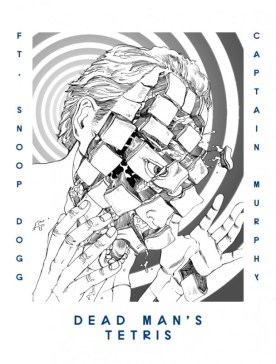
Flying-Lotus-Dead-Mans-Tetris-608x804The artwork for the album is in itself a psychedelic trip.

The album’s musical influences range from the spiritual jazz of the Coltranes, the prog jazz fusion of Weather Report (a major stylistic conduit for Ellison on the record), to the humour and cosmic tones of Sun Ra. Such a mix makes You’re Dead! Ellison’s most free sounding album to date; impressively the record never spirals out of control because it clocks in at less than 40 minutes. In those 38 minutes we encounter a wide spectrum of sounds (and silences) with more live instrumentation than any prior Lotus album. The collaborative cast on the album is diverse, and includes Herbie Hancock, Kendrick Lamar, Captain Murphy, Snoop Dogg, Thundercat, Angel Deradoorian, and others. Given his role at the helm of the fusion movement, Herbie Hancock is well deployed and his mellifluous keys on “Telsa” and “Moment of Hesitation” add to the jazz feel of the album. To really appreciate You’re Dead! you need to listen to the album in one continuous sitting: preferably in a smoky moon-lit room. The smoke could just as fittingly be from incense or cannabis. The tracks seamlessly flow together and the intense opening to the ethereal closing creates a cinematic experience that juxtaposes life and death, heaven and hell. This is cosmic music that is more meditative than it is consumptive. Yes, it is anthropophagic (cannibalistic) of other musical forms, but its channeling is meditative. We are not given a concrete answer to the nature of the afterlife, but I think that’s largely the point. The shamanistic journey FlyLo takes us on is Afrofuturistic because it lets us know that our past contains portals to explore the future of unknown horizons. You’re Dead! might just be the most exciting and confounding musical experience released this year.

images-4images-4images-4images-4 record 1:2(4.5 spins out of 5)

Check out some of Ellison’s music below, including the Kendrick Lamar collaboration on “Never Catch Me.”

Featured image from, here.